
Farm and livestock work in winter: cold stress, water, barns and animals
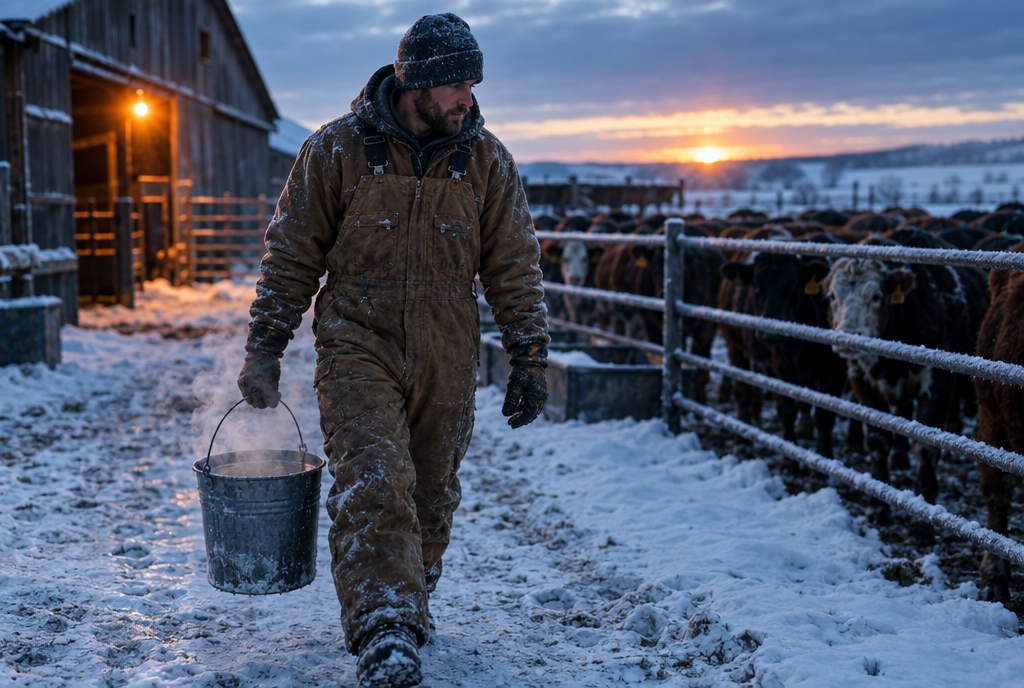
Winter farm work is risky because cold, wind, wet chores and cold water combine, often alone and at night. Stay safe by dressing in three layers with spare dry gloves and socks, keeping walkways sanded, never running tractors or fuel heaters in closed buildings without ventilation and a working CO alarm, telling someone where you are, and knowing the signs of hypothermia and frostbite.
Why is winter farm work a cold stress risk?
Livestock does not take snow days. Feeding, watering, bedding and calving go on in every storm, much of it outdoors or in open-sided buildings. The Agricultural Safety and Health eXtension community names four environmental factors behind cold stress in agriculture: low temperature, strong or cool winds, dampness and cold water.
Farm chores hit all four at once. Hosing, washing equipment, handling wet animals and breaking ice on tanks soak gloves and sleeves, and wet clothing loses much of its insulation. Much of the work is also done alone, far from the house, which is why extension services stress working in teams where possible and telling someone where you are going and when you expect to be back.
How should you dress for farm chores in winter?
The eXtension guidance recommends at least three layers: an inner layer that lets moisture move away from the skin, a middle insulating layer and an outer layer that breaks the wind. Penn State Extension advises avoiding cotton because once it is wet it no longer insulates, and dressing in layers so you can shed them as you warm up during heavy work like forking bedding.
Iowa State guidance on NASD adds covering every exposed area, including neck, face, fingers and wrists, and always wearing a hat. Hands are the limiting factor for many chores; the eXtension page notes that dexterity can be affected at temperatures below 59°F. Carry at least one spare pair of dry gloves and socks in the truck or barn office.
How do you manage wet work and frozen water lines safely?
Keeping water available is a daily winter job. Penn State Extension advises checking hoses, floats and water lines for ice buildup, confirming that heated waterers and heating elements work, and keeping electrical cords out of reach of animals. Its farm work guidance suggests deicers for waterers so animals stay hydrated.
Thawing lines and chopping ice is wet, cold-hand work. Swap to dry gloves as soon as they soak through, and keep boots dry. NIOSH warns that trench foot can occur at temperatures as high as 60°F if the feet are constantly wet, so wet barns and slushy lots are a foot risk even on mild winter days.
How do you stay safe on calving and lambing nights?
Birthing season often lands in the coldest weeks, and checks through the night mean repeated short trips outside at the lowest temperatures of the day, on little sleep. Penn State Extension notes that barn cameras let you monitor animals from the house, which can cut unnecessary trips. Maternity pens that are well bedded and protected from drafts help the animals and make the barn a better place to work.
Keep a warm layer, hat and dry gloves by the door so you do not go out underdressed for a quick check that turns into an hour. Take a phone, and let someone know when you head out. Looking after the herd starts with looking after the person doing the checks.
What causes carbon monoxide poisoning on farms in winter?
Closing up buildings for warmth traps exhaust. Purdue University farm safety specialists list running tractors or other vehicles in shops or garages with the doors closed, older vehicles that leak exhaust into the cab, and gas or oil fueled pressure washers and heaters used in livestock buildings as common winter sources.
Their advice is to install carbon monoxide monitors in enclosed work areas and check them, prohibit gas-powered equipment in unvented or poorly ventilated spaces and inspect exhaust systems for leaks. Penn State Extension adds working carbon monoxide and fire detectors where wood, coal or kerosene heat is used. Symptoms include headache, nausea, weakness, dizziness and confusion; if they appear or an alarm sounds, leave the building, get to fresh air and call 911.
How do you prevent slips and falls around the barn?
Penn State Extension notes that slips, trips and falls are among the most common sources of workplace injuries, and ice makes every lot and doorway worse. Spread sand, salt or stone on walkways, and wear cleats or ice grips on boots. Carry loads you can see over, and take the longer, cleared route when you can.
What are the signs of cold stress, and when should you get help?
Watch yourself and anyone working with you, including teenagers and older family members helping with chores. Iowa State guidance lists confusion, clumsiness, drowsiness, slurred speech, shallow breathing and uncontrollable shivering as warning signs of hypothermia. Talk to a clinician about numbness, color change or skin damage that lingers after warming, and ask about any medications that may affect how you handle cold.
| Warning sign | Possible problem | Action |
|---|---|---|
| Shivering, fatigue, clumsiness, confusion | Early hypothermia | Stop work, get into a warm building or cab, replace wet clothing |
| No shivering, slurred speech, slowed breathing, unresponsive | Severe hypothermia | Call 911 or emergency services immediately |
| Numb, pale, waxy or grayish skin on fingers, toes, face | Frostbite | Warm gently, do not rub, seek medical care |
| Red, swollen, numb or blistered feet after wet work | Trench foot | Dry and warm feet, seek medical care |
| Headache, dizziness, nausea in a closed building | Carbon monoxide poisoning | Leave, get to fresh air, call 911 |
Key takeaways
Cold, wind, dampness and cold water together drive cold stress on farms; wet chores are the hidden risk.
Wear three layers, avoid cotton and carry spare dry gloves and socks.
Never run tractors, pressure washers or fuel heaters in closed buildings without ventilation and a working CO alarm.
Plan night calving and lambing checks: gear by the door, a phone and someone who knows you are out.
Know hypothermia and frostbite signs and act on them early.
Frequently asked questions
Can you get trench foot on a farm if it is not freezing?
Yes. NIOSH notes trench foot can occur at temperatures as high as 60°F when feet stay wet. Wet barns, slush and leaking boots are the usual culprits, so change into dry socks and keep boots in good repair.
Is it safe to warm up a tractor in the shop with the door closed?
No. Purdue University farm safety specialists list running tractors or vehicles in closed shops as a leading winter carbon monoxide source. Open the doors, move the engine outside, and keep a working CO alarm in the shop.
How can I cut down on cold trips during calving season?
Penn State Extension suggests barn cameras so you can check animals from the house. Group tasks so each trip does more, and keep warm gear ready by the door so short checks do not leave you underdressed.
What should I keep in the farm truck in winter?
Iowa State guidance recommends extra clothes, a blanket, a source of emergency heat and flares in all vehicles. A charged phone, spare gloves and socks, and water are also sensible additions for work far from the house.
Should farm workers work alone in extreme cold?
Extension guidance recommends working in teams of two or more and scheduling hard jobs for the warmest part of the day. When working alone is unavoidable, tell someone where you are and when you will be back.
From HEATJAC
We design low-profile thermal garments: a heat-reflective vest and a thermal harness with pockets for warmers or cold packs.
Choosing gear? Cold storage and freezer gear by zone · Winter gear for construction and utility crews
Related reading
Sources
Cold-Related Conditions and Agriculture, Agricultural Safety and Health eXtension Community of Practice
Prepare for Winter Farm Work, Penn State Extension
Dairy Farm Preparation to Avoid the Winter Woes, Penn State Extension
Specialist: Winter brings higher carbon monoxide risk for farmers, Purdue University
Severe Weather Tips for Farmers (Iowa State University Extension), National Ag Safety Database (NASD)
Cold Stress: Related Illnesses, CDC / NIOSH
About HEATJAC. HEATJAC is a thermal architecture company founded by an anesthesiologist. We design patented garment systems that capture, conduct and broaden warmth across the body, and we publish this knowledge hub because the science of staying warm should be public. HEATJAC products are not medical devices and are not intended to diagnose, treat, cure or prevent any disease.