
Temperature regulation after spinal cord injury (poikilothermia)
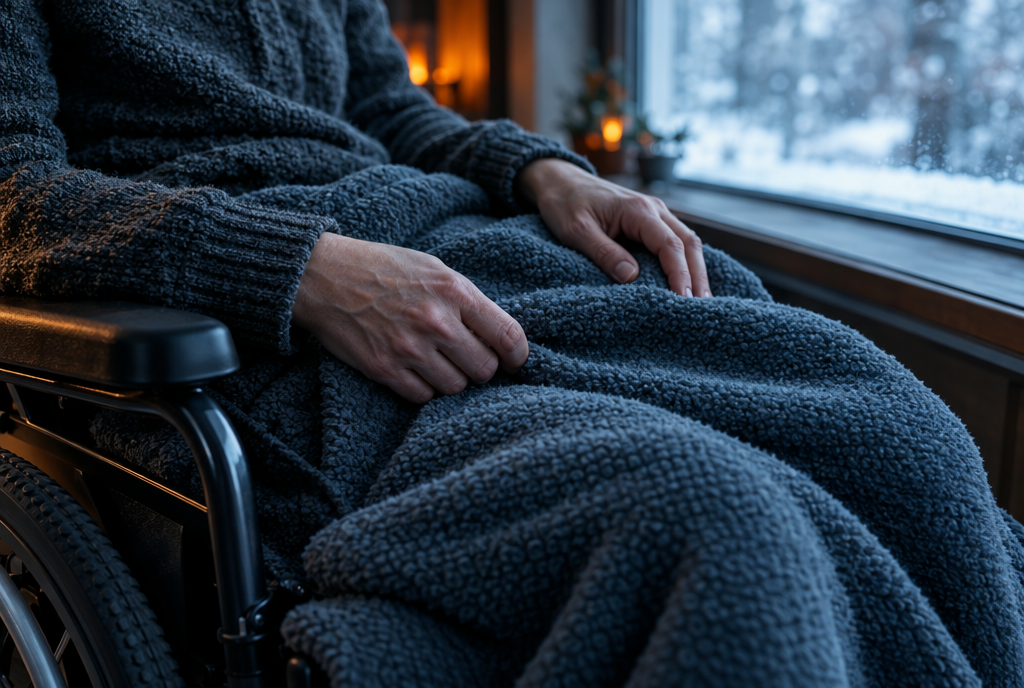
After a spinal cord injury, especially at or above T6, the brain loses much of its connection to the skin, blood vessels and sweat glands below the injury. Shivering and sweating work only above that level, so body temperature tends to drift with the room or the weather. This is called poikilothermia. Managing it means controlling the environment, dressing well and avoiding direct heat sources.
Why does spinal cord injury affect body temperature?
Normal temperature control depends on the hypothalamus in the brain receiving signals from the skin and sending commands back to muscles, blood vessels and sweat glands. The American Academy of Physical Medicine and Rehabilitation (AAPM&R) explains that spinal cord injury cuts these pathways, so a person cannot sense temperature changes below the injury level or respond with sweating, shivering, or narrowing and widening of blood vessels.
AAPM&R defines poikilothermia as the inability to internally regulate core body temperature, so that it tends to follow the surrounding environment. A review in Mayo Clinic Proceedings describes people with high-level injuries as partially poikilothermic and notes that both hypothermia and hyperthermia can be dangerous for them.
Which injury levels have the most trouble regulating temperature?
Shirley Ryan AbilityLab states that temperature regulation problems occur in people with cervical and high thoracic injuries. AAPM&R and the Mayo Clinic Proceedings review both identify injuries above T6 as carrying the greatest risk, because they remove sensation and motor control over a large share of the body surface.
People with lower or incomplete injuries may notice milder changes, and every body is different. Keeping a simple log of how you feel in different rooms, seasons and activities gives your care team useful information.
What does feeling cold look like after spinal cord injury?
Shivering and sweating may still happen, but Shirley Ryan AbilityLab notes they occur only above the level of injury and are less effective when the whole body cannot respond. The Mayo Clinic Proceedings review describes the same pattern for shivering after cervical injury.
That changes how cold shows up. Chills and teeth chattering are the signs Shirley Ryan AbilityLab lists, but a person may feel comfortable while their legs and trunk are losing heat they cannot sense. AAPM&R uses a core temperature below 35 degrees Celsius (95 degrees Fahrenheit) to define hypothermia, the same threshold at which the CDC says to get medical attention immediately.
How can you stay warm safely with a spinal cord injury?
Because the body cannot fine-tune its own temperature, the environment and clothing do the work. AAPM&R lists ambient temperature regulation, insulated clothing, blankets and warm fluids to prevent or manage hypothermia, along with avoiding alcohol in cooler settings and education about medications that affect temperature control.
Dress in insulating layers and keep hands and feet dry, as Shirley Ryan AbilityLab advises for cold weather.
When chilled, use blankets, raise the room temperature slightly and have a warm drink.
Take breaks from very hot or very cold places so the body is not pushed to its limits.
Cover areas with reduced sensation and plan outings around the forecast, including transfers and waiting time outdoors.
Keep clothing loose enough that it does not press or bunch, since tight garments can trigger autonomic dysreflexia.
| Situation | Safer approach | Why |
|---|---|---|
| Feeling chilled indoors | Add a blanket or layer, raise the thermostat slightly, warm drink | Keeps heat in without direct heat on skin |
| Cold feet or legs | Warm socks, insulated boots, lap blanket | Retains body heat in areas you may not feel |
| Heating pad or hot water bottle | Avoid on areas with reduced sensation | Burns can happen without warning pain |
| Going outside in winter | Layers, hat, dry gloves, shorter exposure | Shivering below the injury will not help |
Are heating pads and hand warmers safe with a spinal cord injury?
Direct heat is the riskiest way to warm up when sensation is reduced. Shirley Ryan AbilityLab advises avoiding heating pads and ice packs because reduced sensation may lead to burns or frostbite. The same logic applies to hot water bottles, electric blankets, air-activated warmers and heated garments placed against skin you cannot feel.
If you use any heat source, keep it off bare skin, use a timer, check the skin underneath afterward (a mirror or a caregiver helps with areas you cannot see), and prefer holding in the body heat you already make with layers and insulation. The VA also lists burns, including sunburns, among triggers of autonomic dysreflexia.
When to call a clinician or emergency services
Autonomic dysreflexia is a medical emergency. Cleveland Clinic explains that it most often happens after injury at or above T6 and that up to 90% of people with cervical or high thoracic injuries are susceptible. The VA lists extreme temperature changes, burns and tight garments among its triggers. Talk to a clinician about any symptoms that worry you, and keep your usual blood pressure on record.
| Warning sign | What to do |
|---|---|
| Severe, pounding headache; flushing or sweating above the injury; blurred vision; stuffy nose; blood pressure 20 to 40 mmHg above your usual (VA) | Sit up, loosen tight clothing, check bladder, bowel and skin; call 911 if symptoms persist or the cause is not found |
| Temperature below 95 degrees Fahrenheit, confusion, drowsiness, slurred speech | Get medical attention immediately, remove wet clothing, warm with dry blankets |
| Red, white or grayish-yellow, firm or waxy skin | Possible frostbite; seek care |
| Temperature stays abnormal | See a clinician to rule out infection or other causes |
Key takeaways
Injuries at or above T6 cause the most trouble with temperature regulation, and body temperature can drift with the environment.
Shivering and sweating work only above the level of injury, so warmth has to come from the room and from clothing.
Avoid heating pads and other direct heat on skin with reduced sensation, and check skin after any heat or new equipment.
Extreme temperature changes, burns and tight clothing can trigger autonomic dysreflexia, a medical emergency.
Frequently asked questions
Why am I always cold after a spinal cord injury?
The injury interrupts signals between the brain and the skin, blood vessels and muscles below the injury level. Your body cannot shiver or narrow blood vessels there to hold heat, so it cools with the environment. A clinician can also check for other causes of feeling cold.
Can people with quadriplegia run a fever?
Yes. The Mayo Clinic Proceedings review notes that people with quadriplegia have fevers of a similar size to people without spinal cord injury. A temperature that stays abnormal should be checked by a clinician to rule out infection.
Is poikilothermia permanent?
It depends on the level and completeness of the injury, and patterns vary from person to person. Your rehabilitation team is the best source for what to expect in your situation.
Can being too cold cause autonomic dysreflexia?
The VA lists extreme temperature changes, too hot or too cold, among the triggers of autonomic dysreflexia in people with spinal cord injury. Burns and tight garments are also listed. Know the warning signs and have an emergency plan.
What room temperature is best after a spinal cord injury?
There is no single number. AAPM&R lists regulating the room temperature as a core strategy but does not set a home range; it advises keeping clinic exam rooms between 20 and 25 degrees Celsius (about 68 to 77 degrees Fahrenheit). Work out your own comfortable range with your care team.
Can a spinal cord injury cause body temperature to drop?
Yes. After a spinal cord injury, especially at or above T6, the body cannot shiver or narrow blood vessels below the injury, so core temperature tends to drift down in a cool room or cold weather. AAPM&R defines hypothermia as a core temperature below 95 °F (35 °C), and the CDC advises getting medical attention immediately at that level. Talk to a clinician about how often to check your temperature.
What are the symptoms of poikilothermia?
The main sign is a body temperature that follows the surroundings: feeling chilled or overheated in conditions others find comfortable. Shirley Ryan AbilityLab lists chills and teeth chattering, with shivering and sweating happening only above the injury level. Because sensation below the injury is reduced, the trunk and legs can be losing heat without any warning, so a thermometer is more reliable than how you feel.
Is feeling cold after a spinal cord injury normal?
Yes, it is common, because the injury cuts the signals the brain uses to sense cold and hold heat below the injury level. Feeling cold is still worth mentioning to your care team, since infection, low blood pressure or other causes can add to it. A new chill with headache, flushing or sweating above the injury can signal autonomic dysreflexia and needs urgent care.
Can a spinal cord injury cause hot flashes and sweating?
It can. Cleveland Clinic lists heavy sweating and skin flushing above the level of injury, with pale, cool, dry skin below it, among the signs of autonomic dysreflexia, especially when they come with a pounding headache. Sweating may also simply occur only above the injury level when you are warm. Any sudden sweating or flushing with a headache is an emergency for people with injuries at T6 or above.
From HEATJAC
We design low-profile thermal garments: a heat-reflective vest and a thermal harness with pockets for warmers or cold packs. If you have reduced sensation or a health condition, check with your clinician before adding heat.
Choosing gear? Before you buy: a checklist for any warming garment · Are heated vests safe?
Related reading
Sources
Spinal Cord Injury Complications: Temperature Regulation, Shirley Ryan AbilityLab
Impaired Thermoregulation, American Academy of Physical Medicine and Rehabilitation (PM&R KnowledgeNow)
Thermoregulation and Fever in Normal Persons and in Those With Spinal Cord Injuries, Mayo Clinic Proceedings
Autonomic Dysreflexia (AD): What It Is, Symptoms and Treatment, Cleveland Clinic
SCI Autonomic Dysreflexia (AD) Signs and Symptoms, US Department of Veterans Affairs
Preventing Hypothermia, Centers for Disease Control and Prevention (CDC)
About HEATJAC. HEATJAC is a thermal architecture company founded by an anesthesiologist. We design patented garment systems that capture, conduct and broaden warmth across the body, and we publish this knowledge hub because the science of staying warm should be public. HEATJAC products are not medical devices and are not intended to diagnose, treat, cure or prevent any disease.