
Staying warm in a wheelchair
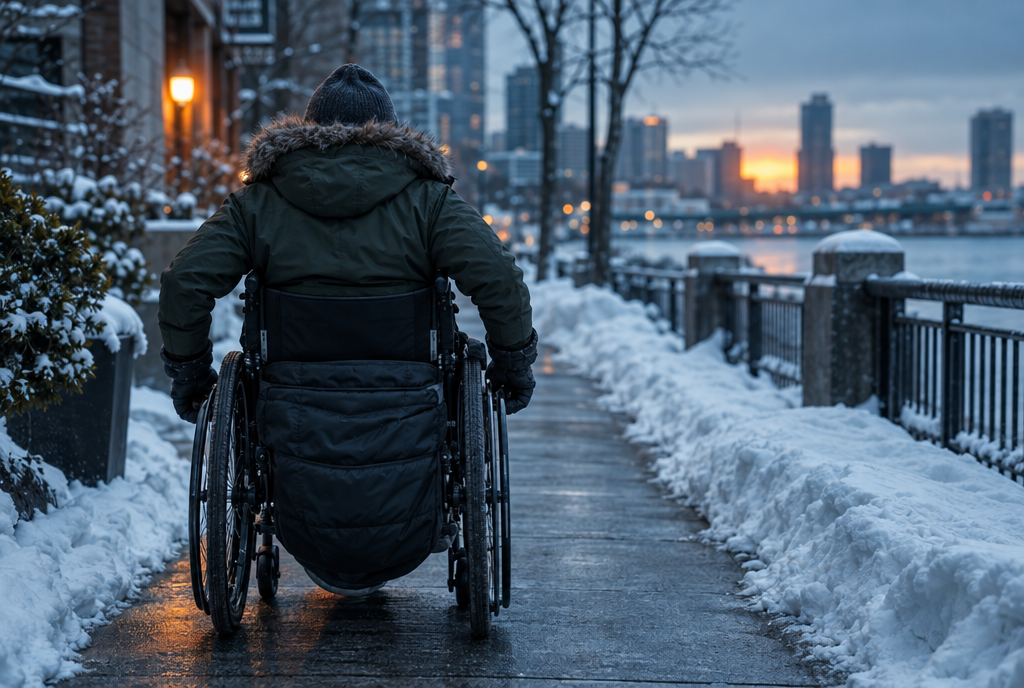
To stay warm in a wheelchair, wear loose layers of wool or synthetic fabric, add a hat, warm socks and lined waterproof boots, and cover your lap and legs with a wheelchair poncho or zippered blanket. Use gloves that still grip the push rims. Charge power chairs every night, and keep heat sources off skin you cannot feel well.
Why do wheelchair users get cold?
Sitting outdoors leaves the lap, legs and feet exposed to wind and cold for long stretches, and hands on metal push rims lose warmth quickly. For many wheelchair users the bigger issue is sensation. People with spinal cord injury and some other conditions may not feel cold in their legs or trunk, and Shirley Ryan AbilityLab notes that after spinal cord injury, shivering and sweating happen only above the level of injury.
That is why Shirley Ryan AbilityLab's occupational therapy advice is to cover all body areas, especially those with altered sensation, rather than waiting until you feel cold.
What should you wear in a wheelchair in winter?
United Spinal Association recommends wool and other natural fibers, which it says hold heat better than acrylic, worn as loose, lightweight layers that trap insulating air. It warns against cotton, which loses its warmth when wet.
Head and neck: a hat that stays on in wind, and a scarf.
Feet: warm wool socks or knee highs and lined, waterproof boots.
Hands: thermal gloves under mittens, or gloves with traction tips that keep fingers warm and still give a good grip on the rims.
Legs: insulated pants rather than many bulky layers, which Shirley Ryan AbilityLab notes makes toileting from the chair easier.
Lap cover: a fleece-lined wheelchair poncho or a zippered wheelchair blanket that will not trail into the wheels.
How do you keep your hands warm while pushing a wheelchair?
Warm hands and a secure grip pull in different directions. United Spinal suggests fingertip-less or thinner-tipped gloves for people who need fine hand use, and adaptive mittens for others. Shirley Ryan AbilityLab points to gloves with traction tips as a middle ground.
Keep a dry spare pair in a bag on the chair. Shirley Ryan AbilityLab advises keeping hands and feet dry to prevent frostbite, and wet gloves on cold rims chill fingers fast.
How do you keep a power wheelchair working in the cold?
Cold weather is hard on batteries. Shirley Ryan AbilityLab advises charging power chairs, power assist devices and scooters overnight, every night, and storing them in temperature-controlled spaces when not in use. United Spinal adds that a fully charged battery matters because extreme cold drains it faster.
Protect the controls too. Both organizations suggest a waterproof joystick cover, and United Spinal suggests small battery lights so you are visible in snow. Shirley Ryan AbilityLab notes that snow and salt corrode moving parts, so clean and service the chair through the season.
| Item | Winter check | Why it matters |
|---|---|---|
| Power chair battery | Charge every night; store indoors | Cold reduces battery performance |
| Joystick | Waterproof cover | Keeps controls dry |
| Tires and casters | Check tread; consider knobby tires or front wheel attachments | Less slipping on snow and ice |
| Frame and moving parts | Clean off salt; keep lubricated | Snow and salt cause corrosion |
| Lap and legs | Poncho or zippered blanket | Covers areas with altered sensation |
Are heated vests and foot warmers safe for wheelchair users?
They can be used with care, but reduced sensation changes the risk. United Spinal lists heated vests and boot and foot warmers among winter options and says to check the skin regularly to prevent burns. Shirley Ryan AbilityLab advises people with spinal cord injury to avoid heating pads because reduced sensation may lead to burns or frostbite.
Safer practice: never place a warmer or heated panel directly on skin, keep heat away from areas you cannot feel, use the lowest setting and a timer, and look at the skin afterward. The Christopher and Dana Reeve Foundation recommends skin checks at least twice a day and more often when using new equipment or devices. Holding in your own body heat with layers and a lap cover is the lower-risk first step.
When to call a clinician or emergency services
Some people cannot rely on shivering or on feeling cold, so caregivers should watch for these signs too. Talk to a clinician about any symptoms that worry you, and ask an occupational therapist if winter is keeping you from activities that matter to you.
| Warning sign | What to do |
|---|---|
| Shivering, exhaustion, confusion, fumbling hands, slurred speech, drowsiness | Possible hypothermia: get indoors, remove wet clothing, warm with dry blankets |
| Body temperature below 95 degrees Fahrenheit | Get medical attention immediately (CDC) |
| Redness or pain, then white or grayish-yellow, firm or waxy, numb skin | Possible frostbite: get warm and seek care |
| Blister, redness or broken skin under a warmer | Possible burn: remove the heat source and contact a clinician |
Key takeaways
Cover the lap, legs and feet with loose wool or synthetic layers and a poncho or zippered blanket; skip cotton.
Choose gloves that keep a grip on the push rims, and carry a dry spare pair.
Charge power chairs every night and store them indoors, because cold weakens batteries.
Keep heat sources off skin with reduced sensation and check skin after using any warmer or new equipment.
Hypothermia is a medical emergency below 95 degrees Fahrenheit.
Frequently asked questions
What is the best way to keep legs warm in a wheelchair?
Insulated pants plus a fleece-lined wheelchair poncho or zippered wheelchair blanket cover the lap, legs and feet without trailing into the wheels. Add wool socks and lined waterproof boots.
Do cold temperatures drain power wheelchair batteries?
Yes. Shirley Ryan AbilityLab notes batteries perform poorly in the cold and advises charging powered devices every night and storing them in temperature-controlled spaces. United Spinal says extreme cold drains batteries faster.
What gloves work best for pushing a wheelchair in winter?
Gloves with traction tips keep fingers warm and still give a good grip. Some people prefer fingertip-less or thinner-tipped gloves for fine hand use, or adaptive mittens. Keep a dry spare pair with you.
Can I use hand warmers if I have reduced sensation?
Use them only with care and never directly on skin. Keep them away from areas you cannot feel, limit the time, and check the skin afterward. Ask your clinician whether they are appropriate for you.
What is a wheelchair poncho?
It is a cape-style cover that fits over the user and the chair, often fleece-lined, so it covers the body and lap without getting caught in the wheels. Zippered wheelchair blankets serve a similar purpose.
From HEATJAC
We design low-profile thermal garments: a heat-reflective vest and a thermal harness with pockets for warmers or cold packs. If you have reduced sensation or a health condition, check with your clinician before adding heat.
Choosing gear? Before you buy: a checklist for any warming garment · Are heated vests safe?
Related reading
Sources
Navigating Winter in a Wheelchair, United Spinal Association
Five Wheelchair Tips for Winter, Shirley Ryan AbilityLab
Spinal Cord Injury Complications: Temperature Regulation, Shirley Ryan AbilityLab
Spinal Cord Injury Skin Care, Christopher and Dana Reeve Foundation
Preventing Hypothermia, Centers for Disease Control and Prevention (CDC)
About HEATJAC. HEATJAC is a thermal architecture company founded by an anesthesiologist. We design patented garment systems that capture, conduct and broaden warmth across the body, and we publish this knowledge hub because the science of staying warm should be public. HEATJAC products are not medical devices and are not intended to diagnose, treat, cure or prevent any disease.