
Cold weather with a prosthesis: residual limb, socket and skin
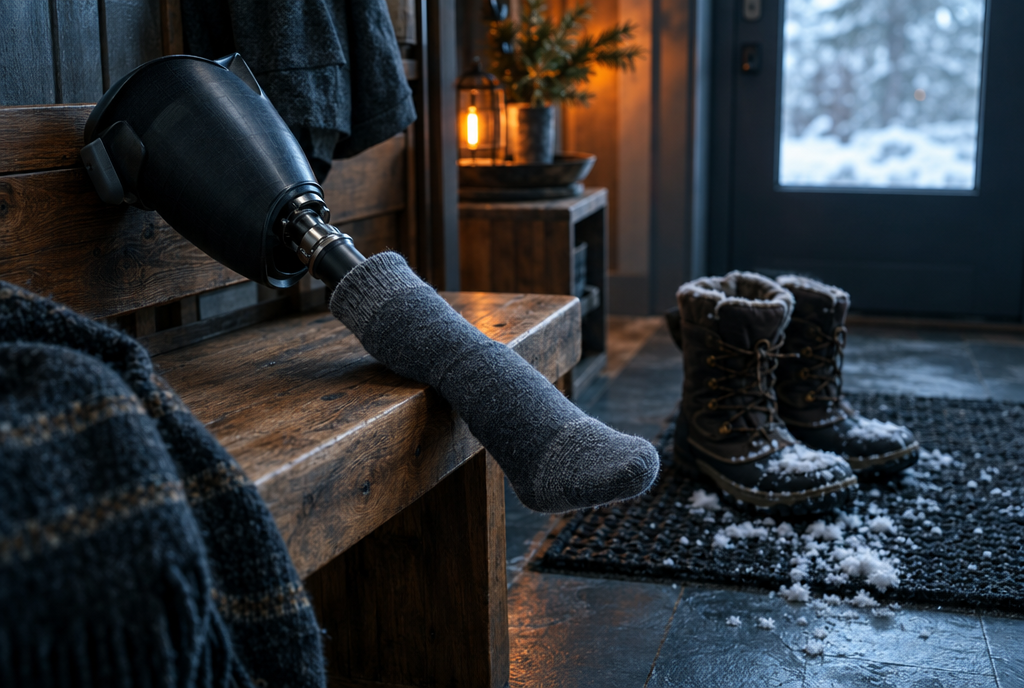
Cold weather can make a residual limb painful, change how the socket fits as limb volume shifts, and trap sweat when you move from the cold into heated rooms. Keep the limb covered and dry, carry extra prosthetic socks, check your skin every morning and night, and keep batteries warm. Never put heat directly on skin with reduced sensation.
How does cold weather affect a residual limb?
Arm Dynamics, a prosthetic rehabilitation provider, notes that circulation is affected after amputation and that a cold residual limb can be extremely painful. Mayo Clinic lists poor circulation, nerve problems such as a neuroma, and issues with the fit or use of a prosthesis among the causes of residual limb pain, so cold can add to discomfort that already has other roots.
Mayo Clinic also notes that residual limb pain can begin soon after surgery or more than two years later. If cold weather brings new or stronger pain, tell your clinician or prosthetist rather than assuming it is just the season.
Does a prosthetic socket fit differently in winter?
Residual limb volume changes, and fit changes with it. The Amputee Coalition describes two kinds of change: maturation over the first three to six months of wearing a prosthesis, and daily fluctuation from morning to night. Prosthetic socks in different thicknesses, called plies, are the usual way to manage it, and the Coalition says you will need to experiment with sock combinations.
A study of 23 people with transtibial amputation, indexed in PubMed Central, found average sock ply rose from 4.8 at the start of the day to 5.5 at the end, and most, but not all, participants lost volume over the day. In winter, carry spare socks so you can adjust after long periods outdoors, and tell your prosthetist if fit problems persist.
Why does my liner get sweaty in winter?
The Amputee Coalition explains that prosthetic sockets trap sweat and prevent air from circulating, which favors bacterial growth. Winter adds heavy layers over the socket and a shift from cold streets to heated buildings, so sweat can build even when the air outside is freezing.
The Coalition's routine works year round: wash the skin with a non-soap cleanser and dry it completely, clean and dry the socket, liner and socks daily, and use a nighttime moisturizer to help protect the skin. Removing an outer layer when you come indoors helps keep the socket from overheating.
Can you use hand warmers or heat on a residual limb?
Be very careful. The Amputee Coalition advises that people with reduced or no sensation in the residual limb check it more often and avoid hot water, which can burn and blister skin they cannot feel. Heating pads, hot water bottles, electric blankets, air-activated warmers and heated garments carry the same risk.
Safer practice is to keep any heat source off bare skin and away from the socket interface, use it for short periods, and check the skin afterward. Retaining the heat you already make, with a warm cover over the socket, insulated pants or a sleeve, is the lower-risk first step. Ask your prosthetist before adding anything inside or around the socket.
How do you keep a prosthesis working in cold weather?
Batteries are the weak point for powered devices. Arm Dynamics reports that battery capacity falls with temperature and that the drop can be drastic below freezing, and published operating ranges differ widely from one device to another. Check your device's range with your prosthetist, keep spare batteries warm in an inside pocket, and charge fully before going out.
For lower limb users, ice is the bigger hazard. The Amputee Coalition notes that people with lower limb amputation have an increased risk of falling, so footwear with good traction and a plan for icy routes matter as much as warmth.
| Winter issue | What helps | Source |
|---|---|---|
| Painful, cold residual limb | Cover and insulate the limb; report new pain | Arm Dynamics; Mayo Clinic |
| Loose or tight socket | Carry extra socks and adjust ply | Amputee Coalition |
| Sweat in the liner | Remove layers indoors; clean and dry skin, liner and socket daily | Amputee Coalition |
| Weak batteries | Charge fully; keep spares warm | Arm Dynamics |
| Burns from heat sources | No heat on bare or numb skin; check skin | Amputee Coalition |
When to call a clinician or emergency services
The Amputee Coalition recommends inspecting all sides of the residual limb with a hand mirror every morning and night, before putting on and after taking off the prosthesis. Talk to a clinician or prosthetist about any symptoms that worry you; a small red spot can become an ulcer that keeps you out of your prosthesis for weeks.
| Warning sign | What to do |
|---|---|
| Red marks that do not fade after 10 to 15 minutes, hardened skin, cracks or rashes | Contact your prosthetist about fit and skin |
| Skin on the limb opens | Go straight to your doctor and prosthetist |
| White or grayish-yellow, firm or waxy, numb skin | Possible frostbite: get warm and seek care |
| Shivering, confusion, slurred speech, drowsiness, or temperature below 95 degrees Fahrenheit | Possible hypothermia: get medical attention immediately |
Key takeaways
Cold can make a residual limb painful; keep it covered and report new or worse pain.
Limb volume changes through the day, so carry spare prosthetic socks to adjust fit.
Sockets trap sweat; remove layers indoors and clean and dry skin, liner and socket daily.
Never put heat directly on skin with reduced sensation, and check the limb every morning and night.
Cold can sharply reduce battery capacity in powered devices; keep spares warm.
Frequently asked questions
Why does my residual limb hurt more in the cold?
Circulation is affected after amputation, and a cold residual limb can be very painful. Residual limb pain also has other causes, including nerve problems and socket fit, so new or worse pain is worth raising with your clinician or prosthetist.
Should I add prosthetic socks in winter?
Sock ply is how most people manage volume changes, which happen daily and over the first months with a prosthesis. Carry extra socks and adjust as needed, and see your prosthetist if you keep needing big changes.
Can I put a heat pack inside my prosthetic socket?
Do not add heat inside the socket without talking to your prosthetist first. Heat on skin with reduced sensation can burn and blister without warning, and anything in the socket can change fit and pressure.
Does cold weather affect myoelectric prosthesis batteries?
Yes. Battery capacity drops with temperature and the drop can be drastic below freezing. Operating ranges vary by device, so check yours with your prosthetist and keep spares warm.
How often should I check my residual limb in winter?
The Amputee Coalition recommends checking all sides with a mirror every morning and night, and more often if you have reduced sensation. Look for red marks that do not fade after 10 to 15 minutes, cracks, rashes or open skin.
From HEATJAC
We design low-profile thermal garments: a heat-reflective vest and a thermal harness with pockets for warmers or cold packs. If you have reduced sensation or a health condition, check with your clinician before adding heat.
Choosing gear? Before you buy: a checklist for any warming garment · Are heated vests safe?
Related reading
Sources
Skin Care 101, Amputee Coalition
Beginning Your New Journey: Below Knee Amputation, Amputee Coalition
Residual limb pain: Symptoms and causes, Mayo Clinic
Self-reported prosthetic sock use among persons with transtibial amputation, PubMed Central (NIH)
Cold Weather and Prosthetic Devices, Arm Dynamics
Preventing Hypothermia, Centers for Disease Control and Prevention (CDC)
About HEATJAC. HEATJAC is a thermal architecture company founded by an anesthesiologist. We design patented garment systems that capture, conduct and broaden warmth across the body, and we publish this knowledge hub because the science of staying warm should be public. HEATJAC products are not medical devices and are not intended to diagnose, treat, cure or prevent any disease.