
Parkinson's and body temperature
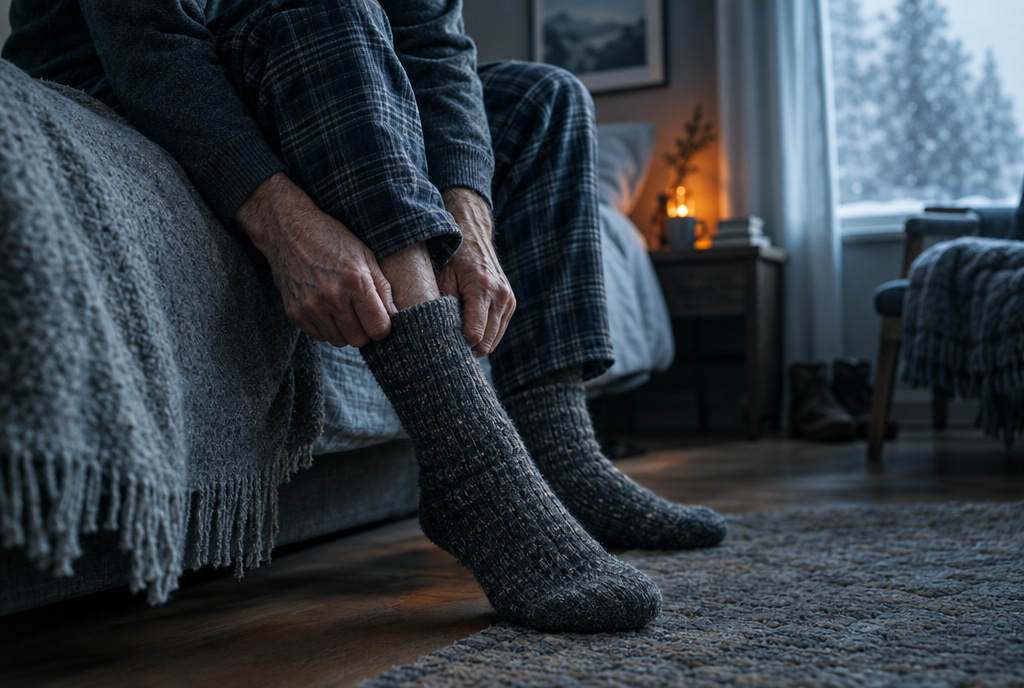
Feeling cold is common with Parkinson's because the disease affects the autonomic nervous system, which controls sweating, blood vessel tone and other parts of temperature regulation. Many people notice cold hands, feet or legs, or feel too cold or too hot when others feel fine. Steady layering, a warm home, movement and careful use of heat sources help most.
Why do people with Parkinson's feel cold?
Parkinson's UK explains that Parkinson's affects the nervous system, which controls body temperature, so people with Parkinson's can be more sensitive to both heat and cold. Parkinson's Australia describes it as feeling too hot or too cold even when others feel fine.
The cause is not a single switch. Parkinson's Australia notes the disease interferes with brain pathways that regulate temperature, affecting sweat production, blood vessel control and muscle activity. A 2025 review in the journal Cells calls thermoregulatory dysfunction an underrecognized feature of Parkinson's that is linked to poorer quality of life.
Why are my hands, feet and legs cold with Parkinson's?
Cold hands and feet are one of the most noticeable temperature changes. A 2016 report in Neurology International describes Parkinson's as frequently associated with vasomotor symptoms such as cold limbs or sensitivity to cold, estimated to occur in 40 to 50% of patients. Cold lower legs usually appear in winter and are often painful, which can make walking or standing harder.
The 2025 Cells review points to impaired control of blood flow to the skin as one contributor. Researchers are still studying how Parkinson's affects the body's heat-making systems, such as shivering and brown fat.
Can Parkinson's cause sweating and temperature swings?
Yes. Parkinson's can cause sweating too much (hyperhidrosis) or too little (hypohidrosis). The Cells review reports excessive sweating in roughly 5.5 to 12.9% of people at diagnosis, rising to over 60% in advanced stages.
Sweating matters in winter because damp clothing pulls heat away from the skin. Someone who sweats heavily indoors and then goes outside can chill quickly, so moisture-wicking base layers and a dry change of clothes are worth having.
| What you may notice | Likely contributor | What helps |
|---|---|---|
| Cold hands, feet or lower legs | Changes in blood vessel control to the limbs | Warm socks, gloves, leg layers; keep feet moving |
| Feeling cold when others are comfortable | Autonomic changes to temperature regulation | Thin layers, warm rooms, a hat indoors if needed |
| Heavy sweating, then chills | Sweating changes (hyperhidrosis) | Wicking base layer; change damp clothing promptly |
| Too hot and too cold in the same day | Unstable temperature regulation | Layers that are easy to add or remove |
Is hypothermia a risk with Parkinson's?
It is uncommon, but it matters. The Cells review describes hypothermia in Parkinson's as rare but potentially life-threatening, arising from changes in several parts of the nervous system that regulate temperature. Reduced movement, living alone and a cold home can add to the risk, as they do for any older adult.
Caregivers should know the warning signs the CDC lists for adults: shivering, exhaustion, confusion, fumbling hands, memory loss, slurred speech and drowsiness. Some of these can overlap with Parkinson's symptoms, so a sudden change from the person's usual state is the key clue.
How can someone with Parkinson's stay warm in winter?
Parkinson's UK recommends several of these practical steps to keep warmth steady through the day.
Wear plenty of thin layers rather than one thick one, in cotton, wool or fleece.
Heat all the rooms you spend the day in, and set heating to come on just before you get up.
Wear a hat and bed socks in bed if you get cold at night.
Move about and do light exercise; it helps you keep warm.
Choose clothing that is easy to put on with stiffness or tremor, such as front zips, magnetic closures and slip-on socks.
Keep warm drinks and a blanket within reach of the chair you use most.
Are heating pads and hot water bottles safe with Parkinson's?
They need care, especially for older adults and anyone with slowed movement, thinking changes or reduced feeling in the feet. An American Family Physician review notes heating pads are a common cause of minor burns and may lead to major burns in older adults with sensory or cognitive deficits. It also cites 120°F as the recommended maximum temperature for home water heaters.
Safer practice: never put a heat source directly on bare skin; use heating pads and electric blankets with an automatic shutoff timer and not while sleeping; check the feet and legs for redness afterward; and favor keeping body heat in with layers, socks and blankets over concentrated heat on one spot. If stiffness makes it hard to move away from something too hot, a caregiver should set up and remove heat sources.
When to call a clinician or emergency services
Raise ongoing temperature problems, sweating changes or painful cold limbs with the person's clinician or Parkinson's team, who can look at the whole picture, including medications.
| Warning sign | What to do |
|---|---|
| Shivering, confusion, fumbling hands, slurred speech or unusual drowsiness in a cold setting | Warm the person and get medical attention; a body temperature below 95°F is an emergency |
| Fainting or falls with temperature swings or heavy sweating | Contact the clinician promptly; call emergency services if injured or not recovering |
| Cold, painful legs that limit walking or standing | Book a clinician visit |
| Skin redness, blisters or wounds after using a heat source | Stop using it and have the skin checked |
Key takeaways
Parkinson's affects the autonomic nervous system, so feeling cold, or too hot, is common.
Cold hands, feet and lower legs are frequent and can be painful in winter.
Sweating changes can leave clothing damp and chill a person quickly.
Hypothermia is rare but serious; a sudden change from usual behavior in the cold is a warning sign.
Use heat sources carefully and prefer layers and insulation that keep body heat in.
Frequently asked questions
Why does my dad with Parkinson's always feel cold?
Parkinson's affects the parts of the nervous system that control body temperature, blood vessel tone and sweating, so feeling cold when others are comfortable is common. Reduced movement can add to it. Mention it to his clinician, since other conditions can also cause feeling cold.
Is cold weather bad for Parkinson's?
Cold weather does not change the disease, but it can make daily life harder: cold, painful legs, stiffness and slower movement are common complaints in winter. Keeping the home warm and dressing in thin layers helps many people stay comfortable.
Can Parkinson's cause cold feet at night?
Yes, cold feet are common with Parkinson's. Parkinson's UK suggests wearing bed socks and a hat in bed if you get cold at night, and setting the heating to come on before you get up.
Why do people with Parkinson's sweat so much?
Parkinson's changes the autonomic nervous system, which controls sweating. Excessive sweating becomes more common as the condition advances. Talk with the Parkinson's team if sweating is heavy or linked to medication timing.
Are heated socks or heated vests safe with Parkinson's?
They can be, with the same care as any heat source: never directly on bare skin, use lower settings, and check the skin afterward. Anyone with reduced feeling in the feet or trouble adjusting controls should have help setting them up.
Does Parkinson's cause cold hands and feet?
Yes, it often does. A 2016 report in Neurology International describes cold limbs or sensitivity to cold in an estimated 40 to 50% of people with Parkinson's, linked to changes in how the nervous system controls blood flow to the skin. Warm socks, gloves, layers and regular movement help, and painful or color-changing hands or feet should be checked by a clinician.
Does Parkinson's make you feel cold?
It can. Parkinson's affects the autonomic nervous system, which controls sweating and blood vessel tone, so many people feel too cold, or too hot, when others are comfortable. Moving less adds to it. Mention it to your clinician, since thyroid problems, anemia or medicines can also cause feeling cold.
How does Parkinson's affect temperature regulation?
Parkinson's interferes with brain pathways that regulate temperature, affecting sweat production, blood vessel control and muscle activity. The result can be cold limbs, heavy or reduced sweating and trouble adjusting to hot or cold weather. A 2025 review calls this thermoregulatory dysfunction an underrecognized feature of the disease.
Can Parkinson's cause night sweats?
Yes. The Parkinson's Foundation notes that drenching sweats, particularly at night, can be troublesome, and that heavy sweating can be a wearing-off symptom tied to how well carbidopa-levodopa is working. Do not change your medication on your own; talk to your clinician or Parkinson's team, who can look at timing and dosing.
From HEATJAC
We design low-profile thermal garments: a heat-reflective vest and a thermal harness with pockets for warmers or cold packs. If you have reduced sensation or a health condition, check with your clinician before adding heat.
Choosing gear? Before you buy: a checklist for any warming garment · Are heated vests safe?
Related reading
Sources
Keeping well this winter, Parkinson's UK
Temperature dysregulation, Parkinson's Australia
Severe Cold Lower Limbs in Patients with Parkinson's Disease During the Summer (Kataoka and Ueno, 2016), Neurology International (PMC)
Preventing Burns in Older Patients (Ehrlich, 2006), American Family Physician
Preventing Hypothermia, Centers for Disease Control and Prevention
Skin Changes, Parkinson's Foundation
About HEATJAC. HEATJAC is a thermal architecture company founded by an anesthesiologist. We design patented garment systems that capture, conduct and broaden warmth across the body, and we publish this knowledge hub because the science of staying warm should be public. HEATJAC products are not medical devices and are not intended to diagnose, treat, cure or prevent any disease.