
Knowledge
Sourced guides on how the body stays warm, how patients and clinicians are kept comfortable, how crews work safely in cold and heat, and how warming gear works. Pick the theme closest to your world.
Ready to choose gear? Browse all buyer’s guides →
Free tools: wind chill and frostbite calculator, cold work warm-up schedule, what to wear by temperature, which warmth setup is right for you? and the warmth runtime and cost calculator. All tools and data →

Science of Warmth
For anyone who wants to understand how the body makes, keeps and loses heat.
Start here
Popular
All Science of Warmth articles →
Healthcare
For clinicians, perioperative teams, hospital leaders, and patients before and after surgery.
Start here
- Patient warming and perioperative hypothermia
- Thermal comfort for clinicians
- For patients: surgery and recovery
Popular
- How to stay warm in the operating room
- What is perioperative hypothermia?
- Forced-air vs conductive warming
Work and Duty
For employers, safety leads, crews, service members and EMS.
Start here
Popular
All Work and Duty articles →
Everyday Life and Health
For people who feel the cold, and for daily life outdoors.
Start here
- Cold sensitivity and Raynaud’s
- Staying warm in everyday life
- Staying warm at home and with family
- Staying warm with a health condition or disability
- Medications and feeling cold
Popular
All Everyday Life and Health articles →
Heat and Cooling
For hot jobs, heavy protective gear and personal heat sensitivity.
Start here
Popular
All Heat and Cooling articles →
Technology and Gear
For choosing, using and caring for warming gear.
Start here
Popular
All Technology and Gear articles →All articles
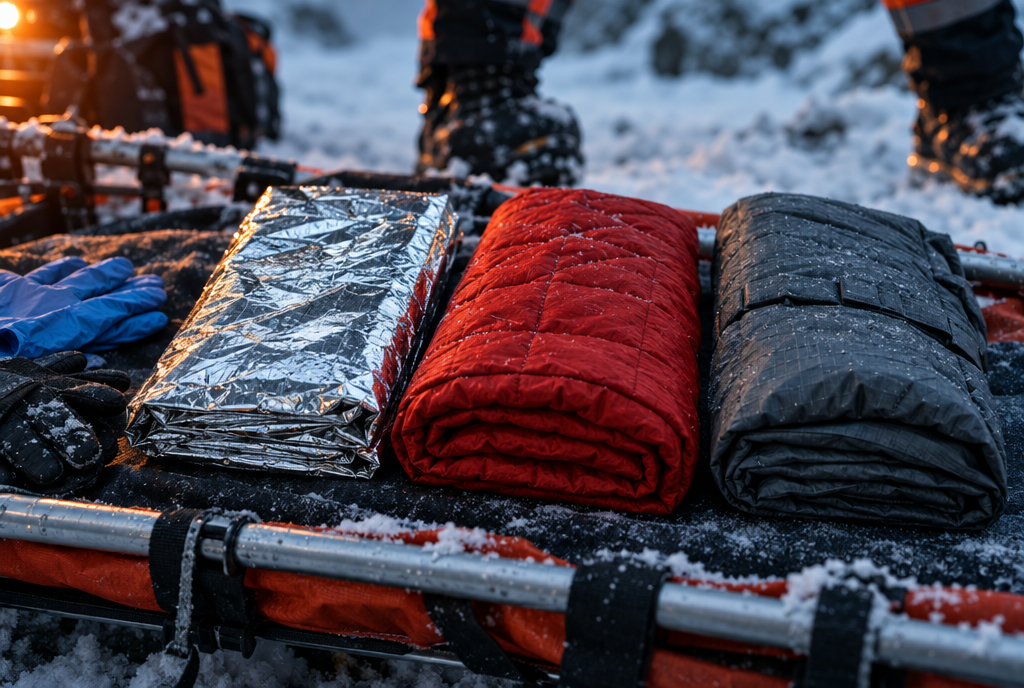
Hypothermia blankets compared: HPMK, Blizzard, Ready-Heat and space blankets
Active systems that add heat, such as the HPMK and Ready-Heat blankets, generally lost the least heat in fluid-model lab studies, and the Blizzard insulated blanket was the best passive option in the Army and UK studies. Plain space blankets and single wool blankets ranked lowest. The military Joint Trauma System recommends an insulated wrap plus an active heat source, kept off bare skin.
Cold stress and frostbite at work: injury statistics
Federal data record relatively few direct cold injuries at work. In 2020, private employers reported 190 cases of exposure to environmental cold, such as frostbite or hypothermia, that caused at least one day away from work, compared with 1,940 for environmental heat. Winter's larger toll is indirect: in 2014, 42,480 days-away cases involved ice, sleet or snow.
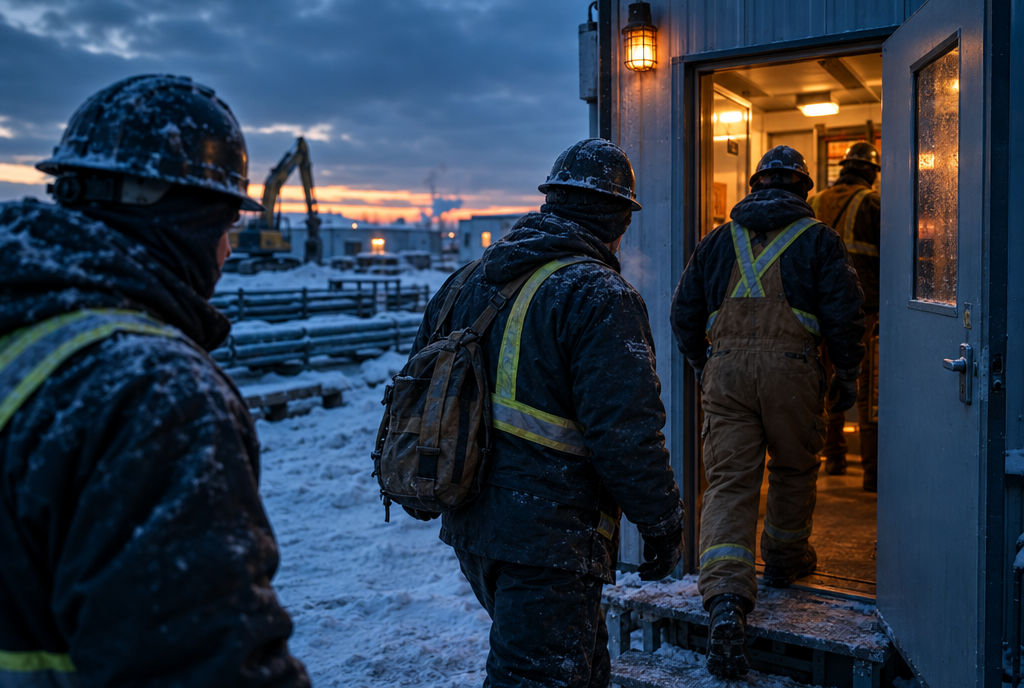
Cold work warm-up schedule: how long can you work in the cold?
Enter air temperature and wind speed, and the tool returns the ACGIH maximum work period and number of 10-minute warm-up breaks for a 4-hour shift of moderate to heavy work. Extra breaks start at -26°C (-15°F) with a 16 km/h (10 mph) wind; at -43°C (-45°F) and below, non-emergency work should cease in any wind.
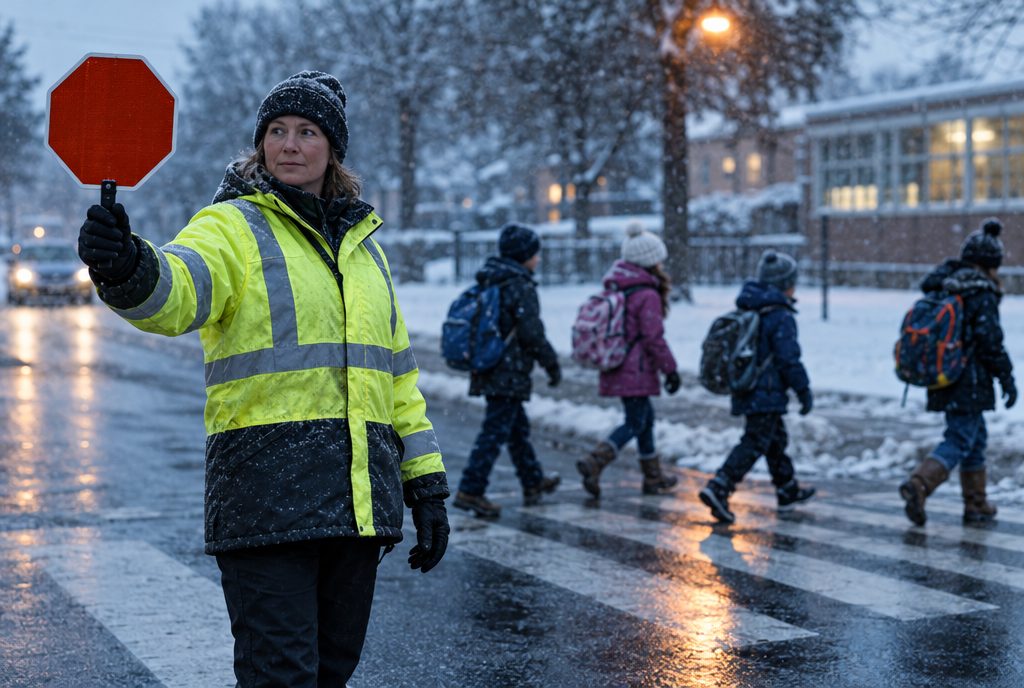
Staying warm on a crossing guard or traffic control post
For crossing guard duty in winter, wear a thin wicking base layer, an insulating mid layer and a windproof coat, then put a correctly sized high-visibility garment on top so nothing covers it. Add a hat that covers the ears, gloves that still grip a stop paddle, and insulated waterproof boots, and step off the post to warm up when you can.
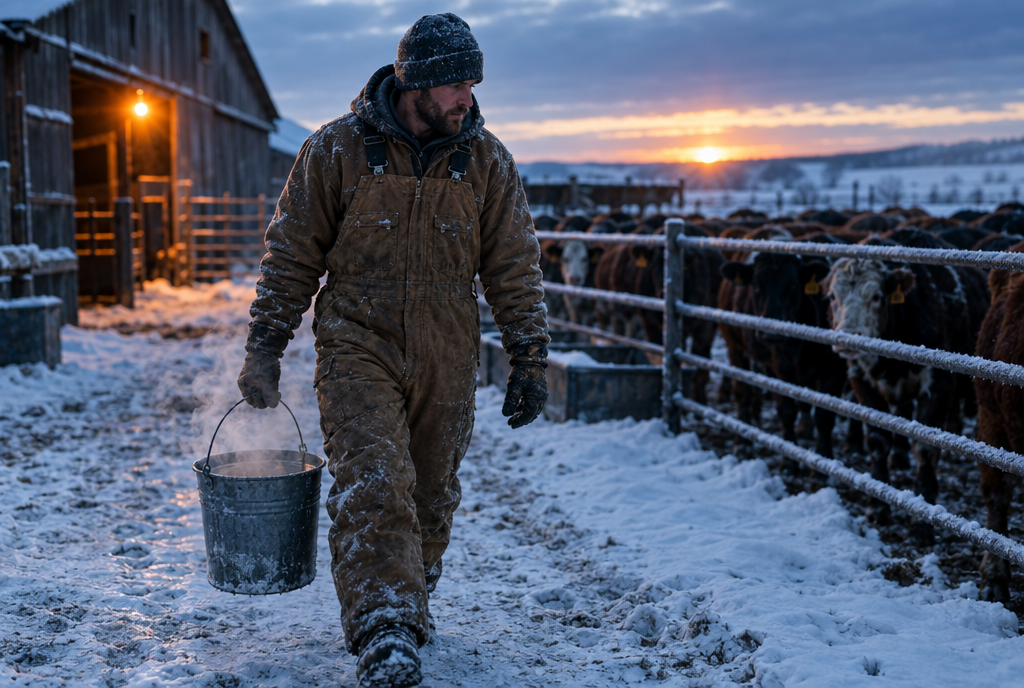
Farm and livestock work in winter: cold stress, water, barns and animals
Winter farm work is risky because cold, wind, wet chores and cold water combine, often alone and at night. Stay safe by dressing in three layers with spare dry gloves and socks, keeping walkways sanded, never running tractors or fuel heaters in closed buildings without ventilation and a working CO alarm, telling someone where you are, and knowing the signs of hypothermia and frostbite.
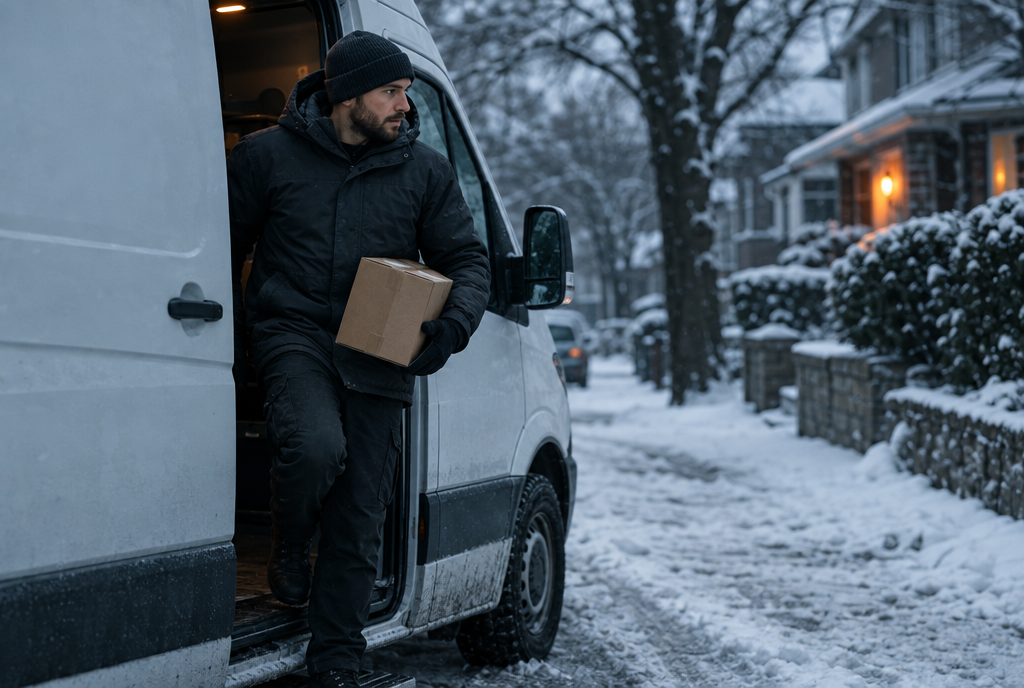
Staying warm as a mail carrier or delivery driver
To stay warm as a mail carrier or delivery driver, dress for the walk rather than the cab: thin, loose layers you can open between stops, a dry base layer that moves sweat away, a hat, waterproof insulated boots with good tread, and gloves you can work in. Change damp layers early, and never idle the vehicle in an enclosed space.
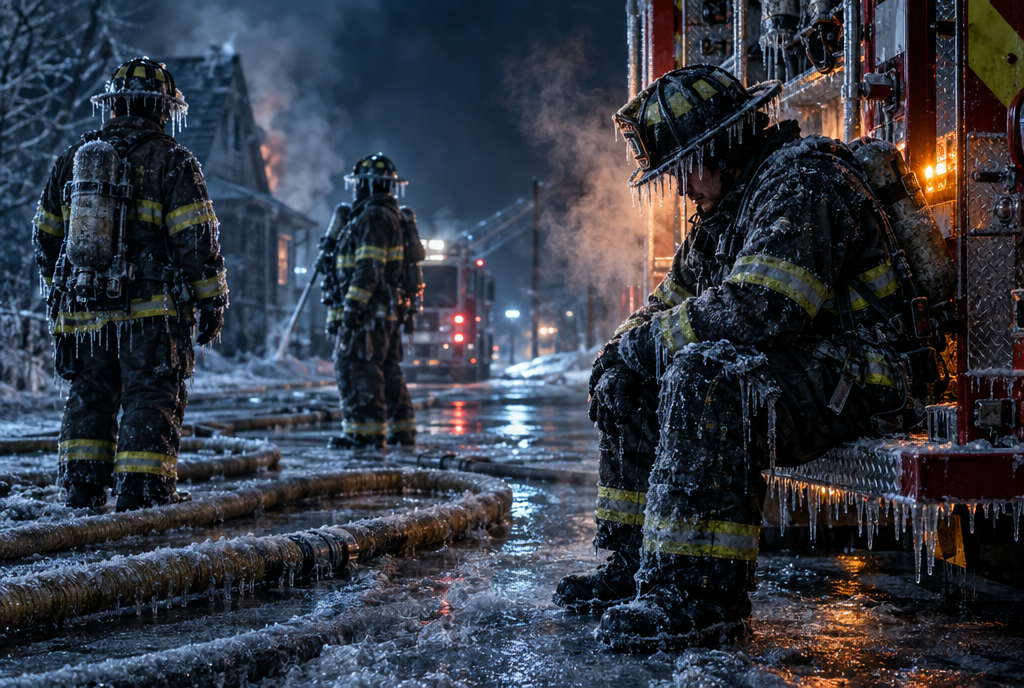
Firefighting in winter: cold, wet gear and rehab
Winter fires combine two opposite threats. Interior work soaks crews in sweat inside heavy turnout gear, then exterior work, water spray and wind chill them fast. Safe cold weather operations rely on early crew rotation, a heated and sheltered rehab area with dry layers and warm fluids, medical monitoring as NFPA 1584 describes, and constant attention to ice underfoot.
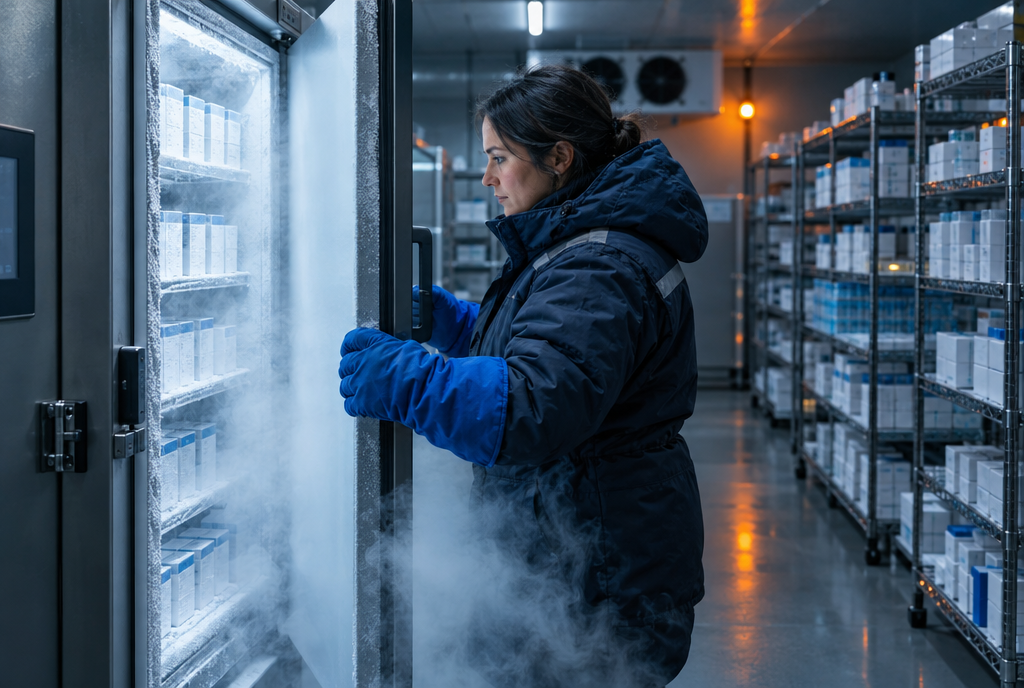
Working in the pharmaceutical cold chain: refrigerated rooms, freezers and ultra-cold storage
Working in pharmaceutical cold storage means two different kinds of cold. Refrigerated rooms at 2 to 8°C bring long, moderate exposure that calls for insulated layers and warm-up breaks. Ultra-cold freezers, dry ice and liquid nitrogen bring brief but extreme contact hazards, plus gas buildup, that call for cryogenic gloves, face protection, ventilation and training.
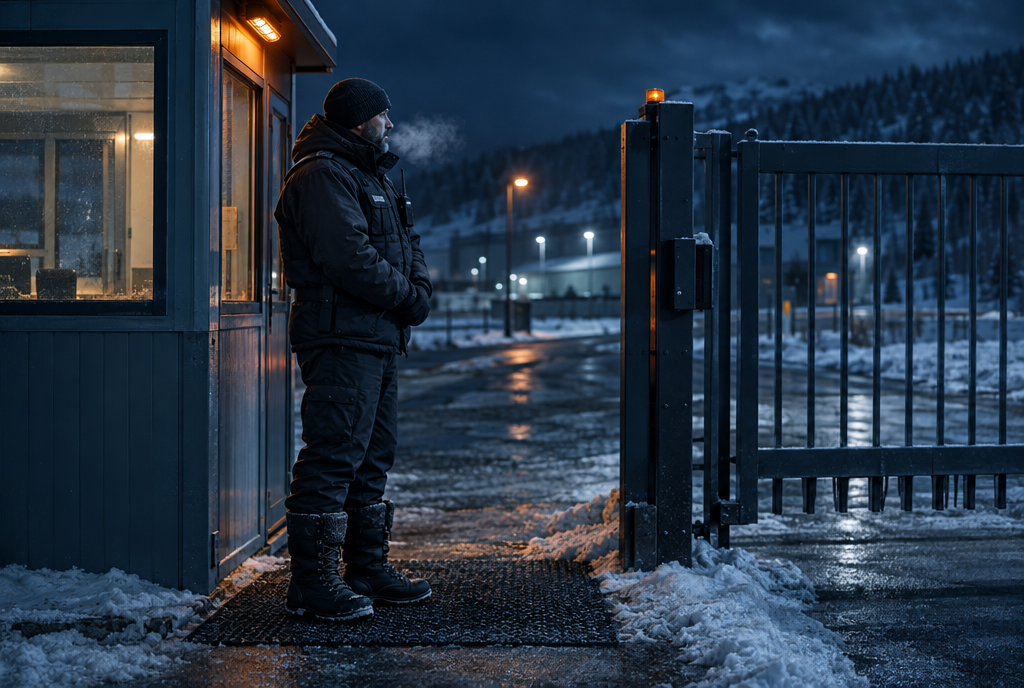
How to stay warm at a static post: security, checkpoints and traffic control
To stay warm standing outside all day, insulate yourself from the ground first with insulated boots and a mat, then block the wind with shelter or a windproof layer. Wear adjustable layers that fit under your uniform and duty gear, add a heat source if your post allows it, take scheduled warm-up breaks, and eat and drink warm, non-alcoholic fluids through the shift.

Buying thermal gear for a team: an employer's bulk purchasing guide
To buy cold weather gear for employees in bulk, start with a needs assessment by job, not a single catalog order. Run a sizing session and a short wear trial, send suppliers a written spec sheet, then negotiate minimum order quantities, warranty, returns and replacement terms. Plan laundering and, for battery-heated items, a controlled charging area before the first box arrives.

Military cold-weather layering principles for any cold job
Military cold-weather layering rests on one idea: stay warm without getting wet. The Army's COLD rule says keep clothing clean, avoid overheating, wear it loose and in layers, and keep it dry. In practice that means a wicking base, removable insulation, a wind or waterproof shell, and a heavy insulated layer added only when you stop moving.
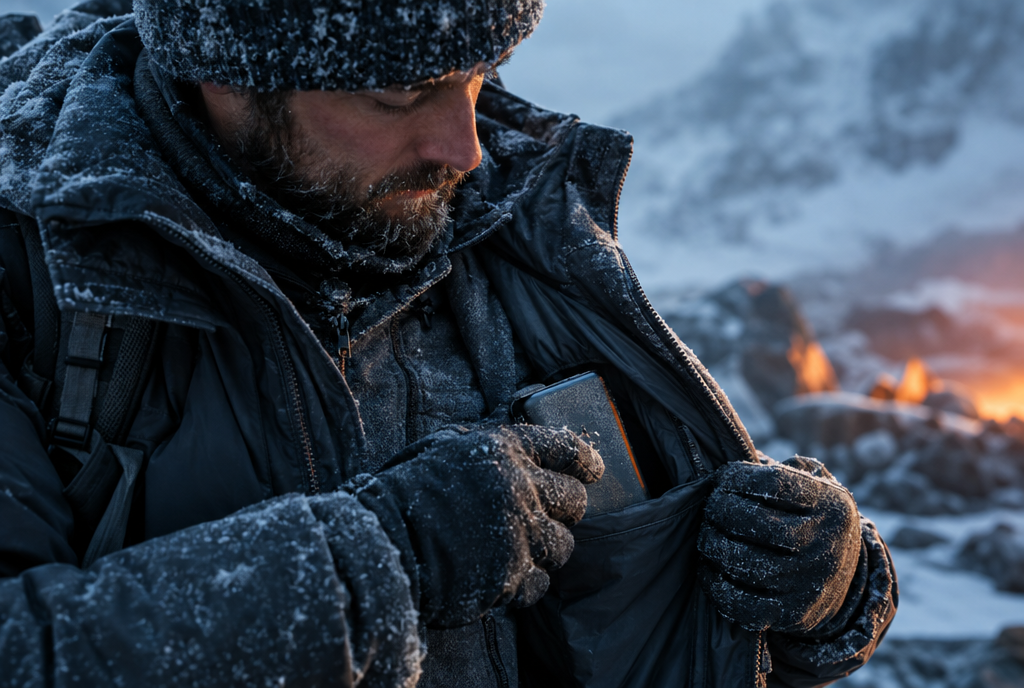
How cold affects batteries in wearables and field gear
Cold slows the chemistry inside a battery, so it delivers less capacity and power until it warms up. Battery University reports that a battery giving full capacity at 27 °C typically gives about half at minus 18 °C. The loss is mostly temporary, but charging lithium-ion cells below freezing can cause permanent damage through lithium plating.
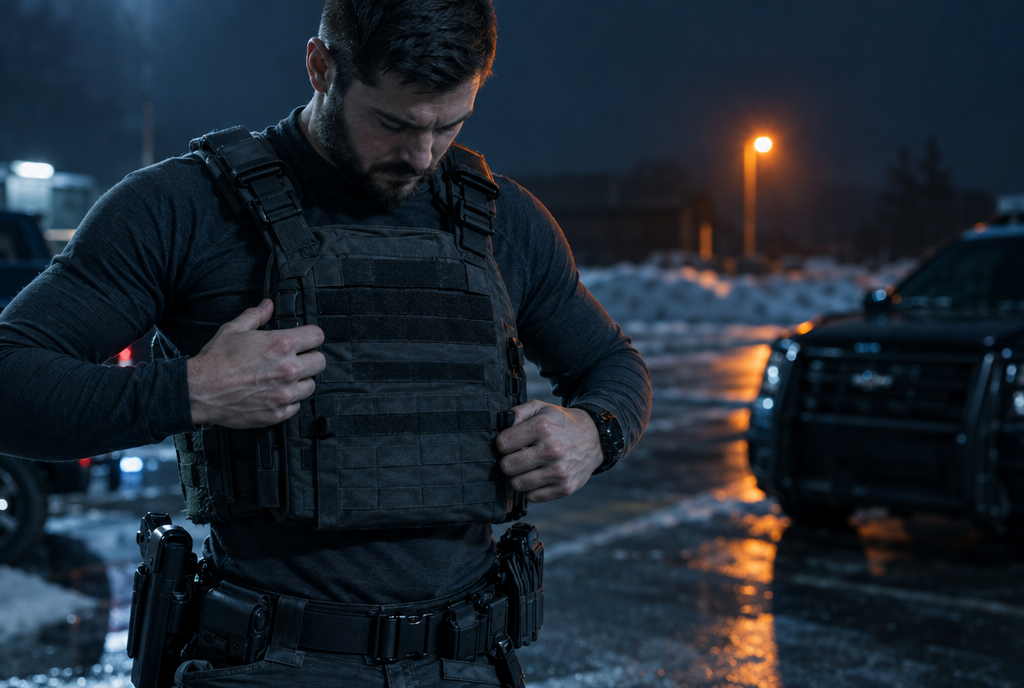
Staying warm under body armor and duty gear
Staying warm under body armor is mostly about managing sweat. A carrier blocks ventilation and presses on anything worn beneath it, so the usual approach is a thin, moisture-managing base layer under the armor, insulation added over the kit when you stop moving, and, where policy allows, low-profile heat sources placed so nothing hot is pressed against bare skin.
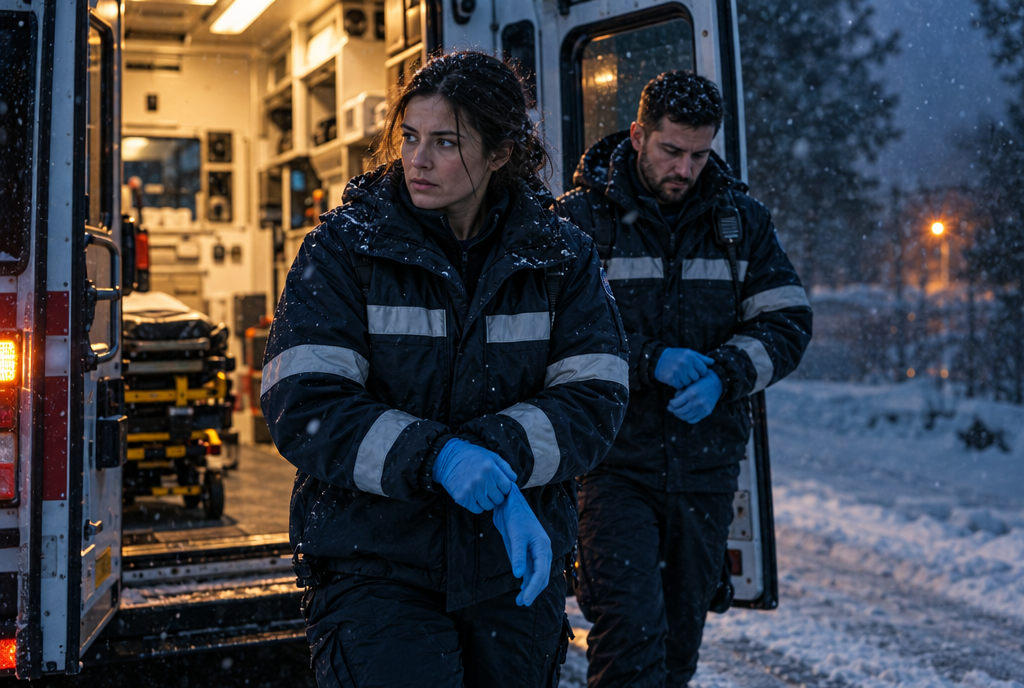
Cold-weather gear for EMS crews: what to buy for winter calls
EMS crews stay warmest with a system built for constant transitions: a wicking base layer, a light insulating mid layer that comes off easily in the heated rig, a fluid-resistant outer shell that can be cleaned or laundered after contamination, sturdy insulated boots, and a glove system that separates exam gloves for patient care from insulated gloves for scene work.
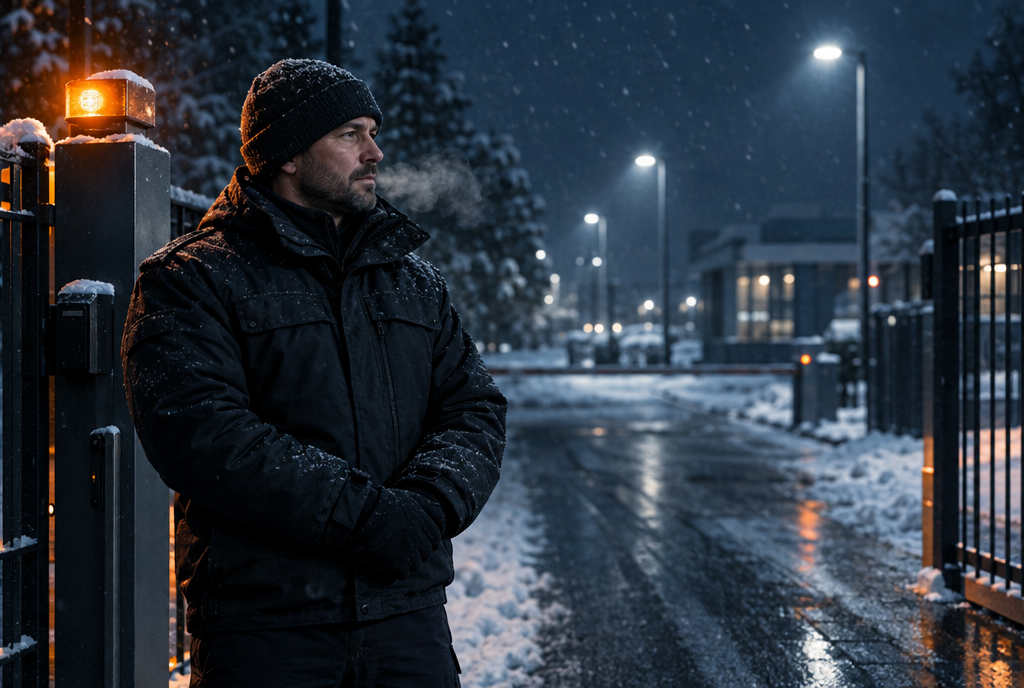
Cold-weather gear for police and security officers: a buyer's guide
For winter duty, buy in this order: a thin wicking base layer that fits under armor, a low-bulk insulated vest or fleece that fits under the duty jacket, insulated waterproof boots with wool socks, and two weights of gloves you have trained in. Add heated or warmer-pocket gear for long static posts, and confirm everything with your department's uniform policy.
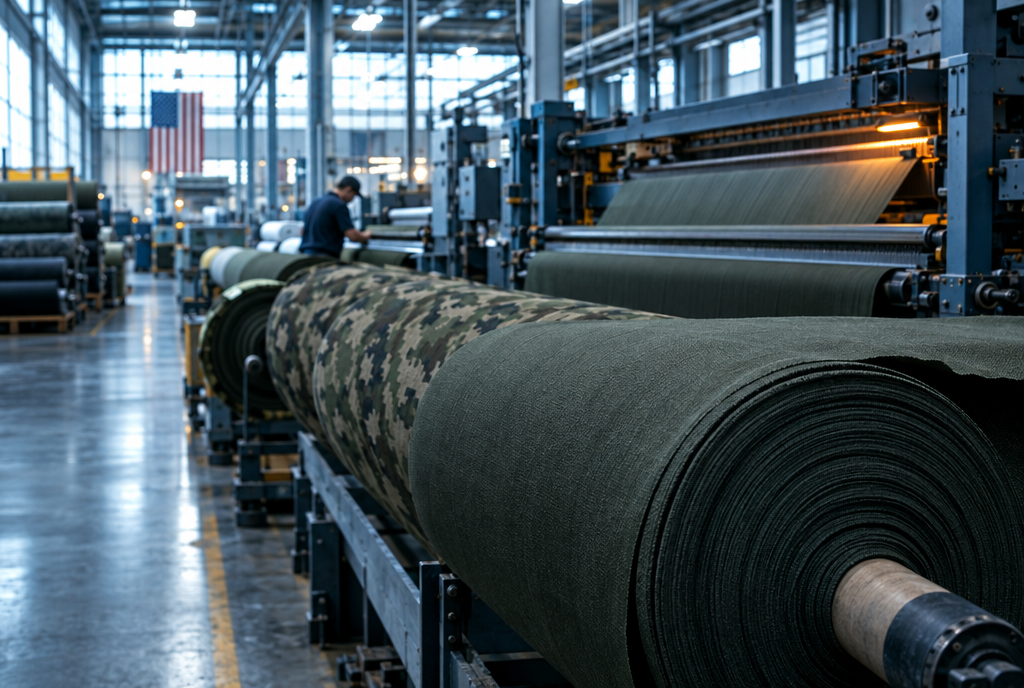
The Berry Amendment and military textiles, explained
The Berry Amendment is a US law that bars the Department of Defense from spending its funds on clothing, textiles, food and certain other items unless they are grown, reprocessed, reused or produced in the United States. For textiles, the requirement reaches back through fabric to fibers and yarns. It is codified at 10 U.S.C. 4862 (formerly 2533a) and implemented through DFARS 252.225-7012.
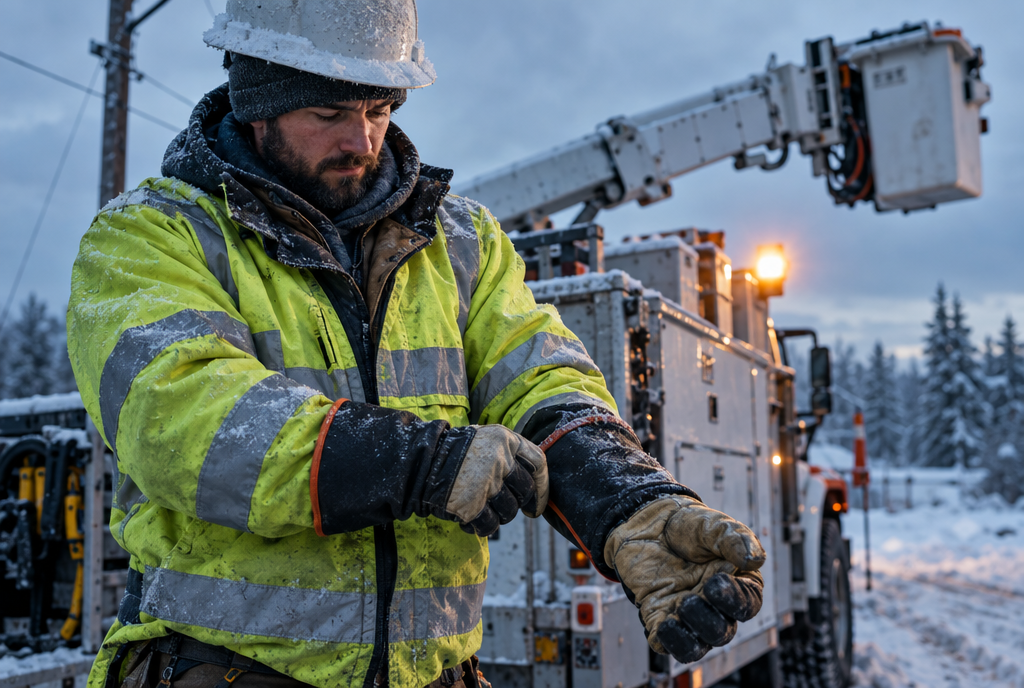
Winter gear for construction and utility crews: what to buy
Buy winter work gear around the rules your outer layer must meet. Hi-vis stays outermost wherever traffic or equipment is present. Where arc flash is a hazard, every layer must be non-melting and the outer layer arc-rated. Within those limits, choose thin core warmth that fits under a harness, gloves matched to each task, and batteries you can charge somewhere warm.
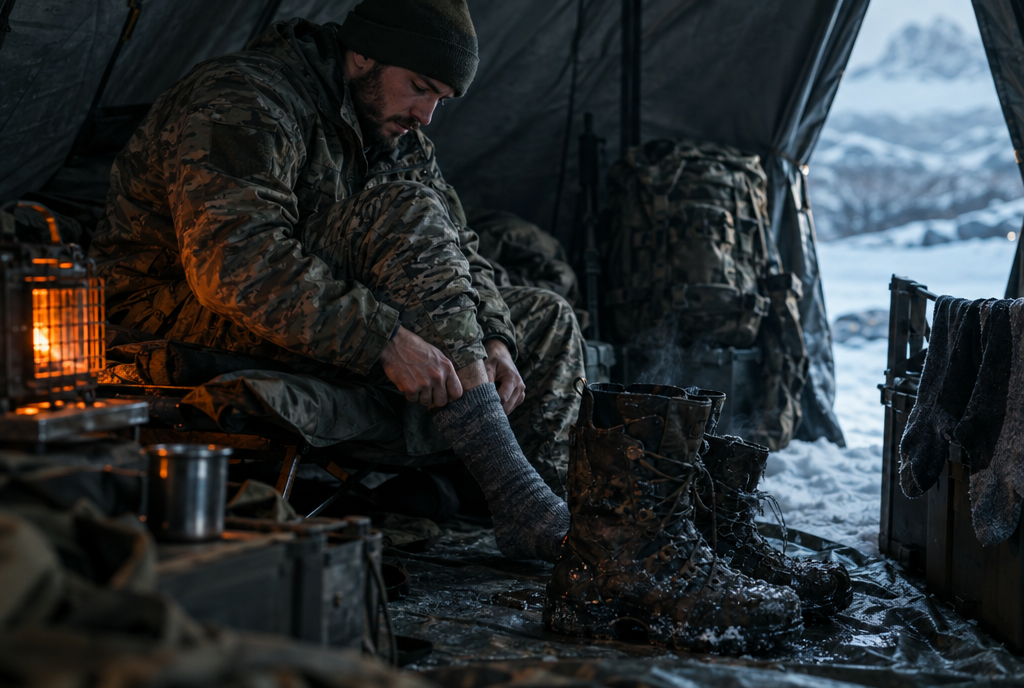
Non-freezing cold injury: the quiet threat to troops and workers
Non-freezing cold injury (NFCI) is damage to nerves, blood vessels and tissue, usually in the feet, caused by hours of cold, wet exposure above freezing. Trench foot and immersion foot are the classic forms. The Army describes risk at air temperatures of 32 to 55 °F, and the CDC notes trench foot can occur up to 60 °F if feet stay wet.
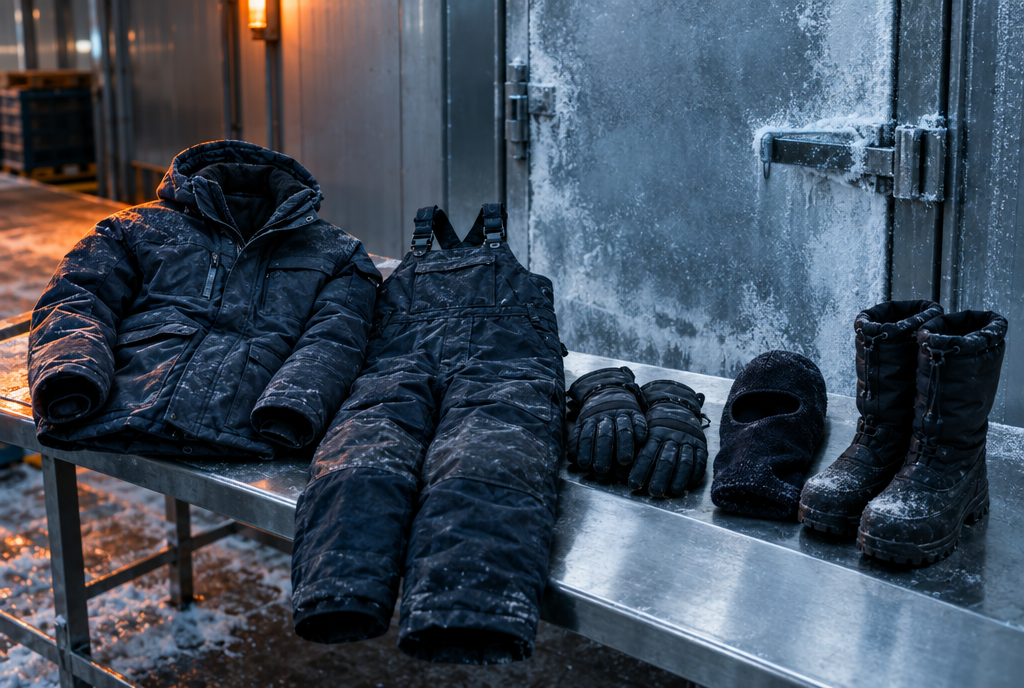
Cold storage PPE: what freezer and cooler workers need, zone by zone
Cold storage PPE depends on the zone and the time spent inside. Coolers near 32 °F (0 °C) usually need warm layers, dexterity gloves and insulated footwear. Freezers need an insulated suit or jacket and bib, liner plus insulated gloves or mittens, insulated boots and a head cover. Blast freezers, down to about -22 °F (-30 °C), also need strict warm-up breaks.
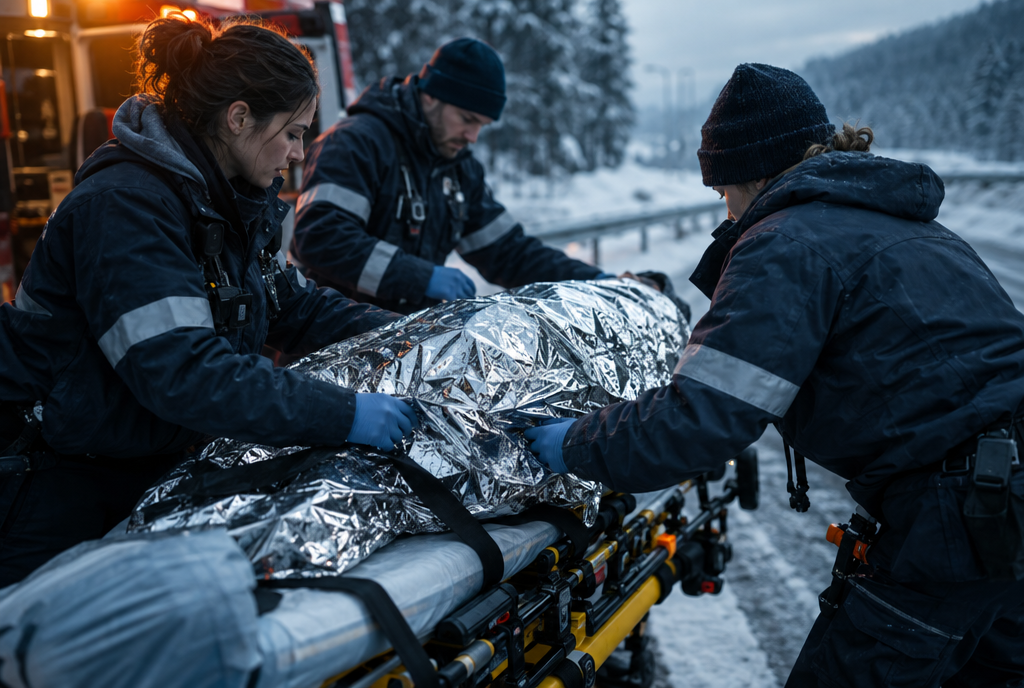
Prehospital hypothermia prevention: blankets, wraps and active warmers
Prehospital hypothermia prevention works in layers: get the patient off cold ground, remove wet clothing, block wind and moisture, add insulation, then add external heat to the torso without direct skin contact. Heat-reflective wraps and vapor barriers limit loss; insulated wraps trap still air; chemical and battery warmers add heat. Military guidance rates simple space blankets as the least effective option on their own.