
Hot flashes and personal cooling: what helps
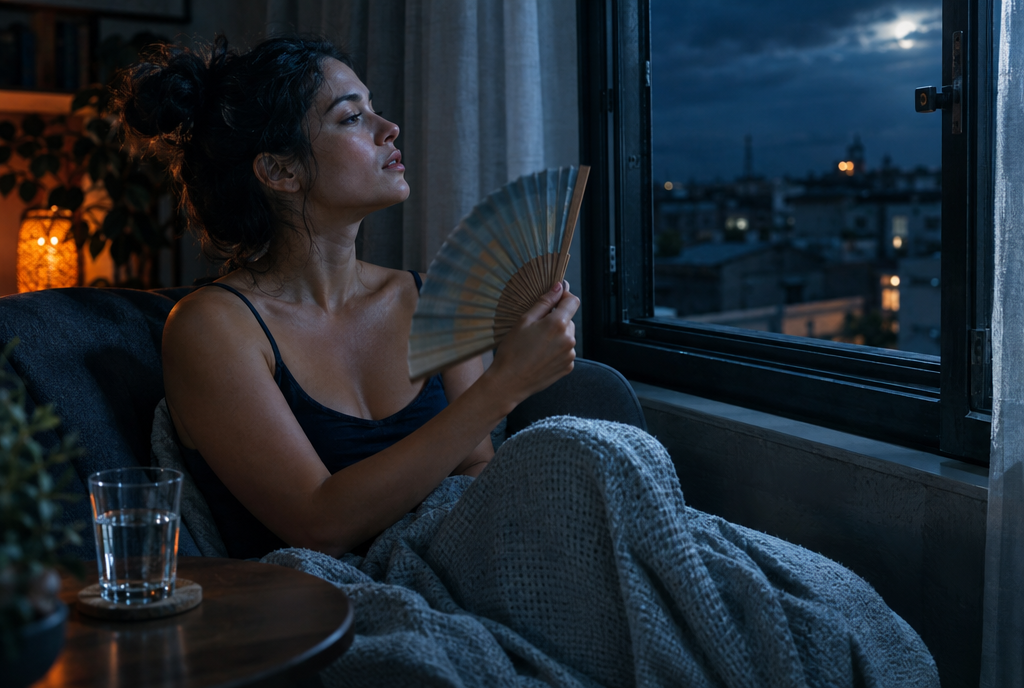
Hot flashes happen when falling estrogen makes the brain's temperature control more sensitive, triggering sudden flushing and sweating. Fans, layers, a cool bedroom and wearable cooling can make episodes more comfortable. The evidence is clear on one point, though: The Menopause Society does not recommend cooling techniques as a treatment for hot flashes, and effective treatments exist, so bothersome symptoms deserve a clinician's input.
Why does menopause make you hot?
Mayo Clinic describes a hot flash as a sudden feeling of warmth in the upper body, most often the face, neck and chest. When estrogen levels drop, the hypothalamus, the body's internal thermostat, becomes more responsive to slight changes in body temperature. It reacts as if the body were overheating, widening skin blood vessels and starting sweat to dump heat.
A single episode typically lasts 1 to 5 minutes. When hot flashes happen during sleep they are called night sweats, and they can disturb sleep. Some people notice chills afterward, as flushing and damp skin keep shedding heat after the flash has passed.
How common are hot flashes, and how long do they last?
Hot flashes and night sweats, together called vasomotor symptoms, are the hallmark symptoms of the menopause transition. The Study of Women's Health Across the Nation (SWAN), reported in JAMA Internal Medicine in 2015, notes that up to 80% of women experience them during the transition.
Among 1,449 SWAN participants with frequent symptoms, the median total duration was 7.4 years, and symptoms persisted a median of 4.5 years after the final menstrual period. Duration varied widely between groups. Mayo Clinic similarly notes that hot flashes last more than seven years on average, and longer for some people.
Does cooling help hot flashes?
Cooling can make the experience more tolerable, but it has not been shown to reduce how often or how intensely hot flashes occur. In its 2023 position statement on nonhormone therapy, The Menopause Society listed cooling techniques and avoiding triggers among approaches it does not recommend for treating vasomotor symptoms.
The same statement recommended several options with stronger evidence, including cognitive behavioral therapy, clinical hypnosis, weight loss, certain antidepressants (SSRIs and SNRIs), gabapentin, oxybutynin, stellate ganglion block and fezolinetant. Hormone therapy is another option discussed with clinicians. Which, if any, is appropriate is an individual decision to make with a clinician.
So the honest framing is this: cooling is a comfort measure. It can help you feel better in the moment, while treatment decisions belong in a conversation with a clinician.
What cooling options support comfort?
Because a flash lasts minutes, fast-acting and easy-to-reach options tend to be most practical. Mayo Clinic suggests dressing in layers and using a fan, open window or air conditioning.
| Option | Best for | Notes |
|---|---|---|
| Layers you can shed | Daytime flashes at work or out | Breathable base layer, easy-off outer layer |
| Desk or handheld fan | Quick comfort when skin feels warm and damp | Moves air across damp skin to speed evaporation |
| Cool bedroom and breathable bedding | Night sweats | Lower thermostat, fan, moisture-wicking sleepwear |
| Cold water or a cool cloth | Immediate comfort | Cool the face, neck or wrists |
| Cooling neck wrap or phase-change pack | Hot rooms, commutes, long warm days | Gentle, steady cooling; not a treatment |
| Wrist-worn cooling devices | Discreet use | Create a cooling sensation; comfort only |
Is a cooling vest useful for hot flashes?
Cooling vests are designed for sustained heat loads, like working outdoors in summer. Hot flashes are brief, so a full vest is rarely necessary. Where a vest or phase-change pack can help is on days when the environment is also hot, such as a warm workplace, a summer commute or travel, when keeping baseline body temperature lower may make flashes feel less overwhelming.
Light, breathable options that can be put on and taken off easily tend to suit this use best. Clothing matters too: loose, moisture-wicking fabrics let sweat evaporate quickly, while tight or heavy layers trap heat and dampness against the skin after a flash. Choosing a top layer you can remove in seconds is often the simplest cooling tool of all.
Why are hot flashes worse at night?
Bedding, sleepwear and a warm room hold heat close to the body, so a flash at night can leave you soaked and awake. Keep the bedroom cool, use a fan, choose breathable sheets and moisture-wicking sleepwear, and keep water by the bed. Mayo Clinic also notes that hot and spicy foods, caffeine and alcohol can set off hot flashes for some people, though avoiding triggers is not a proven treatment.
This page is educational. Talk to a clinician if hot flashes affect your daily activities or sleep, or if you have other symptoms that concern you, since effective treatments are available.
Key takeaways
Hot flashes arise from a more sensitive brain thermostat as estrogen falls; each lasts about 1 to 5 minutes.
Up to 80% of women experience them, and frequent symptoms last a median of 7.4 years in SWAN data.
The Menopause Society does not recommend cooling techniques as a treatment; cooling is a comfort measure.
Fans, layers, a cool bedroom and quick-access cooling support comfort day and night.
Talk to a clinician about bothersome symptoms; several evidence-based treatments exist.
Frequently asked questions
Do cooling devices stop hot flashes?
No evidence shows they stop or reduce hot flashes. They can make episodes more comfortable. The Menopause Society lists cooling techniques among approaches it does not recommend as a treatment.
Can you get cold flashes during menopause?
Some people feel chilled or shivery, often after a hot flash as sweat and flushed skin keep shedding heat. Discuss unusual or persistent chills with a clinician, since other conditions can cause them.
What is the best way to stay cool at night during menopause?
Keep the bedroom cool, use a fan, choose breathable bedding and moisture-wicking sleepwear, and keep cold water nearby. If night sweats disrupt sleep regularly, talk to a clinician about treatment.
How long do hot flashes last?
Each episode usually lasts 1 to 5 minutes. Over time, frequent hot flashes lasted a median of 7.4 years in the SWAN study, and Mayo Clinic notes they last more than seven years on average.
Is a cooling vest good for menopause?
It can support comfort on hot days or in warm workplaces, but it is more than most people need for brief flashes. Lighter options such as fans, layers or a neck wrap are often more practical.
From HEATJAC
We design low-profile thermal garments, including a thermal harness with pockets that hold cold packs in summer and warmers in winter.
Choosing gear? One garment, two seasons: modular heating and cooling · The thermal gear buying, safety and care guide
Related reading
Sources
Hot flashes: Symptoms and causes, Mayo Clinic
Hot flashes: Diagnosis and treatment, Mayo Clinic
Duration of Menopausal Vasomotor Symptoms Over the Menopause Transition, JAMA Internal Medicine (via PubMed Central)
2023 Nonhormone Therapy Position Statement (press release), The Menopause Society (formerly The North American Menopause Society)
About HEATJAC. HEATJAC is a thermal architecture company founded by an anesthesiologist. We design patented garment systems that capture, conduct and broaden warmth across the body, and we publish this knowledge hub because the science of staying warm should be public. HEATJAC products are not medical devices and are not intended to diagnose, treat, cure or prevent any disease.