
Cooling vests and heat sensitivity in multiple sclerosis
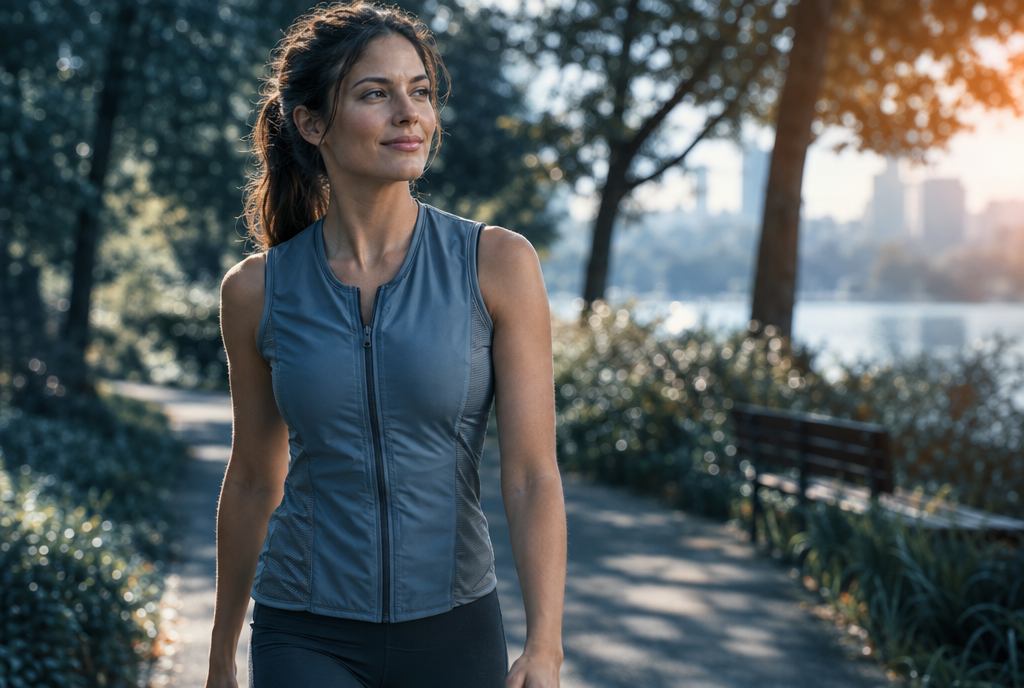
Many people with multiple sclerosis find that heat temporarily worsens their symptoms, a response called Uhthoff's phenomenon. Cooling vests help keep body temperature down and support comfort in hot weather and during exercise. A 2023 review of 13 studies found cooling garments improved walking and mobility in people with MS. Cooling supports comfort; it is not a treatment for MS itself.
Why does heat make MS symptoms worse?
MS damages myelin, the insulation around nerve fibers. Damaged nerves conduct signals less reliably, and a rise in body temperature can make that conduction worse for a while. Symptoms that appear or intensify with heat are known as Uhthoff's phenomenon, named after the eye specialist who described it in 1890.
Estimates of how common it is vary. The MS Trust puts it at around 6 in 10 people with MS, and the Multiple Sclerosis Association of America (MSAA) says as many as 80% experience heat sensitivity. The MSAA lists blurred vision, fatigue, weakness and incoordination as the symptoms most often reported.
Triggers include hot weather, exercise, fever, hot baths and warm rooms. Even a slight increase in core temperature can be enough.
Is heat sensitivity in MS dangerous?
Heat-related worsening is usually temporary. The MSAA describes it as a pseudoexacerbation with no permanent or long-term damage, and the MS Trust notes that symptoms should improve within a few hours of cooling down.
That distinction matters. If symptoms are new, last longer than expected or do not settle after you cool down, they may not be heat-related. Talk to your neurologist or MS team about any new or persistent symptoms rather than assuming heat is the cause.
Do cooling vests help with MS?
Research on cooling garments in MS has focused on comfort and physical function. A 2023 systematic review and meta-analysis in Multiple Sclerosis and Related Disorders pooled 13 studies with 384 participants. It found cooling garments improved walking capacity and functional mobility, lowered core and skin temperature, improved thermal sensation and reduced reported fatigue. Manual dexterity did not improve.
The review found no harms from the garments and could not identify one type as superior. The authors concluded that people with MS should experiment with different garments to find what they prefer.
A 2025 randomized crossover trial in the International Journal of MS Care tested precooling. Fifteen people wore an ice-pack vest for 30 minutes before a 6-minute walk test and walked significantly farther than without cooling, with the largest difference in the final minutes.
The evidence has limits. Most studies are small, use different garments and outcome measures, and look at effects during or shortly after a cooling session. They describe what cooling can do for comfort and function in the moment, not any long-term change in MS itself.
Which cooling vest type suits daily life with MS?
The studies in the 2023 review used liquid-perfused garments (50.0%) and phase-change vests (38.9%) most often. For everyday use, the right type depends on climate, activity and how easily you can recharge packs.
| Type | Good for | Watch for |
|---|---|---|
| Phase-change | Daily outings, commuting, humid heat | Runtime; carry spares for long days |
| Ice pack | Short, intense heat such as precooling before exercise | Can feel very cold; keep a fabric layer |
| Evaporative | Dry heat, light activity, low cost | Weak in humid air |
| Liquid circulating | Longer seated use, home exercise | Pump, weight and cost |
| Neck and wrist wraps | Small, discreet boost | Remove less heat than a vest |
How can you use cooling day to day?
Precool before exercise or a hot outing, since starting cooler gives more margin.
Wear a vest during errands, outdoor events or travel on hot days, and carry spare packs.
Combine the vest with other measures the MS Trust suggests: fans, air conditioning, shade, cool showers, cold drinks and loose, light-colored clothing.
Consider water-based exercise or shorter sessions in cool rooms.
Plan rest breaks in cool spaces, and know where air conditioning is available.
Carry spare packs in a small insulated bag so they stay cold until you need them.
What should you watch out for?
Some people with MS are sensitive to cold as well as heat. MSAA cites a survey in which 29% of respondents were sensitive to both. Very cold packs can be uncomfortable, and reduced sensation can make it harder to notice when skin is getting too cold, so keep a fabric layer between packs and skin and check your skin regularly.
Cost can be a barrier. MSAA runs a program that distributes free cooling vests and accessories to people with MS who qualify for assistance. The National MS Society also publishes guidance on managing heat and temperature sensitivity.
This page is educational. Talk to a clinician about symptoms, exercise plans and whether cooling is appropriate for you, especially if you have other conditions affecting circulation or sensation.
Key takeaways
Heat can temporarily worsen MS symptoms; this Uhthoff's phenomenon usually settles within hours of cooling.
A 2023 review of 13 studies found cooling garments improved walking and mobility and reported no harms.
No single cooling vest type has proven best, so choose based on climate, activity and recharge options.
Precooling before exercise is a practical, studied use.
New or lasting symptoms need a conversation with your MS team, not just more cooling.
Frequently asked questions
What is the best cooling vest for MS?
Research has not identified a single best type. Phase-change vests are popular for daily wear because they feel cool rather than icy and work in humid weather, while ice vests suit short precooling. Try options and choose based on your climate and routine.
Does a cooling vest treat MS?
No. Cooling helps manage body temperature and supports comfort and function in the heat, but it does not change the course of the disease. Disease treatment is a matter for your neurologist.
How long should someone with MS wear a cooling vest?
Studies have used periods such as 30 minutes of precooling before activity, and many people wear vests throughout hot outings. Comfort and skin checks should guide wear time; stop if the vest feels too cold or causes numbness or redness.
Is Uhthoff's phenomenon a relapse?
Usually not. Heat-related worsening is typically temporary and does not reflect new damage. Symptoms that are new or do not improve after cooling should be discussed with your MS team.
Can I get a free cooling vest for MS?
The Multiple Sclerosis Association of America runs a cooling program that distributes free cooling vests and accessories to people with MS who qualify. Check MSAA's current eligibility criteria.
From HEATJAC
We design low-profile thermal garments, including a thermal harness with pockets that hold cold packs in summer and warmers in winter.
Choosing gear? One garment, two seasons: modular heating and cooling · The thermal gear buying, safety and care guide
Related reading
Sources
The effect of cooling garments to improve physical function in people with multiple sclerosis: A systematic review and meta-analysis, Multiple Sclerosis and Related Disorders
Cooling Vests Improve 6-Minute Walk Test Performance in People With Multiple Sclerosis: A Randomized Crossover Trial, International Journal of MS Care
Heat Sensitivity, Multiple Sclerosis Association of America
Heat Sensitivity & Multiple Sclerosis, National MS Society
About HEATJAC. HEATJAC is a thermal architecture company founded by an anesthesiologist. We design patented garment systems that capture, conduct and broaden warmth across the body, and we publish this knowledge hub because the science of staying warm should be public. HEATJAC products are not medical devices and are not intended to diagnose, treat, cure or prevent any disease.