
One garment, two seasons: modular heating and cooling explained
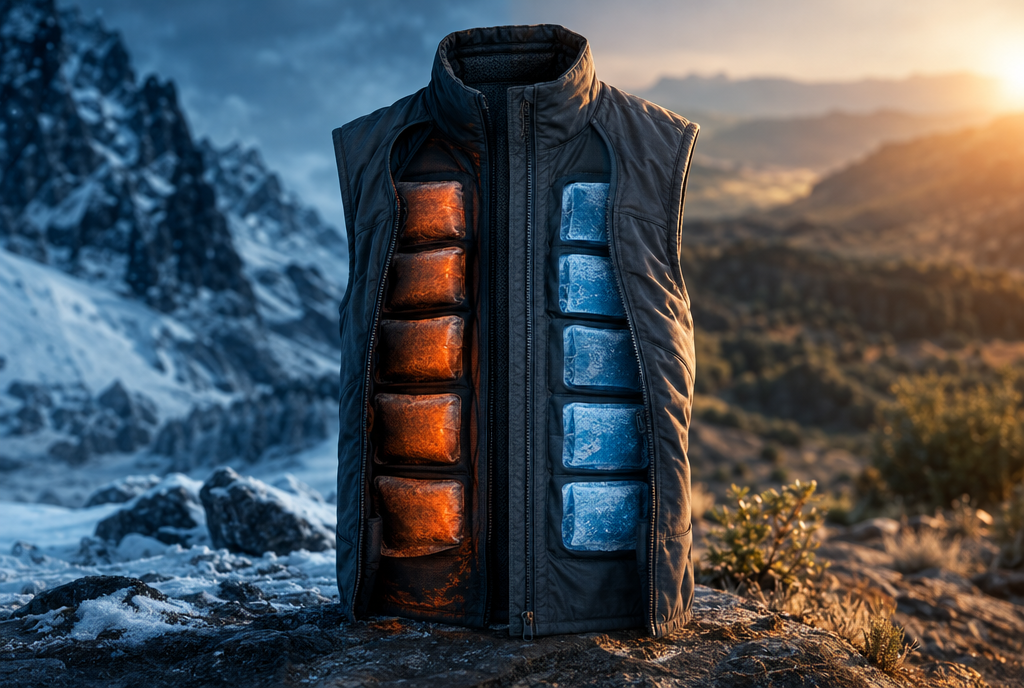
A modular heating and cooling garment is an insulated vest or harness with interior pockets that accept either warming inserts, such as air-activated warmers or battery heaters, or cooling inserts, such as ice or phase-change packs. Insulation slows heat flow in both directions, so the same shell can hold warmth in during winter and keep a cold pack's cooling directed at the body in summer.
What is a modular thermal garment?
Most thermal clothing does one job. A heated vest warms, a cooling vest cools, and each sits in a closet for half the year. A modular garment separates the shell from the source of heat or cold: the garment provides fit, insulation and pockets, and the inserts provide the thermal effect.
That approach suits people whose conditions change by season, by shift or even by room. A utility crew might face winter wind and summer heat; a nurse might be cold at a workstation and warm under a gown. Swapping inserts is simpler than owning and fitting two different garments.
How can one garment both heat and cool?
Insulation does not add heat or cold; it slows heat flow. In cold weather, an insulated layer slows the loss of body heat and of heat from a warming insert to the outside air. In hot weather, the same layer slows the flow of environmental heat toward a cold pack, so more of the pack's cooling capacity goes to the body instead of the surroundings.
Placement matters in both seasons. Pockets on the chest and back put inserts against the torso, where blood flow is high and heat exchange is efficient. This is the same zone that cooling vest research targets; one 2020 hybrid cooling vest design placed two packs on the chest, two on the abdomen and four on the back.
Some designs add a reflective lining. Reflective materials reflect radiant heat, which helps retain warmth in the cold. Heat moving by conduction through direct contact with an insert is not stopped by a reflective layer, so the insert still does most of the heating or cooling work.
Which inserts work in a modular garment?
| Insert | Effect | Typical use | Main consideration |
|---|---|---|---|
| Air-activated warmer | Warming by iron oxidation | Cold outdoor work, events, travel | Single use; follow skin-contact guidance |
| Battery heating insert | Adjustable electric warming | Long cold shifts | Charge and battery safety |
| Ice or gel pack | Strong cooling | Short, intense heat exposure | Can feel harsh; needs a freezer |
| Phase-change pack | Steady cooling at a set temperature | Humid heat, work under PPE | Runtime; recharge below melting point |
What does a modular heating and cooling vest look like?
HEATJAC CORE is one example of this architecture: a low-profile thermal harness whose pockets accept air-activated warmers, battery heating inserts or cold packs. The underlying design, insulated panels with interior pockets that hold warming or cooling elements, is covered by US patents 8,671,464 and 9,980,526. Similar principles appear in other pocketed cooling and heated garments on the market.
What are the trade-offs of modular garments?
The main risk in heat is insulation without cooling. A garment that holds heat in will also hold body heat in once cooling packs are spent. Research on phase-change vests under protective suits found that continuing to wear a depleted vest increased heat strain, and in that study packs lasted about 50 minutes at 40°C. In hot conditions, swap packs on schedule and remove the garment when cooling runs out.
Pocket size and insert fit also matter. Inserts that shift or fold lose contact with the torso and deliver less effect. Heating and cooling inserts differ in size and thickness, so check what a garment is designed to hold before buying inserts separately.
Finally, a single garment is a compromise. A dedicated liquid-cooled suit or a fully heated jacket can deliver more power in extreme conditions. Modular designs trade a little peak performance for versatility, low profile and year-round use.
How do you use heating and cooling inserts safely?
Keep a fabric layer between inserts and skin, especially frozen packs and hot warmers.
Check skin regularly and stop if you notice pain, numbness, redness or blistering.
Follow the insert manufacturer's instructions for placement, runtime and charging.
Do not use heating and cooling inserts at the same time in adjacent pockets; choose one mode for the conditions.
People with reduced sensation, circulation problems, diabetes or other health conditions should talk to a clinician before using heated or cooled wearables.
Who benefits most from a heating and cooling vest?
Those with the widest temperature swings: outdoor crews working year-round, workers who move between hot plant floors and cold storage, clinicians in operating rooms where roles differ in how hot or cold they feel, and travelers or outdoor users who want one low-profile layer. For extreme heat under heavy PPE, dedicated cooling systems and a full heat plan remain essential; OSHA places engineering controls, water, rest and shade ahead of any personal cooling.
Key takeaways
Modular garments separate the shell from the thermal source, so inserts change with the season.
Insulation slows heat flow both ways, keeping warmth in and directing cold-pack cooling at the body.
Torso pockets on the chest and back put inserts where heat exchange is efficient.
In heat, a garment with spent packs becomes insulation, so swap or remove it promptly.
Use one mode at a time, protect skin, and check with a clinician if you have circulation or sensation concerns.
Frequently asked questions
Can a heated vest be used as a cooling vest?
Only if it has pockets designed to hold cold packs in contact with the torso. A standard battery heated vest without cooling pockets cannot cool, and its insulation can trap heat in warm weather.
Does insulation make a cooling vest work better?
An outer insulating layer slows environmental heat reaching the cold packs, so more of their capacity goes to cooling you. Once the packs are spent, though, the same insulation holds body heat in, so remove or recharge promptly.
What cold packs fit in a thermal vest?
Flat ice, gel or phase-change packs sized to the pockets work best. Check the garment maker's recommended dimensions so packs lie flat against the torso without folding.
Is it safe to put hand warmers in vest pockets?
Air-activated warmers are widely used in clothing pockets. Keep them out of direct, prolonged contact with skin, follow the package directions, and take extra care if you have reduced sensation.
Can I use a heating and cooling vest in an operating room?
That depends on facility attire and infection-control policies, which vary. Check with your department before wearing any added layer or insert under scrubs or gowns.
From HEATJAC
We design low-profile thermal garments, including a thermal harness with pockets that hold cold packs in summer and warmers in winter.
Choosing gear? One garment, two seasons: modular heating and cooling · The thermal gear buying, safety and care guide
Related reading
Sources
Criteria for a Recommended Standard: Occupational Exposure to Heat and Hot Environments (DHHS/NIOSH Publication 2016-106), CDC, National Institute for Occupational Safety and Health
Experimental Study on the Efficacy of a Novel Personal Cooling Vest Incorporated with Phase Change Materials and Fans, Materials (via PubMed Central)
Optimizing the Use of Phase Change Material Vests Worn During Explosives Ordnance Disposal Operations in Hot Conditions, Frontiers in Physiology
Cooling vests with phase change materials: the effects of melting temperature on heat strain alleviation in an extremely hot environment, European Journal of Applied Physiology (via PubMed)
Heat: Protecting Workers (Controls), Occupational Safety and Health Administration
About HEATJAC. HEATJAC is a thermal architecture company founded by an anesthesiologist. We design patented garment systems that capture, conduct and broaden warmth across the body, and we publish this knowledge hub because the science of staying warm should be public. HEATJAC products are not medical devices and are not intended to diagnose, treat, cure or prevent any disease.