
Sterile processing temperature rules and how SPD teams stay comfortable
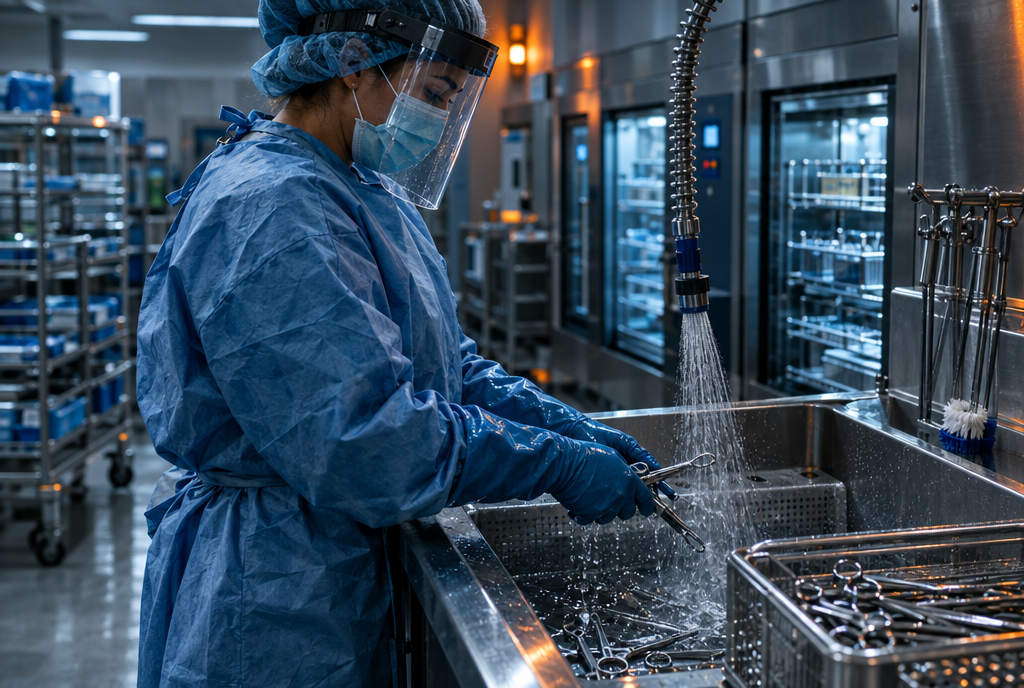
Sterile processing departments set temperature by area. Under ASHRAE Standard 170 (2013 edition as amended by Addendum h), decontamination rooms are designed for 60°F to 73°F, clean workrooms for 68°F to 73°F with humidity at or below 60%, and sterile storage for a maximum of 75°F and 60% humidity. Decontamination runs cool largely because technicians work in heavy, fluid-resistant PPE that traps body heat.
What are the sterile processing department temperature requirements?
Two documents shape the numbers. ASHRAE/ASHE Standard 170 governs how health care spaces are designed and ventilated, while AAMI ST79 guides how sterile processing is carried out. Since its 2017 revision, ST79 no longer lists its own fixed temperature and humidity values; it directs facilities to work with their engineering departments and follow the ASHRAE 170 edition in force when the department was built or last renovated.
In 2015, representatives of ASHRAE, AAMI, FGI, AORN, ASHE and APIC met to resolve conflicts between the two documents. The result, Addendum h to ASHRAE 170-2013, lowered the older 72°F to 78°F design range for the sterile processing department and set separate values for each area. Later editions and state codes can differ, so confirm which version applies to your building.
| Area | Typical temperature range | Why | Comfort issue |
|---|---|---|---|
| Decontamination (soiled) room | 60°F to 73°F (16°C to 23°C); humidity not specified | Offsets heat from staff in fluid-resistant PPE, hot water and washer-disinfectors | Staff often feel hot and sweaty under gowns and face shields |
| Prep and pack (clean workroom) | 68°F to 73°F (20°C to 23°C); humidity 60% or less | Supports inspection and packaging work in clean attire | Seated, detailed work can feel cool over a long shift |
| Sterile storage | Maximum 75°F (24°C); humidity 60% or less | Protects the integrity of wrapped and packaged items | Low activity and cool air make brief tasks feel cold |
Why is the decontamination room kept cool?
Decontamination is where used instruments arrive soiled and are cleaned by hand and machine. Staff wear a head cover, mask, face shield, fluid-resistant gown, gloves and shoe covers. Impervious gowns made of plastic or heavy fluid-resistant fabric hold body heat against the skin, and the work itself is physical: lifting trays, scrubbing, rinsing and loading equipment.
Hot water, steam and washer-disinfectors add heat and moisture to the room. A cool air temperature is the main tool for keeping technicians in full PPE workable. Even so, many feel hot under their protective layers, because the air cannot reach the skin through a gown designed to block fluid.
Why do prep and pack and sterile storage have their own ranges?
The clean workroom is where instruments are inspected, assembled and packaged. Staff wear clean attire rather than full decontamination PPE, and the tasks are often seated and precise. The narrower 68°F to 73°F range with a humidity ceiling reflects that mix of human work and packaging materials.
Sterile storage protects finished packages until use. The 75°F and 60% humidity ceilings exist so that packaging is not exposed to heat or moisture that could compromise it. Manufacturers of sterile packaging also publish their own storage conditions in their instructions for use, and those can matter as much as the building standard.
Why do SPD teams feel hot and cold on the same shift?
The comfort conflict comes from how technicians rotate. A technician may spend an hour sweating in a gown in decontamination, then move to prep and pack in damp scrubs, then walk into sterile storage to pull case carts. Each room may be within its design range, yet the person moving between them experiences a hot, then cool, then colder day.
Damp clothing makes the cool rooms feel colder, since moisture carries heat away from the skin. People who run warm and people who run cold share the same thermostat, so no single setting suits everyone.
How can SPD teams stay comfortable within policy?
AAMI's guidance on decontamination discomfort includes cooling vests or collars and staying well hydrated. Laboratory evidence supports cooling under PPE: in a 2026 study in the Scandinavian Journal of Work, Environment and Health, 12 participants doing simulated health care work in PPE in a hot chamber (32°C, 70% humidity) finished with a mean core temperature of 37.5°C with a cooling vest versus 38.4°C without one. That chamber was hotter than an SPD, so treat it as evidence for the principle rather than a prediction for your room.
CDC's NIOSH recommends shortening work periods and increasing rest when protective clothing is worn, and letting workers take rest and water breaks when they feel heat discomfort. For moderate activity lasting under two hours, NIOSH suggests about one cup of water every 15 to 20 minutes.
Rotate technicians between decontamination and clean areas on a planned schedule rather than long unbroken stretches in PPE.
Allow cooling garments under PPE in decontamination where infection prevention approves them, and keep them clean and dedicated to the area.
Keep water accessible outside the decontamination room and build hydration into breaks.
Change damp scrubs before moving to prep and pack or storage.
In cooler clean areas, use clean, facility-approved warm layers where attire policy allows, and ask infection prevention before adding anything new.
What should leaders and facility teams monitor?
Temperature and humidity logs show whether each area stays within its design range. When technicians report discomfort, check the logs, airflow and equipment heat load before adjusting a setpoint, since changing one room can affect pressure relationships with its neighbors.
Staff who feel dizzy, unusually fatigued or unwell while working in PPE should stop, cool down and tell a supervisor. Anyone with recurring symptoms should talk to a clinician.
Key takeaways
AAMI ST79 now defers to the ASHRAE 170 edition that applied when the department was built or renovated.
Under ASHRAE 170-2013 Addendum h, decontamination is 60°F to 73°F, prep and pack is 68°F to 73°F, and sterile storage is at most 75°F with humidity at or below 60%.
Decontamination runs cool because fluid-resistant PPE traps heat, and it can still feel hot.
Rotation, hydration, approved cooling under PPE and dry, policy-compliant layers in cooler areas address both sides of the comfort conflict.
Frequently asked questions
What temperature should a decontamination room be?
ASHRAE 170-2013, as amended by Addendum h, sets a design range of 60°F to 73°F (16°C to 23°C) for the decontamination room, with no humidity requirement. Earlier AAMI guidance recommended 60°F to 65°F. Confirm which edition applies to your facility.
What are the temperature and humidity requirements for sterile storage?
ASHRAE 170-2013 with Addendum h sets sterile storage at a maximum of 75°F (24°C) with relative humidity at or below 60%. Packaging manufacturers also publish storage conditions in their instructions for use.
Does AAMI ST79 still specify temperatures?
No. Since the 2017 revision, ST79 directs facilities to set policies with their engineering departments based on the ASHRAE 170 edition in force when the department was built or last renovated.
Can SPD technicians wear cooling vests under PPE?
AAMI's guidance on decontamination discomfort mentions cooling vests or collars and hydration as options. Check with infection prevention on which garments are approved and how they must be cleaned.
Why is sterile processing so hot even when the room is cool?
Fluid-resistant gowns and face shields block the airflow that would normally carry heat away from the body, and decontamination work is physical. The room air can be cool while the space under the gown is warm and humid.
What is the temperature and humidity requirement for sterile processing?
It depends on the area. Under ASHRAE 170-2013 as amended by Addendum h, which AAMI ST79 now defers to, decontamination is designed for 60 °F to 73 °F (16 °C to 23 °C) with no humidity requirement, the clean workroom for 68 °F to 73 °F (20 °C to 23 °C) at 60% humidity or less, and sterile storage for a maximum of 75 °F (24 °C) at 60% or less. Confirm which edition applies to your building.
What is the maximum temperature permitted in the sterile storage area?
75 °F (24 °C). ASHRAE 170-2013 with Addendum h sets that maximum, and the CDC disinfection and sterilization guideline likewise says sterile storage temperature may be as high as 75 °F. Packaging manufacturers may set their own storage limits in their instructions for use.
What is the maximum humidity for storage of sterile supplies?
ASHRAE 170-2013 with Addendum h sets sterile storage at 60% relative humidity or less. The older CDC guideline, written in 2008, allowed up to 70% in sterile storage and recommended 30 to 60% in other central processing work areas. Facilities follow the edition adopted for their building, so check with your engineering team.
What temperature should the prep and pack area be?
Under ASHRAE 170-2013 with Addendum h, the clean workroom where instruments are inspected and packaged is designed for 68 °F to 73 °F (20 °C to 23 °C) with relative humidity at or below 60%. The CDC guideline recommends 30 to 60% humidity in central processing work areas other than sterile storage. Seated, detailed work can feel cool over a long shift, so approved warm layers help where attire policy allows.
From HEATJAC
We design low-profile thermal garments: a heat-reflective vest and a thermal harness with pockets for warmers or cold packs.
Choosing gear? What nurses and OR staff should look for in thermal gear · Getting a thermal vest approved for clinical areas
Related reading
Sources
Monitoring and Maintaining HVAC Parameters Within the Sterile Processing Department, Infection Control Today (Nancy Chobin), 2018
Sterile Processing Department Design and HVAC Considerations, Facility Guidelines Institute (Paula Wright and Byron Burlingame)
ANSI/ASHRAE/ASHE Addendum h to ANSI/ASHRAE/ASHE Standard 170-2013, ASHRAE
Heat Stress: Recommendations, CDC, National Institute for Occupational Safety and Health
Novel cooling vest with personal protective equipment alleviates heat strain without increasing metabolic cost, Scandinavian Journal of Work, Environment and Health, 2026
Sterilizing Practices: Guideline for Disinfection and Sterilization in Healthcare Facilities (2008), Centers for Disease Control and Prevention
About HEATJAC. HEATJAC is a thermal architecture company founded by an anesthesiologist. We design patented garment systems that capture, conduct and broaden warmth across the body, and we publish this knowledge hub because the science of staying warm should be public. HEATJAC products are not medical devices and are not intended to diagnose, treat, cure or prevent any disease.