
Preventing heat stress at work: guidance for employers
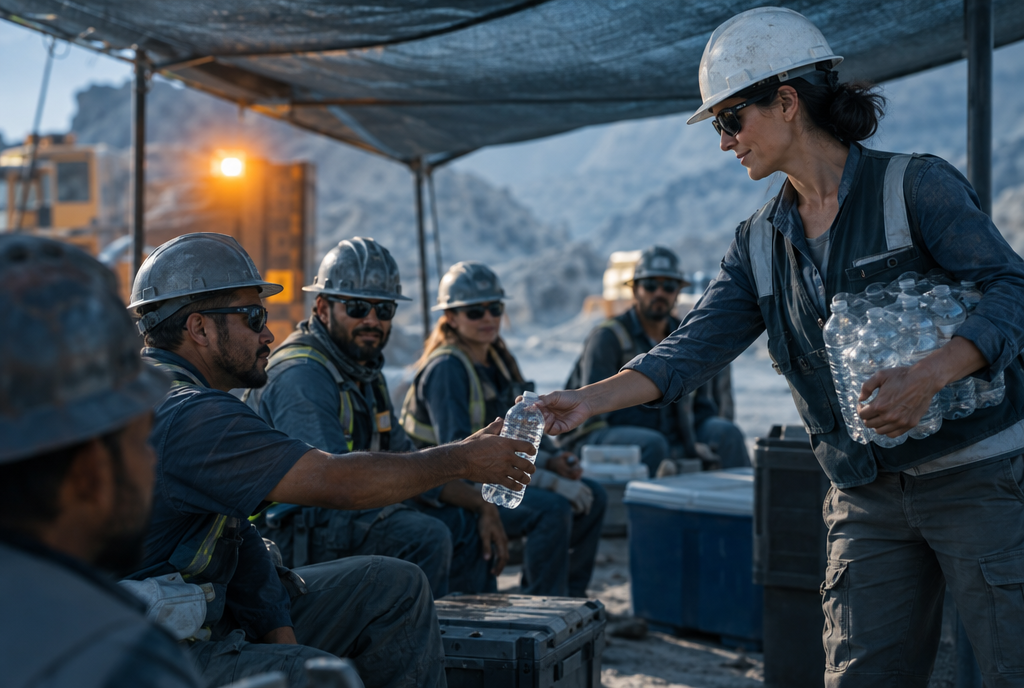
Employers prevent heat stress with a written plan built on water, rest, shade, gradual acclimatization, training and a ready emergency response, backed by engineering controls such as ventilation and shade. As of September 2026, OSHA's proposed federal heat rule is not final, but employers remain responsible for heat hazards under the General Duty Clause and a revised National Emphasis Program.
Is there an OSHA heat standard in 2026?
Not a final federal one. OSHA published its proposed rule, Heat Injury and Illness Prevention in Outdoor and Indoor Work Settings, on August 30, 2024. The comment period ended January 14, 2025, the informal public hearing ran from June 16 to July 2, 2025, and the post-hearing comment period closed on October 30, 2025. OSHA's rulemaking page lists no final rule.
Enforcement continues regardless. OSHA cites heat hazards under Section 5(a)(1) of the OSH Act, the General Duty Clause, which requires workplaces free from recognized hazards likely to cause death or serious physical harm. On April 10, 2026, OSHA issued a revised National Emphasis Program on outdoor and indoor heat-related hazards, directive CPL 03-00-024. According to a legal analysis, it narrows the targeted industries from about 78 to 55, drops numeric inspection goals, remains in effect for five years, and keeps programmed inspections on days when the National Weather Service issues heat warnings or advisories.
Some states have their own heat rules, which may go further. Check the requirements where you operate.
Step 1: How do you assess heat hazards?
Start by identifying where and when heat builds: outdoor tasks in sun, work near furnaces, ovens or engines, poorly ventilated buildings, and jobs requiring heavy or impermeable protective clothing. OSHA notes that some respirators, impermeable clothing and head coverings increase the risk of heat-related illness.
Track the forecast and on-site conditions, and set clear triggers for when extra precautions begin. Heavy work, direct sun and humidity all raise the risk at a given air temperature.
Step 2: Which engineering controls reduce heat?
Engineering controls change the environment rather than the worker, so they come first. NIOSH recommends increasing air velocity, using reflective or heat-absorbing shielding, and reducing steam leaks, wet floors and humidity. OSHA adds air-conditioned cabs and break rooms, ventilation, cooling fans, insulation of hot surfaces and misting fans.
Step 3: How should new workers acclimatize?
Acclimatization is the body's gradual adaptation to heat, and new or returning workers are most vulnerable before it happens. NIOSH recommends that new workers start with no more than 20% of a normal heat exposure on day 1 and increase by no more than 20% each day.
For experienced workers returning to hot work, NIOSH recommends no more than 50% exposure on day 1, 60% on day 2, 80% on day 3 and 100% on day 4. OSHA advises shorter shifts for new and unacclimatized workers, increasing gradually over the first 1 to 2 weeks.
Step 4: How much water, rest and shade do workers need?
OSHA frames prevention around water, rest and shade. NIOSH recommends 1 cup (8 oz.) of water every 15 to 20 minutes during moderate activity lasting under 2 hours, with fluid intake not exceeding 6 cups per hour, and cool water kept close to the work area. For longer work, electrolyte drinks help replace salt lost in sweat.
Schedule rest breaks in shaded or air-conditioned areas, move heavy tasks to cooler times of day, rotate demanding jobs and add workers to reduce each person's workload.
Step 5: What should heat training cover?
Signs and symptoms of heat illness and first aid, including when to call 911.
Personal risk factors and the importance of acclimatization.
The buddy system: coworkers watching each other for early signs.
Hydration, rest and how to report symptoms without penalty.
How to use cooling PPE and when packs need swapping.
Step 6: How do you prepare for heat emergencies?
Write down who calls 911, how to give responders directions to the site, and how to cool a worker fast. For suspected heat stroke, NIOSH advises calling 911, moving the person to shade, removing outer clothing and cooling rapidly with an ice bath, cold water or wet cloths. Keep ice, water and cooling supplies on hand on hot days.
Step 7: How do you keep the plan working?
Assign a named person to run the plan on hot days, check that water, shade and cooling supplies are in place, and adjust schedules when forecasts change. Review every heat-related incident or near miss, and ask crews what is and is not working. Revisit the plan before each warm season and whenever tasks, sites or protective equipment change.
Where do cooling vests fit in a heat plan?
OSHA lists cooling vests, reflective clothing and cooling neck wraps among personal protective options. They sit at the end of the hierarchy: useful for extending comfort and helping workers recover during breaks, especially under protective clothing, but not a substitute for engineering controls, acclimatization, water, rest and shade.
Give workers health information in plain language, and encourage anyone with symptoms or health concerns to talk to a clinician.
Key takeaways
OSHA's proposed heat rule is still not final as of September 2026, but the General Duty Clause and a revised National Emphasis Program apply.
Engineering controls come first: shade, ventilation, air conditioning and shielding.
Acclimatize new workers gradually, starting at no more than 20% exposure on day 1.
NIOSH recommends 1 cup of water every 15 to 20 minutes during moderate work.
Cooling vests supplement a heat plan; they do not replace it.
Frequently asked questions
Does OSHA require a heat illness prevention plan?
There is no final federal heat standard requiring one as of September 2026. However, OSHA can cite employers for heat hazards under the General Duty Clause, and a written plan is the clearest way to show hazards are recognized and controlled. State rules may add requirements.
What is OSHA's heat National Emphasis Program?
It is an enforcement directive that targets high-risk industries for heat inspections. OSHA issued a revised version, CPL 03-00-024, on April 10, 2026, replacing the 2022 program.
What is the NIOSH acclimatization schedule?
For new workers, no more than 20% of normal heat exposure on day 1 and no more than a 20% increase each day after. For experienced workers returning to heat, 50% on day 1, 60% on day 2, 80% on day 3 and 100% on day 4.
How much water should workers drink in the heat?
NIOSH recommends 1 cup (8 oz.) every 15 to 20 minutes during moderate work lasting under 2 hours, and no more than 6 cups per hour. Longer work calls for electrolyte replacement as well.
What should a heat stress toolbox talk cover?
Warning signs of heat exhaustion and heat stroke, when to call 911, hydration and rest rules, acclimatization for new workers, the buddy system, and how to use cooling PPE on site.
From HEATJAC
We design low-profile thermal garments, including a thermal harness with pockets that hold cold packs in summer and warmers in winter.
Choosing gear? One garment, two seasons: modular heating and cooling · The thermal gear buying, safety and care guide
Related reading
Sources
Heat Injury and Illness Prevention in Outdoor and Indoor Work Settings Rulemaking, Occupational Safety and Health Administration
Heat: Overview, Occupational Safety and Health Administration
OSHA Refines Heat Enforcement Strategy While Federal Heat Rule Remains Pending, Beveridge & Diamond
Heat: Protecting Workers (Controls), Occupational Safety and Health Administration
Heat Stress: Workplace Recommendations, CDC, National Institute for Occupational Safety and Health
Heat Stress: Acclimatization, CDC, National Institute for Occupational Safety and Health
About HEATJAC. HEATJAC is a thermal architecture company founded by an anesthesiologist. We design patented garment systems that capture, conduct and broaden warmth across the body, and we publish this knowledge hub because the science of staying warm should be public. HEATJAC products are not medical devices and are not intended to diagnose, treat, cure or prevent any disease.