
How to size a thermal vest to wear under scrubs, uniforms or body armor
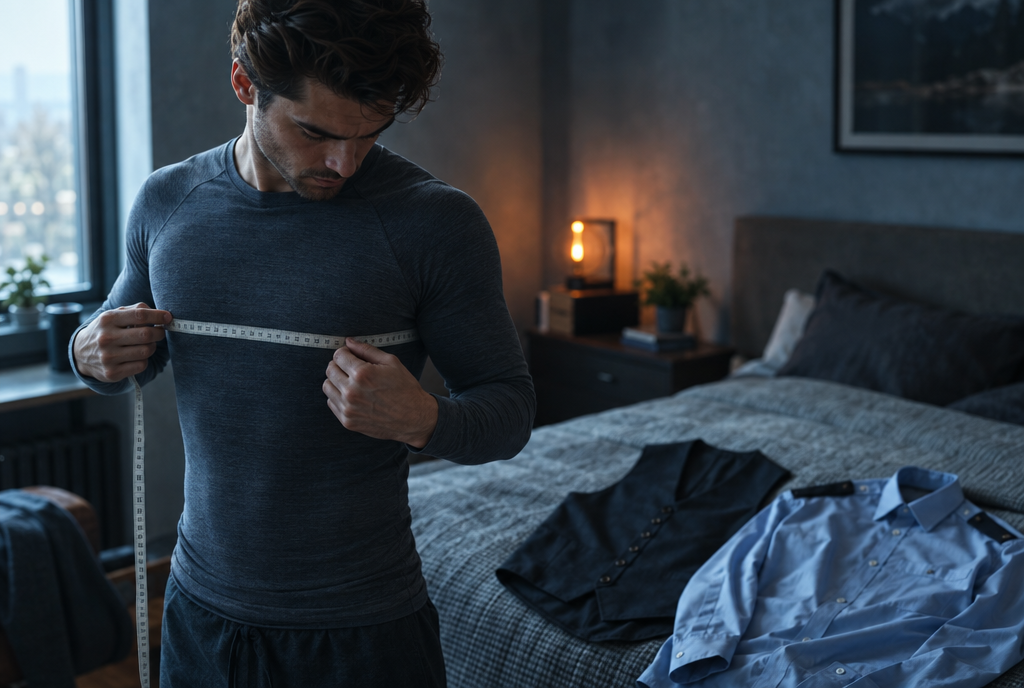
To size a thermal vest for wear under scrubs, a uniform or body armor, measure your chest at its fullest point over the base layer you will actually wear, then compare it with the maker's chart. Aim for close contact without compression, a length that stays tucked under the outer layer, and no added bulk that changes how scrubs or armor fit.
Why is sizing harder for a vest worn underneath?
A vest worn as a middle layer has two jobs that pull in opposite directions. It should sit close to your body, because heating panels and heat-reflective linings work best near the skin or base layer. It also has to disappear under something else: a scrub top, a uniform shirt or an armor carrier that was sized without it.
NIOSH advises wearing several layers of loose clothing for better insulation and warns that some clothing can restrict movement. Under a uniform, loose and close are both relative. The target is a vest that follows your torso without squeezing, leaving the outer layer to fit the way it did before.
How do you measure your chest for a vest?
Use a soft tape and measure over the base layer you plan to wear, not over bare skin or a heavy sweater. Keep the tape level around the fullest part of the chest, under the arms and across the shoulder blades, and breathe normally.
Chest is only the start. One heated apparel maker, ororo, asks for chest, waist, hip and shoulder measurements for sleeveless items, and advises choosing the larger size when measurements fall between two sizes. That rule suits an outer layer. For a vest worn underneath, check whether the larger size bunches under your outer layer before you commit.
Chest: at the fullest point, over your base layer
Waist: where a duty belt or scrub waistband sits
Torso length: from the base of the neck to the waist, so the hem stays covered
Shoulder width: so straps or armholes do not rub under a carrier
Your outer layer: lay your scrub top or uniform shirt flat and note its chest width
What fit rules apply under each outer layer?
Use the outer layer as the constraint. The table sets out what to aim for and what to check in each case.
| Worn under | Fit target | Check before keeping it |
|---|---|---|
| Scrub top | Slim, fully covered at neckline, armholes and hem | Reach overhead and bend; nothing shows |
| Uniform shirt | Flat front, no bulk at buttons | Shirt closes without pulling |
| Soft armor carrier | Thin, smooth, no seams at panel edges | Armor sits in its fitted position |
| Plate carrier | Thinnest layer possible under plates | No hot spots or pressure points |
| Winter coat | Close to body, room for a base layer | Coat zips and arms move freely |
How should a vest fit under scrubs?
Coverage matters as much as comfort. AORN says an interdisciplinary team at each facility should decide which fabrics may be worn under surgical attire and how much may extend beyond it, so a vest that peeks out at the V-neck or hem can turn an acceptable layer into a policy problem.
Try the vest under your usual scrub size and reach forward as if across a table. If the hem rides out or the armholes gap, try a shorter cut or a smaller size rather than a larger scrub top. If your unit requires approval, settle fit first; the request is easier when you can show a photo of the vest fully covered.
How should a vest fit under body armor?
Armor fit comes first. The Criminal Justice Technology Testing and Evaluation Center says proper measurement is necessary for sufficient coverage of the torso and vital organs while allowing the range of motion officers need, and points to ASTM E3003 for measuring concealable and tactical armor. NIJ guidance on armor selection likewise stresses armor that fits properly.
Anything under the carrier can change that fit. Choose the thinnest, flattest vest that does the job, try it on with your armor fully adjusted, and confirm the panels still sit where your fitter placed them. Route any wires and battery pockets away from plate edges, and follow your agency's policy and the armor maker's guidance.
How do you check fit before the return window closes?
Treat the first wear as a test, done at home with tags attached. Wear the vest with your full kit or uniform for a realistic stretch of time and run through the movements your job needs.
Sit, kneel, reach overhead and twist; the vest should not ride up
Check neckline, armholes and hem for show-through
For heated models, find the battery pocket with your outer layer on
Look for pressure lines on the skin after removing armor or a tight carrier
Confirm the return window and whether items tried on under a uniform can be returned
Where HEATJAC fits
HEATJAC CORE is a low-profile thermal harness platform with integrated heat-reflective inserts and pockets for supplemental warming elements, sold in two sizes, S/M and L/XL. With two broad sizes, measure your chest over your base layer and try it under the scrubs, uniform or carrier you actually wear. It has no built-in battery, so there is no pack to place under armor.
Key takeaways
Measure your chest at its fullest point over the base layer you will wear.
Size for close contact without compression; the outer layer should fit as it did before.
Under scrubs, full coverage at neckline, armholes and hem keeps you inside policy.
Under armor, protect the armor's fit first and choose the thinnest option.
Test with your full kit, tags on, before the return window closes.
Frequently asked questions
Should I size up or down for a heated vest worn under a uniform?
Start with your true size measured over your base layer. Sizing up can leave the heating panels too far from your body and add bulk under the outer layer; sizing down can squeeze. Try both if you are between sizes.
Do I need bigger scrubs to wear a vest underneath?
Usually not if the vest is thin. If the vest shows at the neckline or hem, change the vest before the scrubs, because a larger scrub top can create its own fit and policy problems.
Can a vest under body armor affect protection?
Anything under the carrier can change where the panels sit. Keep the layer thin, confirm the armor still sits in its fitted position, and check with your agency or armor fitter.
How tight should a heated vest be?
Close enough that the panels touch your base layer, loose enough to breathe deeply and move freely. If it leaves pressure marks or restricts movement, it is too tight.
What if I am between sizes?
For outer layers many makers suggest the larger size. For a vest worn underneath, compare the chest and length on the chart with your outer layer and choose the size that stays covered without compression.
Related reading
Sources
About Cold Stress, National Institute for Occupational Safety and Health (CDC)
Surgical Attire, Stethoscopes and Personal Items, Association of periOperative Registered Nurses (AORN)
Body Armor Selection and Fit, Criminal Justice Technology Testing and Evaluation Center
Body Armor Selection, Care, and Maintenance, National Institute of Justice
About HEATJAC. HEATJAC is a thermal architecture company founded by an anesthesiologist. We design patented garment systems that capture, conduct and broaden warmth across the body, and we publish this knowledge hub because the science of staying warm should be public. HEATJAC products are not medical devices and are not intended to diagnose, treat, cure or prevent any disease.