
Winter hiking and camping: how to stay warm day and night
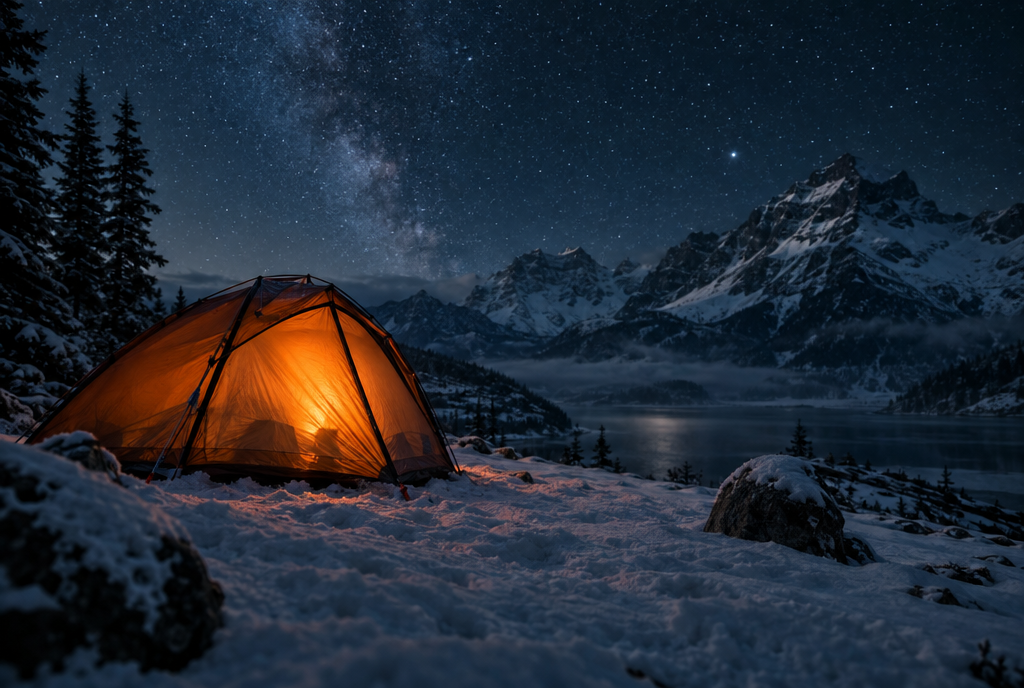
To stay warm winter camping, hike in light wicking layers so you do not sweat, then add insulation as soon as you stop. At night, insulate from the ground with sleeping pads totaling an R-value of about 5.5 or more for very cold conditions, choose a bag rated below the expected low, change into dry clothes, eat, and warm up before getting in.
How do you stay warm while winter hiking?
The trail rule is to stay dry. Hike in a base layer and a breathable shell, start slightly cool, and open vents before you sweat. REI's winter camping guidance recommends midweight long underwear, a puffy down or synthetic jacket for the insulating layer, and fully waterproof jacket and pants rather than water-resistant ones for the outer layer.
Put the puffy on the moment you stop for a break, before you feel cold. Snacks and water through the day keep your body producing heat, and a thermos of something warm makes it easier to keep drinking.
Where should you pitch camp to stay warmer?
Site choice matters. Cold air drains downhill and pools in valley bottoms, so a spot slightly above the floor of a valley is often warmer than the lowest flat ground. A stand of trees or a snow wall on the windward side cuts wind across the tent.
On snow, pack down the tent platform with skis, snowshoes or boots and let it set before pitching, so you are not sleeping on soft lumps. Melting snow for water takes time and fuel; REI suggests adding a little water to the pot before the snow so it does not scorch.
How much sleeping pad insulation do you need in winter?
More than most people expect, because the ground pulls heat from your body through a compressed sleeping bag. REI explains that a pad's R-value measures its resistance to heat flow, so an R-value of 2.0 insulates twice as well as 1.0. Manufacturers now test pads in a uniform way, which makes R-values comparable across brands.
| R-value | Typical use (REI guidance) |
|---|---|
| Under 2.0 | Warm weather |
| 2.0 to 3.9 | Cool weather |
| 4.0 to 5.4 | Cold weather |
| 5.5 and higher | Extremely cold weather, around 0°F expected lows |
Should you use two sleeping pads in winter?
Many winter campers do. REI notes that R-values of stacked pads simply add together, and suggests a closed-cell foam pad next to the ground with an inflatable or self-inflating pad on top. The foam pad adds insulation, protects the air pad from punctures, and still works if the air pad fails.
What sleeping bag rating do you need for winter camping?
Bag ratings come from standardized lab tests. REI describes the comfort rating as the temperature at which a cold sleeper might feel comfortable, and the lower limit as the temperature at which a warm sleeper might still be comfortable. If you tend to sleep cold, go by the comfort rating.
REI recommends taking the coldest temperature you expect and adding a 10 to 15 degree buffer, meaning a bag rated that much lower. A liner, an insulated jacket worn inside the bag, or a second bag can extend a bag's range.
How do you sleep warm in a tent?
Most cold nights are won or lost in the hour before bed. REI's winter tips include several simple habits:
Warm up before getting in: REI suggests jumping jacks or jogging in place, because a sleeping bag only holds the heat you bring into it.
Fill a leak-proof bottle with hot water and put it in the bag, wrapped in a sock so it does not sit directly against skin.
Change into clean, dry long underwear and socks for sleep.
Eat a snack before bed so your body has fuel for the night.
Dry damp gloves or socks by placing them on your shoulders or near your armpits over your base layer.
Bring boots into the tent to keep them a few degrees warmer, and keep stove canisters in your sleeping bag.
Is it safe to use a stove or heater inside a tent?
No. Stoves, lanterns and other fuel-burning devices produce carbon monoxide, an odorless gas. The CDC lists stoves and lanterns among common sources and estimates that more than 400 Americans die each year from unintentional carbon monoxide poisoning not linked to fires. Cook outside or in a well-ventilated vestibule with the door open, and never sleep with a fuel-burning heater running in a closed tent.
Symptoms include headache, dizziness, weakness, nausea and confusion. Because they resemble tiredness or altitude effects, anyone who feels unwell after cooking inside should get fresh air immediately.
What should you do if someone gets too cold?
The CDC's warning signs of hypothermia in adults are shivering, exhaustion, confusion, fumbling hands, memory loss, slurred speech and drowsiness. Stop, get the person out of the wind, replace wet clothes with dry ones, insulate them from the ground, and give warm, sweet drinks if they are alert. A temperature below 95°F calls for medical attention immediately.
An emergency blanket over the insulation can cut wind and radiant heat loss while you organize help, but it does not replace a sleeping bag or pad. Talk to a clinician before a winter trip if you have a heart or circulation condition or take medicines that affect temperature regulation.
Key takeaways
Hike in light, dry layers and add insulation as soon as you stop.
Insulate from the ground: REI suggests an R-value of 5.5 or more for extremely cold nights, and stacked pad R-values add.
Pick a bag rated 10 to 15 degrees below the expected low, using the comfort rating if you sleep cold.
Warm up, eat and change into dry clothes before bed.
Never run a stove or fuel-burning heater in a closed tent.
Frequently asked questions
How can I stay warm camping in 30 degree weather?
Use a pad or pad combination rated for cold weather, a bag rated 10 to 15 degrees below 30°F, and dry sleep clothes. Eat before bed, warm up with some movement, and add a hot water bottle to the bag.
What R-value do I need for winter camping?
REI's guidance puts pads for extremely cold weather at 5.5 or higher, and 4.0 to 5.4 for cold weather. Stacking a foam pad under an air pad adds their R-values together.
Should I sleep in my clothes in a sleeping bag?
Change into clean, dry base layers and socks. Damp daytime clothes make you colder and can dampen the bag's insulation. Wearing an insulated jacket inside the bag on very cold nights is a common way to add warmth.
Can I use a heater in my tent?
Fuel-burning heaters in a closed tent risk carbon monoxide poisoning and fire. Rely on your sleep system instead, and cook outside or in a well-ventilated vestibule.
Do emergency blankets keep you warm camping?
They reflect radiant heat and block wind, which helps in an emergency, but they are not insulation on their own. Use them over or under real insulation, not in place of a sleeping pad or bag.
From HEATJAC
We design low-profile thermal garments: a heat-reflective vest and a thermal harness with pockets for warmers or cold packs.
Choosing gear? Heated vest vs heat-reflective vest · A hunter's guide to staying warm in the stand
Related reading
Sources
Winter Camping Tips, REI Expert Advice
How to Choose Sleeping Pads, REI Expert Advice
How to Choose Sleeping Bags, REI Expert Advice
Layering Basics, REI Expert Advice
Carbon Monoxide Poisoning Basics, Centers for Disease Control and Prevention
Preventing Hypothermia, Centers for Disease Control and Prevention
About HEATJAC. HEATJAC is a thermal architecture company founded by an anesthesiologist. We design patented garment systems that capture, conduct and broaden warmth across the body, and we publish this knowledge hub because the science of staying warm should be public. HEATJAC products are not medical devices and are not intended to diagnose, treat, cure or prevent any disease.