
Do hot drinks actually warm you up?
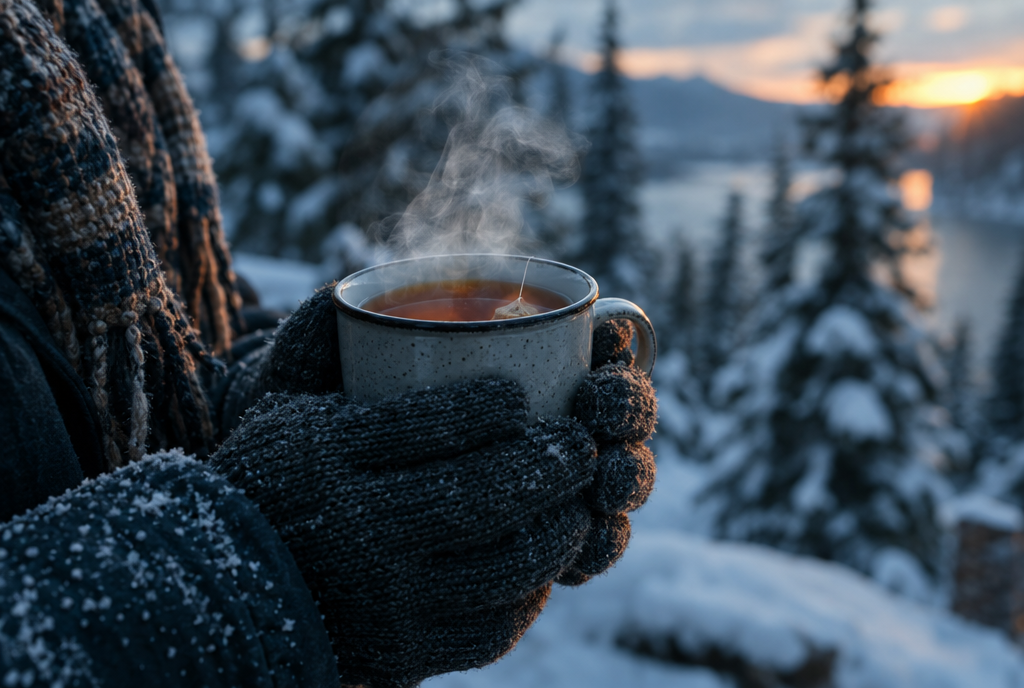
Partly true. A hot drink makes you feel warmer and adds a small amount of heat, but not enough to meaningfully raise core temperature on its own. In the cold, its comfort and, if sweetened, its calories help more than its heat. In hot, dry conditions, research suggests a hot drink can even reduce stored body heat by triggering extra sweating.
How much heat does a hot drink actually add?
Less than most people expect. A Wilderness Medical Society article worked through the numbers for a 75 kg adult with mild hypothermia. Drinking one liter of hot liquid, which it called ambitious for most people, would raise body temperature by only about 0.4 degrees Celsius. Bringing core temperature back to normal would take roughly 8 liters of 60 degree water.
The body is a large mass of warm water, and a mug of tea is small by comparison. Your own metabolism, especially shivering and physical activity, produces far more heat over time.
Then why do hot drinks make you feel warm?
Much of the effect is sensory. The mouth, throat and stomach contain temperature sensors, and research on drinks during exercise has pointed to a role for thermoreceptors in the gut in how warm or cool we feel. A warm mug also heats cold hands directly by conduction.
That comfort is real and worth having. Feeling warmer can make it easier to stay calm and keep functioning in the cold. It simply is not the same as a meaningful rise in core temperature.
Do warm drinks help when you are very cold?
They help as part of the response, not as the main fix. NHS, CDC and Mayo Clinic first aid guidance all include offering a warm, non-alcoholic drink to someone with hypothermia, but only if the person is fully awake and able to swallow. Mayo Clinic specifies warm and sweet.
The sweetness matters. The Wilderness Medical Society article argues that for an alert person who is cold, the calories, especially carbohydrates, matter more than the temperature, because they fuel shivering. Shelter, dry clothing and insulation still come first, and suspected hypothermia calls for emergency help.
| Claim | What the evidence says |
|---|---|
| A hot drink raises your core temperature | Only slightly. One liter adds about 0.4 degrees Celsius in a 75 kg adult |
| Hot drinks make you feel warmer | True. Sensors in the mouth, throat and gut, and warm hands on the mug, drive that feeling |
| Warm drinks help someone with hypothermia | Partly. Useful if the person is fully awake, mainly for sugar and comfort, alongside shelter and dry layers |
| A hot drink cools you in the heat | Sometimes. It can lower stored heat if the extra sweat can evaporate |
| Coffee or alcohol is the best warming drink | No. Alcohol increases heat loss; a warm, sweet, non-alcoholic drink is the standard advice |
Can a hot drink cool you down in hot weather?
Under the right conditions, yes. A 2012 study in Acta Physiologica from Ollie Jay's lab at the University of Ottawa had volunteers cycle while drinking water at different temperatures. Drinking hot water, around 50 degrees Celsius, led to less heat stored in the body than cooler drinks, because it triggered a larger increase in sweating.
The catch is evaporation. Jay explained that the benefit holds only if the extra sweat can evaporate from the skin. On a very humid day, in heavy clothing, or when sweat drips off rather than evaporating, a hot drink is a bad idea. A 2018 study by Barwood and colleagues found cold drinks improved thermal comfort during exercise in the heat, so comfort and heat balance do not always point the same way.
What actually warms you up in the cold?
Keep moving if you can; working muscles produce much more heat than any drink delivers.
Eat and drink regularly; food fuels heat production and shivering.
Add or change layers, prioritizing a dry base layer and a windproof shell.
Get out of wind and off cold ground; conductive and wind-driven losses add up quickly.
Choose warm, non-alcoholic drinks for comfort and hydration.
Key takeaways
A hot drink adds little heat compared with what your body produces and loses.
The warm feeling comes largely from sensors in the mouth, throat and gut, and from warming your hands.
In cold conditions, calories in a warm, sweet drink matter more than its temperature.
In hot, dry conditions, a hot drink can reduce stored heat by increasing sweating that evaporates.
Offer warm drinks to a cold person only if they are fully awake, and never alcohol.
Frequently asked questions
Does hot tea warm your body?
It warms you slightly and makes you feel warmer, but a cup adds only a small amount of heat to the core. Layers, movement and food do far more.
Is it better to drink hot or cold water in winter?
Either keeps you hydrated, which matters in cold, dry air. A warm drink is more comfortable and encourages you to keep drinking.
Why do people drink hot tea in hot countries?
Research suggests a hot drink can trigger extra sweating that cools you, provided the sweat can evaporate. In humid heat, that benefit largely disappears.
Should you give a hot drink to someone with hypothermia?
Only if they are fully awake and able to swallow. First aid guidance from NHS, CDC and Mayo Clinic recommends a warm, non-alcoholic drink, with Mayo Clinic advising a sweet one. Call emergency services for suspected hypothermia.
Does coffee warm you up?
A hot coffee gives the same modest warmth as any hot drink. It does not generate meaningful extra heat, and if you have symptoms such as persistent chills, talk to a clinician.
From HEATJAC
We design low-profile thermal garments: a heat-reflective vest and a thermal harness with pockets for warmers or cold packs.
Choosing gear? What actually helps someone who is always cold · Warm, safe gifts for an older parent
Related reading
Sources
Thermodynamics and Hypothermia, Wilderness Medical Society
Body heat storage during physical activity is lower with hot fluid ingestion under conditions that permit full evaporation, Acta Physiologica, 2012
A Hot Drink on a Hot Day Can Cool You Down, Smithsonian Magazine
The effect of hot and cold drinks on thermoregulation, perception, and performance: the role of the gut in thermoreception, European Journal of Applied Physiology, 2018
Hypothermia: First aid, Mayo Clinic
Hypothermia, NHS
About HEATJAC. HEATJAC is a thermal architecture company founded by an anesthesiologist. We design patented garment systems that capture, conduct and broaden warmth across the body, and we publish this knowledge hub because the science of staying warm should be public. HEATJAC products are not medical devices and are not intended to diagnose, treat, cure or prevent any disease.