
Hand warmers for Raynaud's: what helps and what to avoid
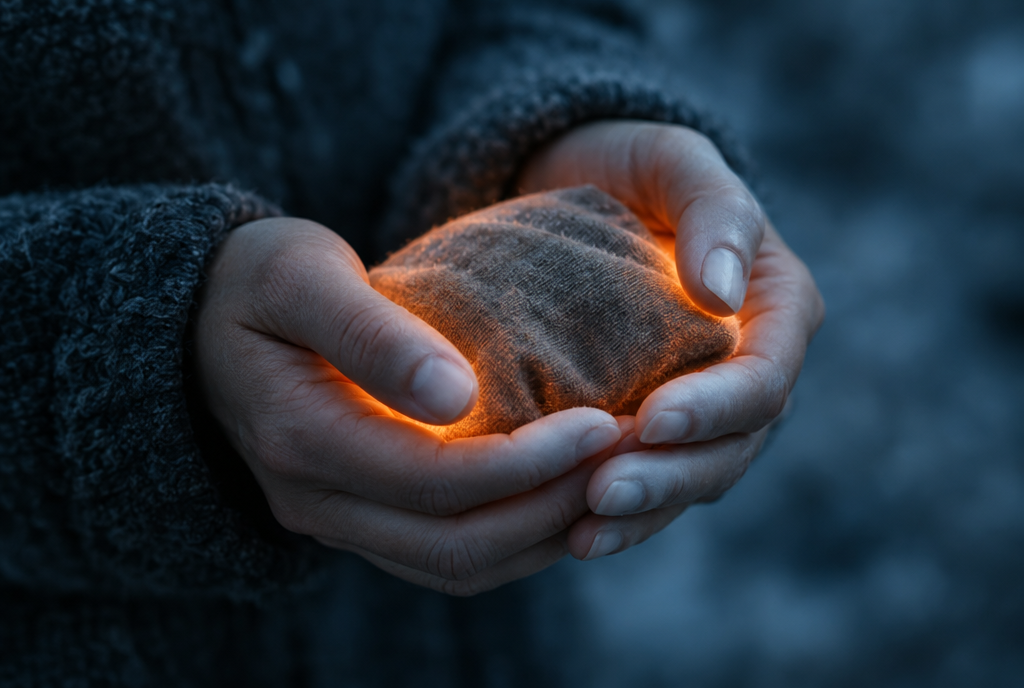
The best hand warmers for Raynaud's give gentle, steady heat you can start before your fingers get cold: rechargeable warmers with adjustable settings, air-activated packets inside mittens, or click warmers for a quick boost. The National Institutes of Health lists hand warmers and heated gloves among Raynaud's self-care steps. Pair them with a warm core, and never press a hot warmer against numb skin.
Do hand warmers help with Raynaud's?
They can help as part of a wider plan. The National Institute of Arthritis and Musculoskeletal and Skin Diseases (NIAMS) advises keeping the hands, feet and whole body warm and suggests considering heated gloves or hand warmers. The Raynaud's Association also recommends carrying hand and foot warmers.
Timing matters more than raw heat. The Raynaud's Association notes that an attack can start at around 60 to 70 °F (16 to 21 °C), well above the temperatures that bother most people, and the NHS says episodes last from a few minutes to a few hours. A warmer works best when it keeps fingers from cooling in the first place, such as before you step outside, reach into a freezer or sit in air conditioning.
Which type of hand warmer is best for Raynaud's?
No single type suits everyone. The right choice depends on how often attacks happen, how long you are in the cold and how easily you can operate a device with stiff fingers. Many people keep more than one type.
| Type | How it heats | Good for | Watch out for |
|---|---|---|---|
| Air-activated packet | Iron reacts with air for hours | Long outings; slips into mittens and pockets | Cannot be turned down; rated up to 149 °F (65 °C) |
| Rechargeable electric warmer | Battery heats a metal or plastic case | Daily use; adjustable heat levels | Hottest setting can be too hot for numb fingers |
| Reusable click warmer | Sodium acetate crystallizes and releases heat | Instant warmth at the start of an attack | Short-lived; must be boiled to reset |
| Heated gloves or mittens | Battery-powered wires in the glove | Keeping all fingers warm at once | Bulk, cost, and the same burn risk on high settings |
What should you look for in a hand warmer for Raynaud's?
Look for heat you can control and start quickly. Fingers that are already cold and numb make small buttons and stiff packaging hard to manage, so simple controls matter.
Adjustable or low settings, so you can use the lowest heat that feels comfortable.
Fast start, so warmth arrives before an attack takes hold.
A size that fits inside a mitten; Cleveland Clinic and the Raynaud's Association both note mittens are warmer than gloves.
A fabric cover or pouch, so the heat source never sits directly on skin.
Enough runtime for your longest regular cold exposure, such as a commute or a walk.
How should you warm your hands during a Raynaud's attack?
Warm gently. NIAMS suggests warming the area under warm, not hot, water or with a heating pad, whirling the arms in a windmill pattern, or tucking the hands under the armpits. Cleveland Clinic adds moving to a warmer space and slow, deep breathing, since stress can also trigger attacks.
Hold a warmer through a mitten or around a cupped hand rather than squeezing it against the fingertips. As blood flow returns, NIAMS notes the skin may tingle or burn. That sensation is part of rewarming, which is one reason it can mask a warmer that is simply too hot.
Can hand warmers burn fingers numbed by Raynaud's?
Yes. During an attack, Cleveland Clinic describes the fingers as cold and numb, as if they have fallen asleep, so the warning signal of heat pain is weaker. An integrative review in the journal Wounds reports that skin can burn at temperatures as low as 44 °C (111 °F), and that damage roughly doubles with each degree between 44 and 51 °C (111 and 124 °F).
Ergodyne rates its air-activated hand warmers at an average of 127 °F (53 °C), above that burn threshold. The same review lists peripheral vascular disease among the groups at higher risk of burns from heating devices, and cites studies in which many heating pad and hot water bottle burns happened during sleep. The safest pattern is the gentlest heat that works, never on bare skin.
Keep every warmer in a mitten, pocket or cover, never directly on skin.
Use the lowest setting and move the warmer around rather than holding it on one spot.
Do not sleep with a warmer in your hands or bed.
Check fingertips after use for redness, blisters or broken skin.
Why does keeping your core warm help cold fingers?
Hand warmers only heat the hands. The Raynaud's Association advises warming the whole body, especially the core, to help head off attacks, along with layers and a hat outdoors. When the torso is warm, the body is less inclined to narrow blood vessels in the hands and feet.
The NHS also advises keeping your home warm and avoiding sudden temperature changes. A warm layer over the torso and a hand warmer started early often do more together than a hotter warmer used alone.
When to call a clinician or emergency services
Talk to a clinician to confirm the diagnosis and check for an underlying condition, since the Raynaud's Association notes a secondary condition can appear years later. Color changes can be harder to see on brown or black skin, so describe numbness and coldness too.
See a clinician if attacks affect only one side of the body, or you are over 30 and getting symptoms for the first time (NHS).
See a clinician if you also have joint pain, skin rashes or muscle weakness, or a child under 12 has symptoms (NHS).
Get prompt care for sores or ulcers on fingers or toes, or loss of function in a hand or foot (Cleveland Clinic).
Get urgent care for a burn or blister on numb fingers, or a fingertip that darkens or will not rewarm, which can signal tissue damage.
Key takeaways
Hand warmers and heated gloves are listed by NIAMS among Raynaud's self-care steps; they work best started before fingers get cold.
Adjustable rechargeable warmers suit daily use; air-activated packets suit long outings; click warmers give a fast, short boost.
Numb fingers cannot sense heat well, and skin can burn from 111 °F (44 °C), so keep warmers covered and at the lowest useful setting.
A warm core and mittens matter as much as the warmer itself.
One-sided attacks, new symptoms after 30, or fingertip sores need a clinician.
Frequently asked questions
Are rechargeable hand warmers good for Raynaud's?
Many people with Raynaud's like them because they start on demand and offer adjustable heat. Use the lowest setting that works, since the top setting can be too hot for numb fingers. Keep one charged and in a pocket so it is ready before you go out.
Are there finger warmers for Raynaud's?
Small air-activated packets and slim rechargeable warmers can sit inside a mitten so the fingers share the heat. Heated gloves warm each finger directly. Whatever the type, keep fabric between the heat and the skin.
Should I run my hands under hot water during a Raynaud's attack?
No. NIAMS and the Raynaud's Association both advise warm, not hot, water. Numb fingers can burn before you feel the heat, so test the water with an unaffected hand or wrist first.
Can I sleep with a hand warmer for Raynaud's?
It is safer not to. A review of burns from heating devices cites studies in which many heating pad and hot water bottle burns happened during sleep. Warm socks, mittens and bedding are lower-risk ways to stay warm at night.
Do heated gloves help Raynaud's?
NIAMS lists heated gloves among self-care options for Raynaud's. They warm all fingers at once, which suits long outdoor exposure. Mittens with a warmer inside are a lighter and cheaper alternative.
When should I see a doctor about Raynaud's?
See a clinician to confirm the diagnosis and rule out an underlying condition. Go sooner if attacks affect one side only, start after age 30, come with joint pain or rashes, or cause sores on the fingers or toes.
From HEATJAC
We design low-profile thermal garments: a heat-reflective vest and a thermal harness with pockets for warmers or cold packs.
Choosing gear? What warmth costs per shift: warmers vs battery vs heat-reflective · Heated vest vs heat-reflective vest
Related reading
Sources
Frequently Asked Questions, Raynaud's Association
Raynaud's Phenomenon, National Institute of Arthritis and Musculoskeletal and Skin Diseases (NIH)
Raynaud's, NHS
Raynaud's Syndrome, Cleveland Clinic
Burns Sustained From Body Heating Devices: An Integrative Review (Kornhaber et al., Wounds, 2020), Wounds / HMP Global
Hand Warmers: How They Work (And Everything Else You Need To Know), Ergodyne
About HEATJAC. HEATJAC is a thermal architecture company founded by an anesthesiologist. We design patented garment systems that capture, conduct and broaden warmth across the body, and we publish this knowledge hub because the science of staying warm should be public. HEATJAC products are not medical devices and are not intended to diagnose, treat, cure or prevent any disease.