
Knowledge
Sourced guides on how the body stays warm, how patients and clinicians are kept comfortable, how crews work safely in cold and heat, and how warming gear works. Pick the theme closest to your world.
Ready to choose gear? Browse all buyer’s guides →
Free tools: wind chill and frostbite calculator, cold work warm-up schedule, what to wear by temperature, which warmth setup is right for you? and the warmth runtime and cost calculator. All tools and data →

Science of Warmth
For anyone who wants to understand how the body makes, keeps and loses heat.
Start here
Popular
All Science of Warmth articles →
Healthcare
For clinicians, perioperative teams, hospital leaders, and patients before and after surgery.
Start here
- Patient warming and perioperative hypothermia
- Thermal comfort for clinicians
- For patients: surgery and recovery
Popular
- How to stay warm in the operating room
- What is perioperative hypothermia?
- Forced-air vs conductive warming

Work and Duty
For employers, safety leads, crews, service members and EMS.
Start here
Popular
All Work and Duty articles →
Everyday Life and Health
For people who feel the cold, and for daily life outdoors.
Start here
- Cold sensitivity and Raynaud’s
- Staying warm in everyday life
- Staying warm at home and with family
- Staying warm with a health condition or disability
- Medications and feeling cold
Popular
All Everyday Life and Health articles →
Heat and Cooling
For hot jobs, heavy protective gear and personal heat sensitivity.
Start here
Popular
All Heat and Cooling articles →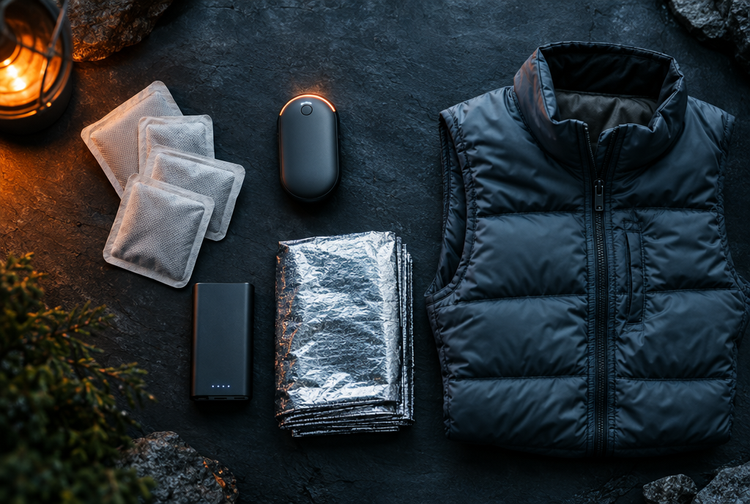
Technology and Gear
For choosing, using and caring for warming gear.
Start here
Popular
All Technology and Gear articles →All articles
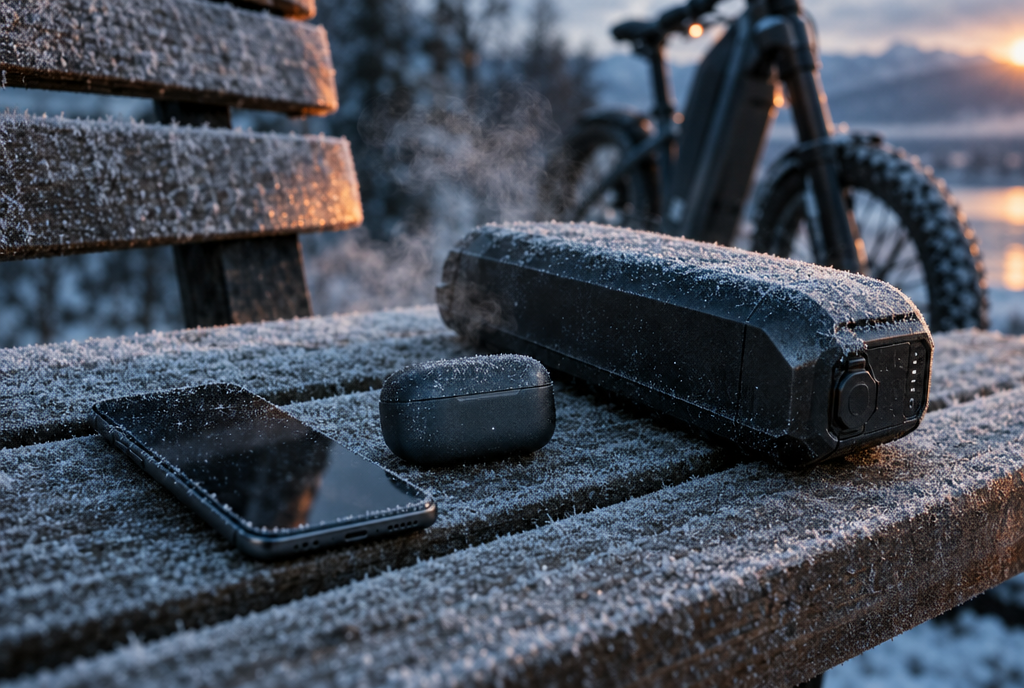
Why batteries die in the cold: phones, vapes, e-bikes and heated gear
Batteries die in the cold because low temperatures slow the chemistry inside lithium-ion cells. The electrolyte thickens, internal resistance rises, and the cell cannot deliver power fast enough, so devices drain quickly or shut off. Apple and Samsung design their phones for 32 to 95 °F (0 to 35 °C). The loss is usually temporary and returns once the battery warms.

Hand warmers for Raynaud's: what helps and what to avoid
The best hand warmers for Raynaud's give gentle, steady heat you can start before your fingers get cold: rechargeable warmers with adjustable settings, air-activated packets inside mittens, or click warmers for a quick boost. The National Institutes of Health lists hand warmers and heated gloves among Raynaud's self-care steps. Pair them with a warm core, and never press a hot warmer against numb skin.
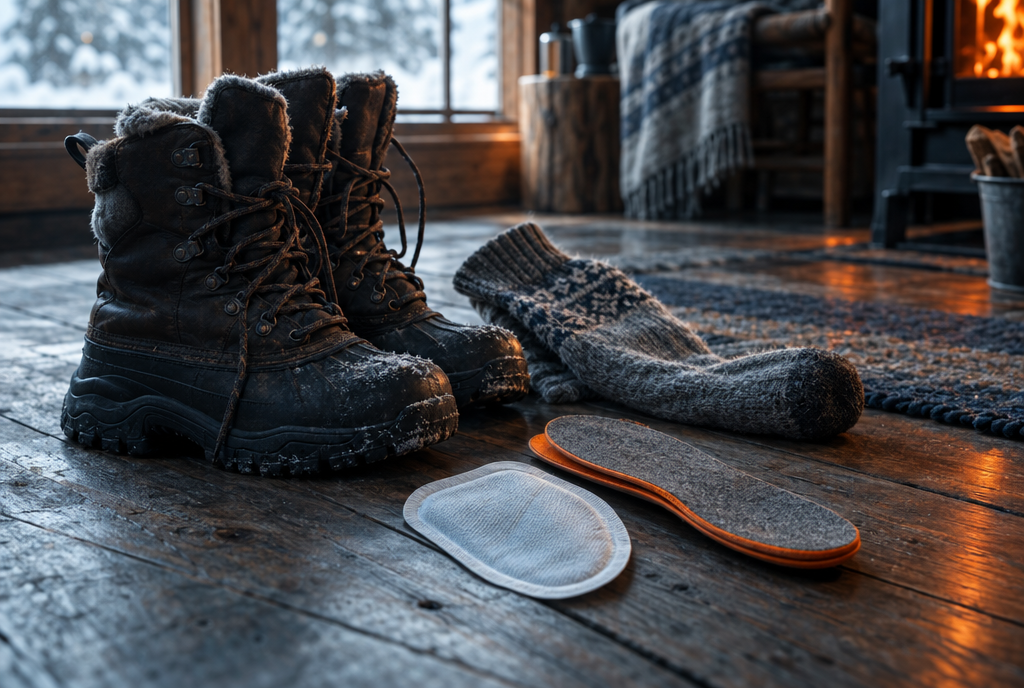
Toe warmers, body warmers and insoles: which warmer goes where
Disposable toe warmers are rated to last up to 7 to 8 hours, and stick-on body warmers up to 12 to 18 hours. Toe warmers are built to run cooler, around 102 to 113 °F (39 to 45 °C), because they sit inside a boot against the foot. Each type is shaped for one place, so match the warmer to the spot.
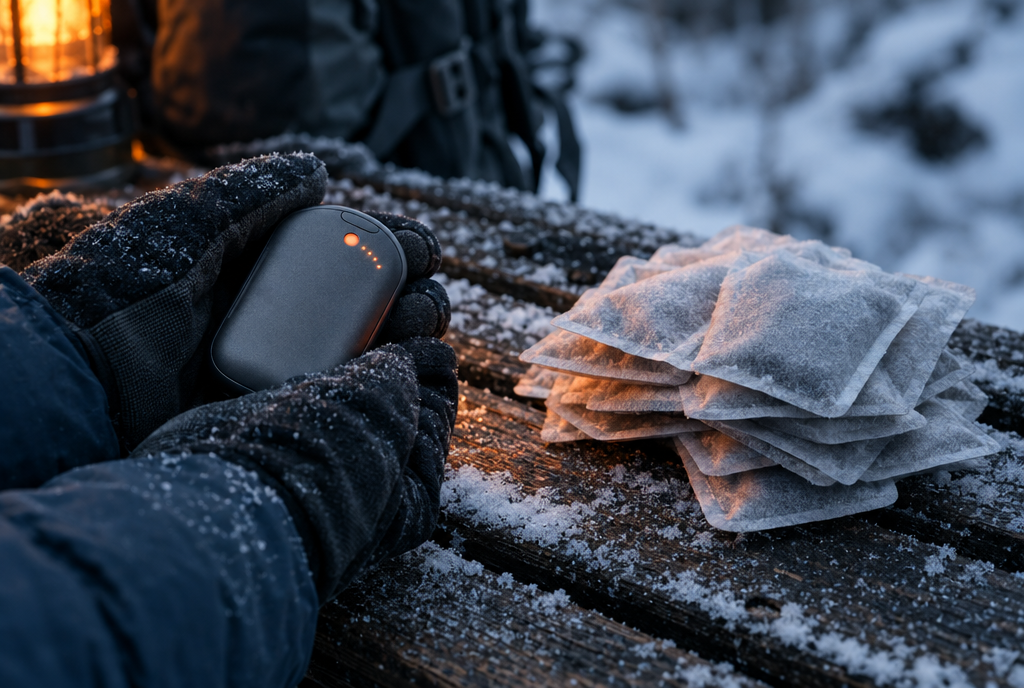
Rechargeable vs disposable hand warmers: which is better?
Neither wins everywhere. Disposable air-activated warmers run longer per use, often rated at up to 10 hours, need no charging and suit occasional use. Rechargeable warmers are often rated for up to about 6 hours per charge on low, offer adjustable heat and cost less over many uses, but they carry lithium-ion battery risks and follow FAA battery rules when you fly.

Reusable click hand warmers (sodium acetate): how they work
Reusable click hand warmers hold a supersaturated solution of sodium acetate in water. Flexing the small metal disc starts crystallization, and as the liquid turns solid it releases stored heat, reaching about 129 °F (54 °C). The heat lasts minutes rather than hours. Boiling the pad in water redissolves the crystals so it is ready to use again.
Can you reuse a disposable hand warmer?
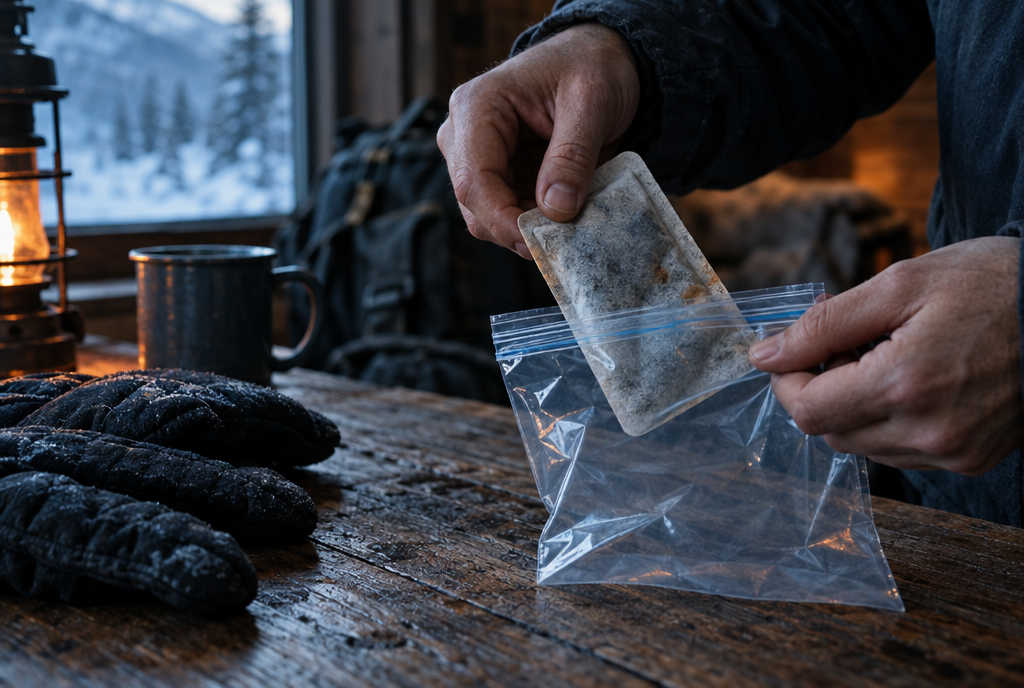
Not fully. A disposable air-activated hand warmer cannot be recharged once its iron has oxidized, but you can pause a partly used one. Seal it in an airtight zip-top or freezer bag with the air pressed out, and the reaction slows to a stop. Open the bag later and it heats again, using only the energy that was left.
Where to put hand warmers on your body to stay warmest
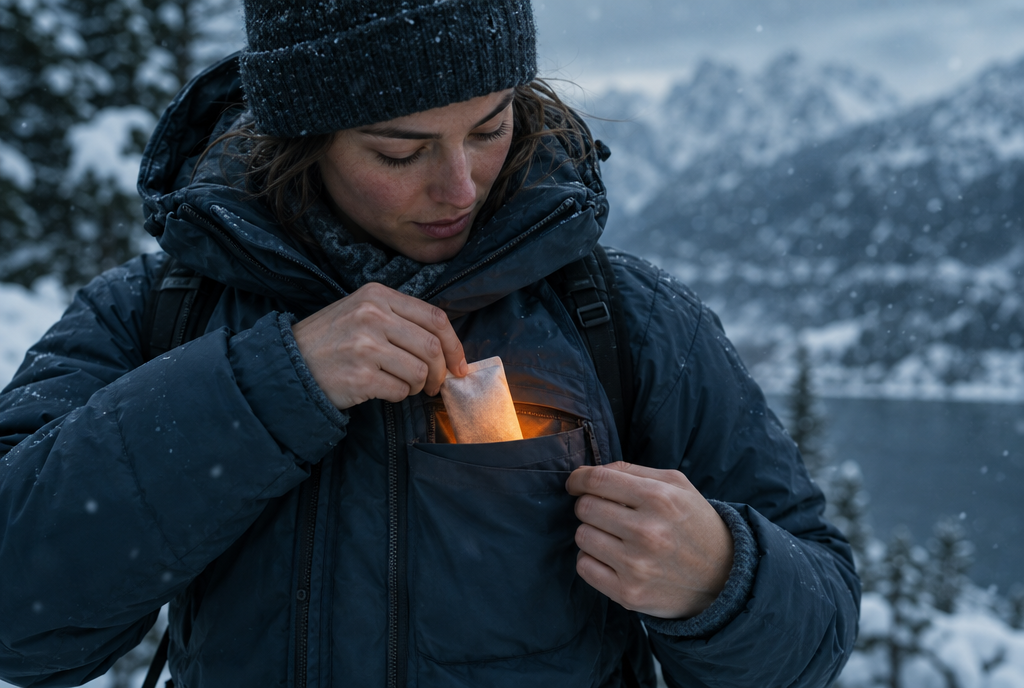
Put warmers in two places: on your core and where you feel cold. An adhesive body warmer stuck to your base layer over the upper back or chest keeps blood flowing to your hands, while hand warmers go in mittens, glove pockets or jacket pockets. In a Canadian defense research study at -13 °F (-25 °C), heating the torso kept fingers more dexterous than heating the hands directly.
Before you buy: a checklist for any warming garment
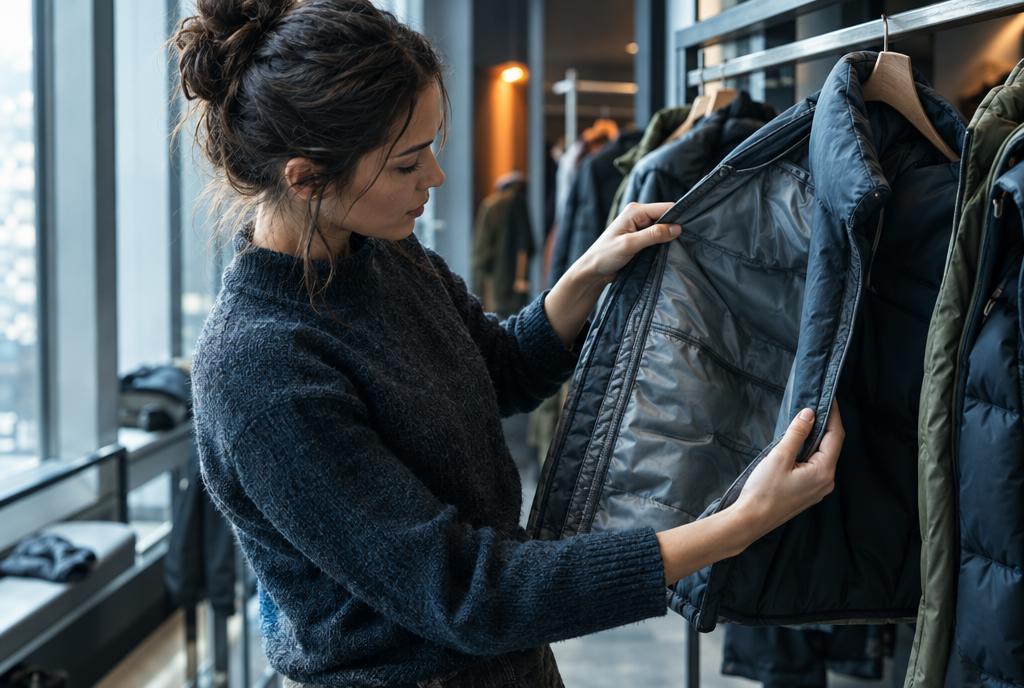
Before buying any warming garment, check seven things: the use case, safety marks and recall history, fit over your real layers, the care label, the written warranty and return terms, whether your workplace or airline allows it, and the cost over a full season. The checklist works for heated, heat-reflective, insulated and warmer-pocket garments alike.
What does warmth cost per shift? Disposable warmers vs battery vs heat-reflective
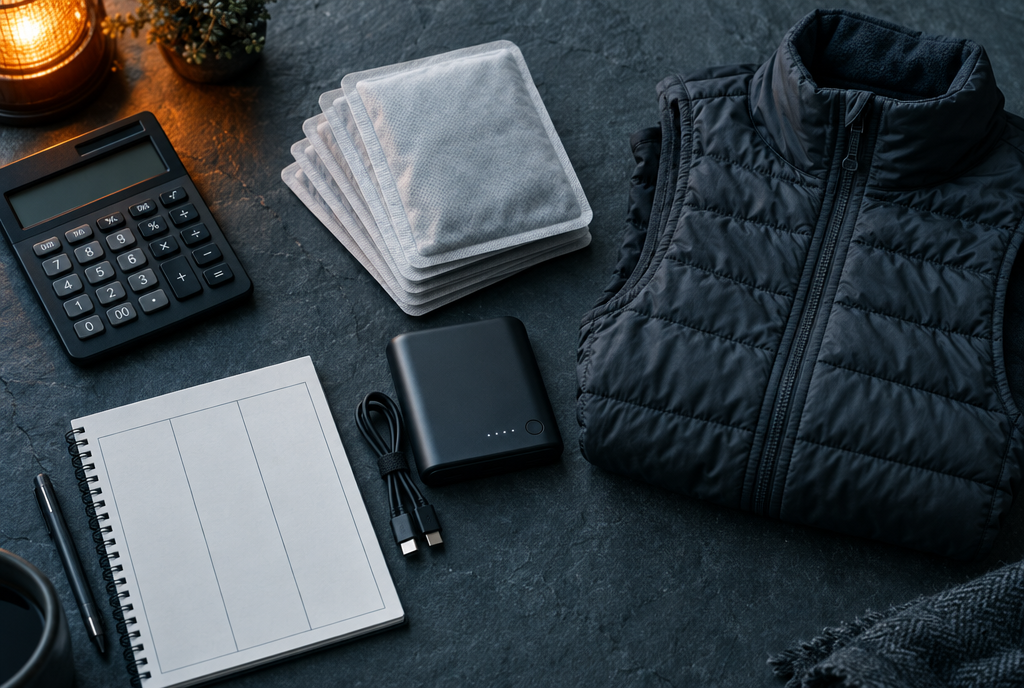
Over a season, disposable warmers cost little per shift but add up with every shift, while a battery-heated vest costs more up front and very little to run. Using listed prices and a 100-shift illustrative season, one pair of warmers a shift runs about $69 to $149 per worker, and a $180 heated vest pays back in about two to three seasons.

How many hours of warmth do you need? Planning heat by shift length
Plan warmth for the hours you are actually cold, not the length of the shift. As labeled by their makers, air-activated hand warmers run up to about 10 hours and body warmers up to 18, while one 35 Wh heated vest pack is rated at about 3 hours on high and 10 on low. Cold, heat setting and a passive base layer change those numbers.
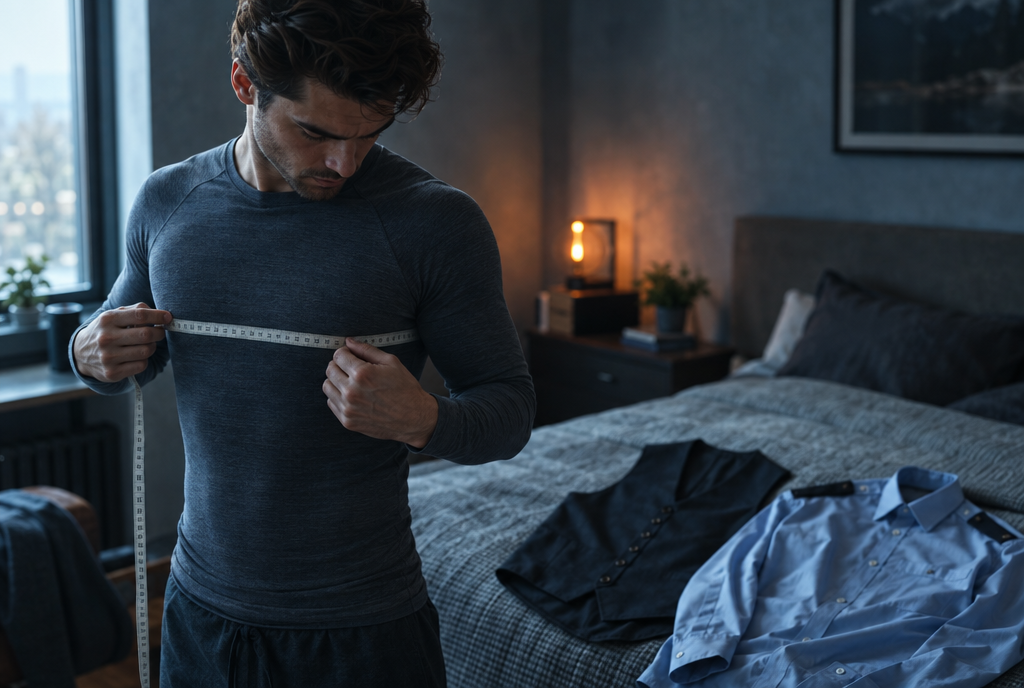
How to size a thermal vest to wear under scrubs, uniforms or body armor
To size a thermal vest for wear under scrubs, a uniform or body armor, measure your chest at its fullest point over the base layer you will actually wear, then compare it with the maker's chart. Aim for close contact without compression, a length that stays tucked under the outer layer, and no added bulk that changes how scrubs or armor fit.
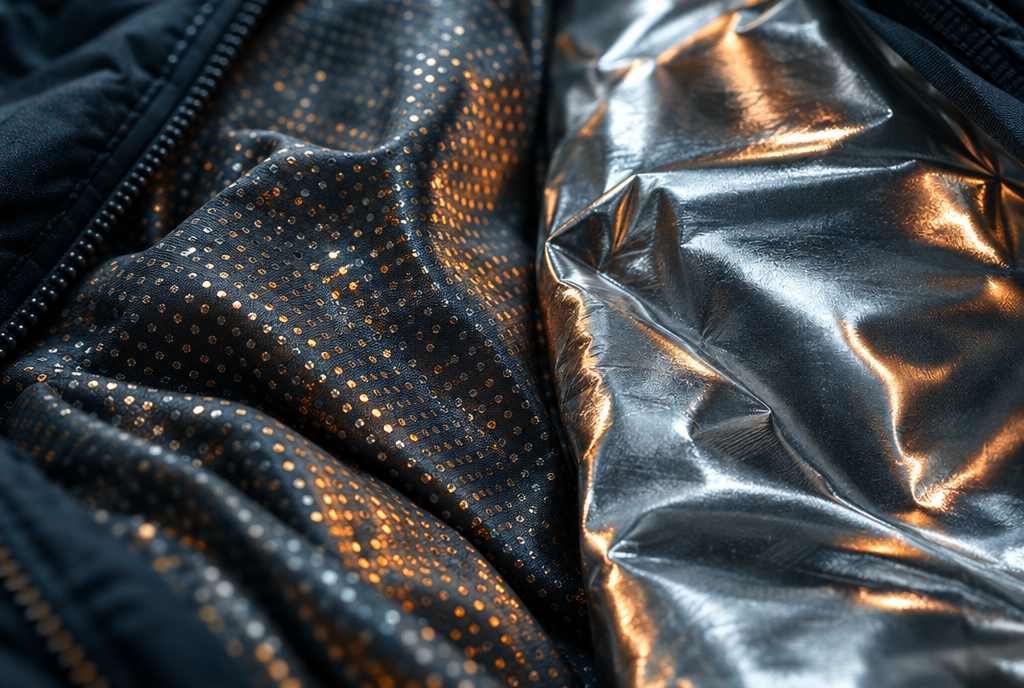
Heat-reflective jacket linings compared: dots, full foil and film
Heat-reflective linings differ mainly in how much of the surface is metal. Dot patterns trade some reflection for breathability, continuous metallized layers reflect more but can trap sweat unless perforated or breathable, and laminated films sit between the two depending on construction. Judge any lining by its metal coverage, a stated emittance measured to a named test method, and how it handles moisture.
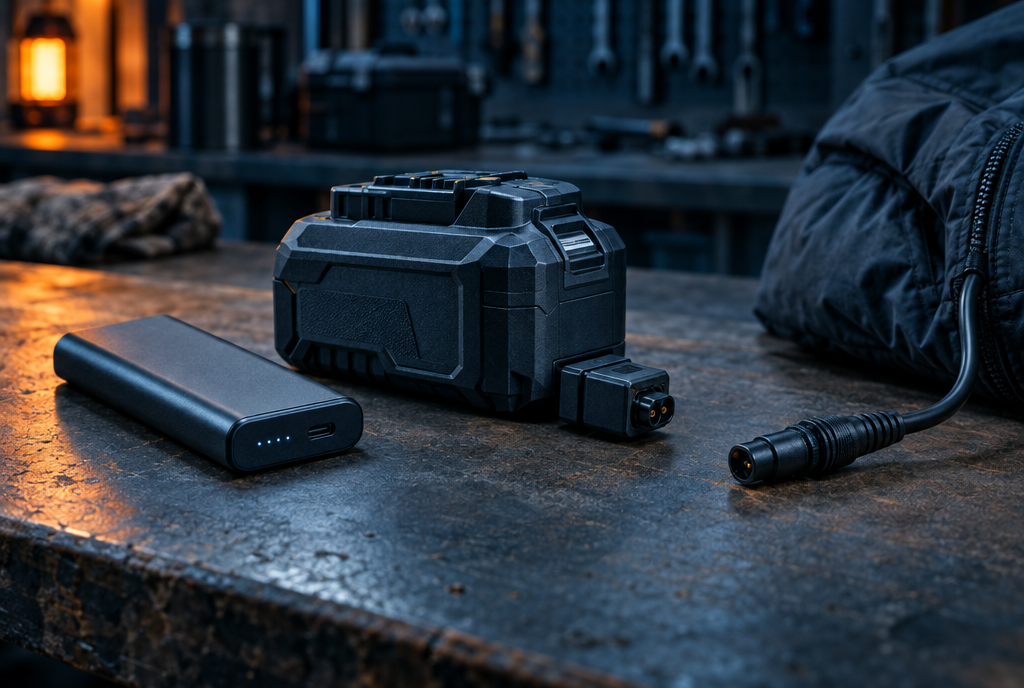
7.4V vs 12V heated gear: is more voltage better?
Not by itself. Heat output depends on watts, which designers can reach at 7.4V or 12V. A 12V system often supports more heating zones or higher peak output, and tool-battery gear lets you share packs, but runtime depends on watt-hours divided by watts, not voltage. Choose on rated watts, pack watt-hours, weight, and the battery ecosystem you already own.
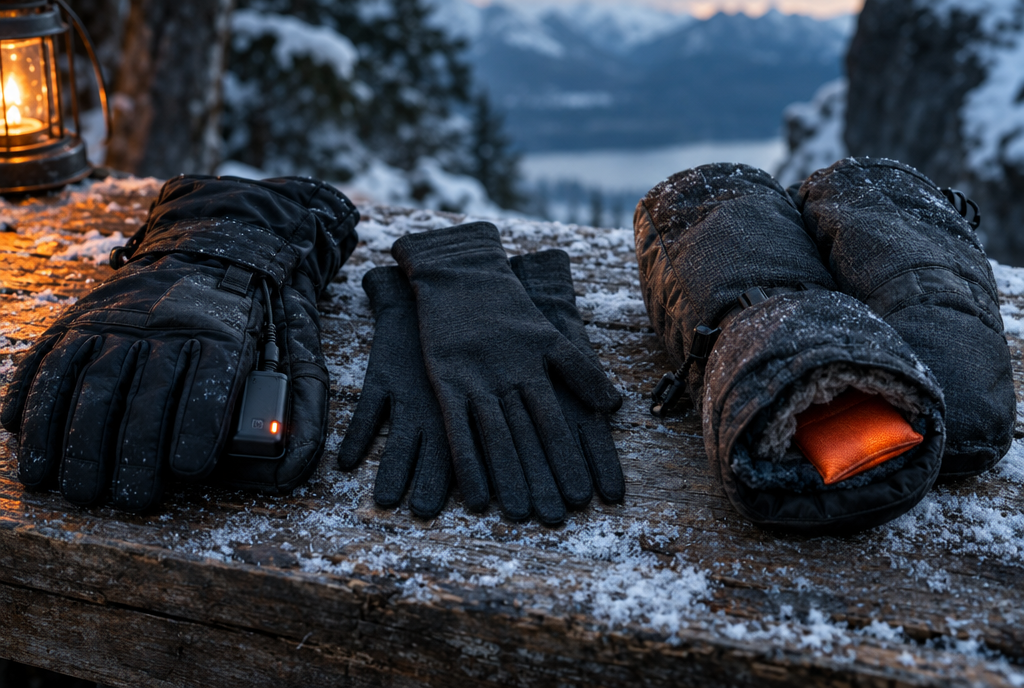
Heated gloves vs glove liners vs mittens with warmer pockets
Choose on how much finger work you do. Heated gloves give adjustable heat with moderate dexterity but add battery weight and cost. Glove liners keep fingers covered for fine tasks but add little warmth alone. Mittens with a warmer pocket are the warmest simple option for waiting and walking, with the least dexterity. Many people use a liner under a mitten and add heat when needed.
Battery heat vs air-activated warmers: cost and runtime compared
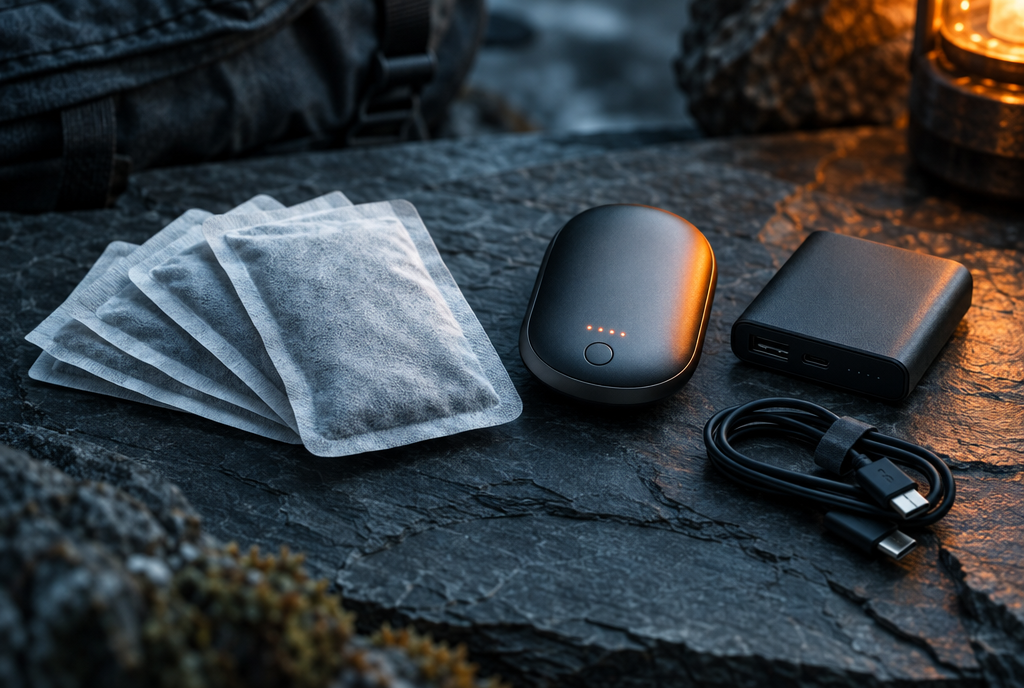
If you use warmers only a few days a year, air-activated packs cost less and need no charging. If you use them most days of the season, rechargeable battery warmers usually pay for themselves within about 50 to 100 days of use, because a charge costs under a cent. The trade-offs are shorter runtime per charge, cold-weather battery loss and battery disposal.
Heated vest vs heat-reflective vest: which to buy for which job
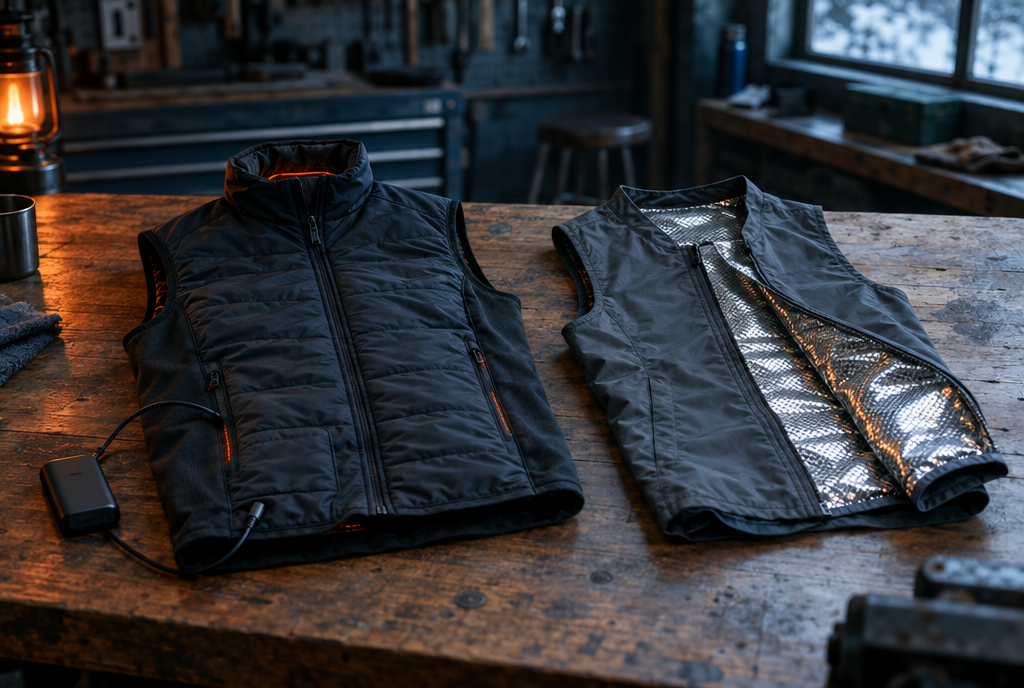
Buy a heated vest when you stand or sit still in real cold for hours and can charge every day. Buy a heat-reflective vest when you move a lot, work where batteries need approval, get wet, or want a layer that never runs down. Many buyers end up with a heat-reflective or insulated vest plus pockets for added heat on the coldest days.
Far-infrared clothing and Celliant: what the evidence says
Far-infrared (FIR) clothing contains mineral particles that absorb body heat and re-emit part of it as infrared energy. Physics allows a small effect on how heat moves, but a passive fabric cannot create energy. Controlled studies are few, small and mixed: some report modest changes in recovery or fatigue measures, and none show large warmth or health benefits. Read bold claims with caution.

Phase-change materials in clothing, explained
Phase-change materials (PCMs) are substances, often waxes, that melt and solidify near skin temperature. In clothing they are sealed in microcapsules or fibers. When you warm up, they absorb heat as they melt; when you cool down, they release it as they solidify. The effect is real but small and temporary, smoothing temperature swings rather than supplying lasting warmth.

Aerogel in clothing: how the thinnest insulation works
Aerogel is a solid made mostly of air, about 99.8% by volume, locked inside a nanoscale silica network. The tiny pores stop air from moving and carrying heat, so aerogel insulates well in very thin layers. In clothing it is usually bonded into flexible blankets or composites, which suits gloves, boots and slim jackets, though breathability, durability and cost remain trade-offs.

How space blankets work, and what they cannot do
A space blanket is a thin plastic film coated with vaporized aluminum. It works mainly by reflecting the infrared heat your body radiates back toward you, and secondarily by blocking wind and trapping moist air, which cuts convective and evaporative loss. It adds almost no insulation, so it cannot stop heat draining into cold ground and works best combined with a pad and insulating layers.