
Heated-garment technologies, explained.
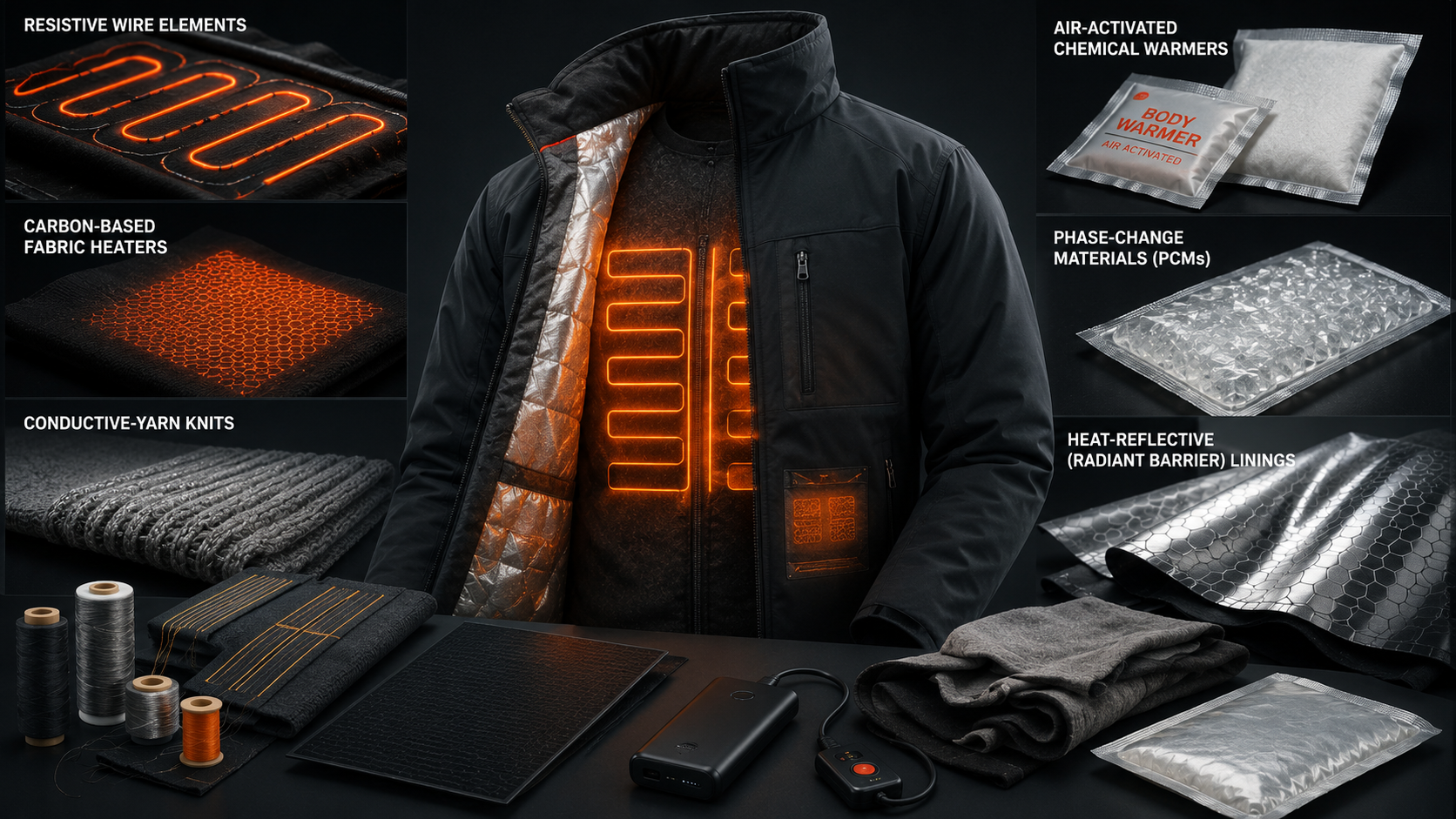
Heated and warming garments use six main technologies: resistive wire elements, carbon-based fabric heaters, conductive-yarn knits, air-activated chemical warmers, phase-change materials, and heat-reflective (radiant barrier) linings. The first three convert battery power into heat; the last three carry or conserve heat without electronics. Most well-designed systems combine at least two.
How do powered heating elements work?
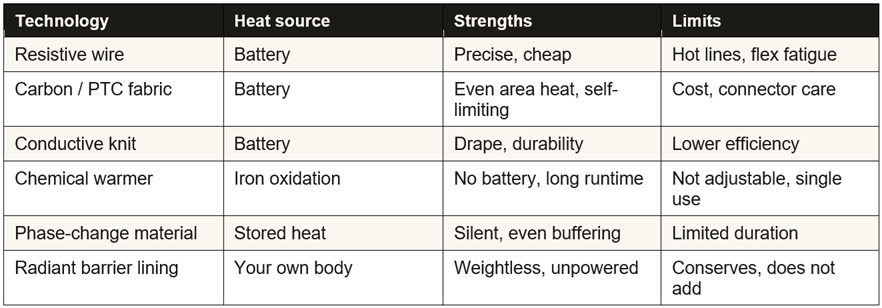
All powered elements are resistance heaters: current flows through a conductor that resists it, and the resistance becomes heat. The differences are in the conductor. Wire elements (typically insulated metal alloy) are inexpensive and precise but concentrate heat along the wire path and can fail at flex points. Carbon-based fabric and film heaters spread current through a carbon-loaded sheet, warming a wider area; many are self-limiting (PTC, positive temperature coefficient), meaning their resistance rises as they warm, so output falls as they approach their design temperature. Conductive-yarn knits weave metal or metal-coated fibers into the textile itself, trading some efficiency for drape and durability.
What about warmth without batteries?
Air-activated chemical warmers generate heat from the oxidation of iron powder; sizes range from pocket warmers to large body pads, with manufacturer-rated durations from a few hours to more than half a day. Phase-change materials (PCMs) store heat in advance: a wax or salt compound melts when charged with warmth and releases that stored heat as it re-solidifies, buffering temperature swings for a limited period. Heat-reflective linings add no heat at all; they conserve the heat the body already produces by reflecting radiant energy back toward the wearer.
Which technology is best?
The honest answer: none of them, alone. Powered elements give control but add battery weight, charging discipline, and a failure point. Chemical warmers are cheap, light, and reliable but not adjustable. PCMs are comfortable but time-limited. Reflective linings are weightless and unpowered but conserve rather than create. The engineering question is not which heater to buy; it is how a garment positions, spreads, and retains warmth from whatever source the situation calls for. That system-level design, rather than any single element, determines real-world performance.
Frequently Asked Questions
How do heated vests work? Almost all powered heated vests are resistance heaters: a battery pushes current through wire, carbon fabric, or conductive yarn, which converts electrical energy to heat. Designs differ in how evenly they spread that heat and how they regulate temperature.
What does PTC mean in heated clothing? Positive temperature coefficient: the material’s resistance rises as it warms, so heat output falls as it approaches its design temperature. This makes PTC heaters self-limiting.
Are chemical hand warmers safe? Air-activated warmers based on iron oxidation are widely used and rated by their manufacturers for skin-adjacent use with a cloth layer between warmer and skin. Follow the individual product’s instructions.