
Beta blockers and cold hands and feet
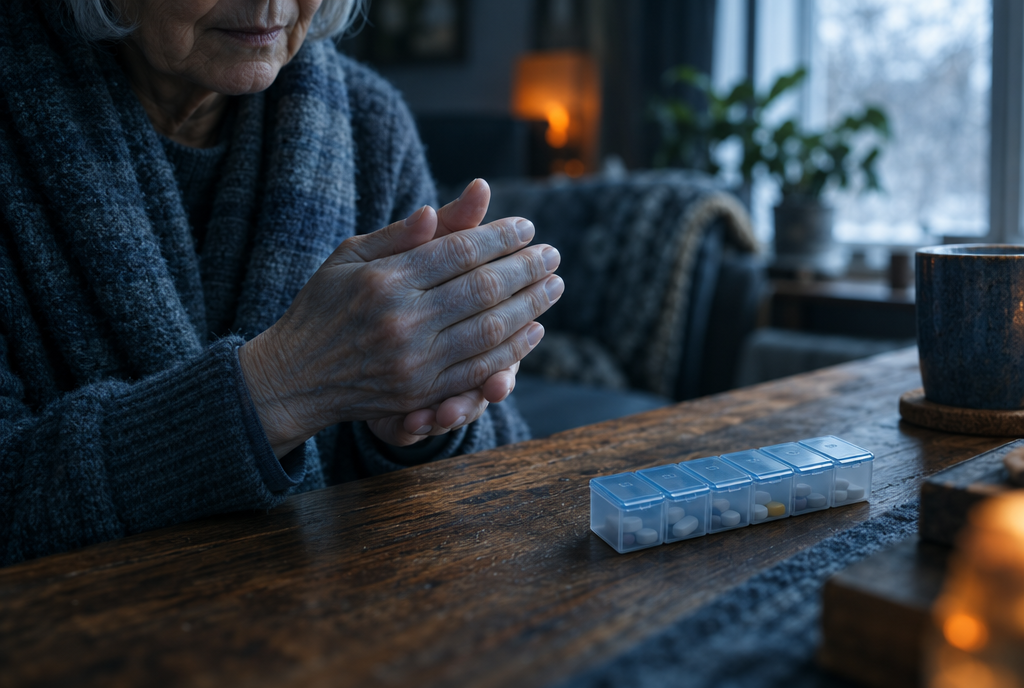
Yes. Cold hands and feet are a recognized side effect of beta blockers. The NHS lists them among common side effects, and US labels for metoprolol and propranolol list cold extremities or arterial insufficiency of the Raynaud type. Beta blockers lower the heart's output and can block signals that widen small blood vessels. Never stop one suddenly; talk to your prescriber.
Do beta blockers make your hands and feet cold?
They can. The NHS lists cold feet and hands alongside tiredness and dizziness as common side effects of beta blockers. In the US prescribing information for Lopressor (metoprolol tartrate), cold extremities and arterial insufficiency, usually of the Raynaud type, are reported in about 1 in 100 patients.
Older research suggests the complaint can be much more common in practice. A 1976 study in the British Medical Journal of 102 people with high blood pressure found a 50% rate of cold hands and feet among those taking beta blockers. Only 1 of 21 people taking methyldopa, a different blood pressure drug, reported the same.
Why do beta blockers cause cold hands and feet?
Two effects work together. First, beta blockers slow the heart and reduce its output, and decreased cardiac output is one of the mechanisms the labels describe. Less blood pumped per minute means less warm blood reaching the fingers and toes.
Second, the body uses beta-2 receptors in blood vessel muscle to widen vessels. The Lopressor label notes that metoprolol mainly blocks beta-1 receptors in the heart, but that at higher blood levels it also blocks beta-2 receptors, which are chiefly located in bronchial and vascular muscle. When that widening signal is blocked, small vessels in the skin may stay narrower, especially in the cold.
Which beta blockers are most linked to cold hands?
Beta blockers differ in how selectively they act on the heart. In the 1976 BMJ study, cold hands and feet and missing foot pulses were most frequent with propranolol, a nonselective drug, compared with atenolol or oxprenolol. Some patients who switched from propranolol to oxprenolol reported improvement.
That is one older study, and any change of medicine is a decision for your prescriber. The table summarizes the groups the NHS describes.
| Type | Examples (NHS) | What the evidence notes |
|---|---|---|
| Cardioselective (mainly beta-1) | Atenolol, bisoprolol, metoprolol | Metoprolol label: cold extremities in about 1%; selectivity is not absolute at higher blood levels |
| Nonselective (beta-1 and beta-2) | Propranolol, sotalol, carvedilol, labetalol | Propranolol label lists paresthesia of hands and arterial insufficiency, usually of the Raynaud type |
| Nonselective eye drops | Timolol | Listed by the NHS as a nonselective beta blocker |
Can beta blockers cause Raynaud's?
They are a known trigger. Mayo Clinic lists beta blockers for high blood pressure among medicines that can cause secondary Raynaud's, along with migraine drugs, ADHD drugs, certain cancer drugs and some cold medicines. The Arthritis Foundation names propranolol and certain other blood pressure drugs as a leading cause of drug-related Raynaud's.
In Raynaud's, fingers or toes turn white, then blue, and may tingle or sting as they rewarm. People who already have Raynaud's or narrowed leg arteries may notice it more. The Lopressor label warns that beta blockers can bring on or worsen symptoms of arterial insufficiency in people with peripheral vascular disease.
Is it safe to stop a beta blocker because of cold hands?
Do not stop on your own. The Lopressor label warns that worsening chest pain (angina) and, in some cases, heart attacks have occurred after beta blockers were stopped suddenly. When a beta blocker is stopped, particularly in people with ischemic heart disease, the label tells prescribers to reduce the dose gradually over 1 to 2 weeks with monitoring, and to warn patients not to interrupt treatment without medical advice.
Cold hands are worth raising at your next visit, or sooner if they bother you. High blood pressure and heart conditions have many treatment options, and your prescriber can weigh whether anything should change.
How to keep hands and feet warm on a beta blocker
The aim is to keep your core warm so your body is willing to send blood to the extremities, then protect the hands and feet directly.
Wear a vest or extra torso layer indoors and out; a warm core helps the body keep blood flowing to the hands.
Choose mittens over gloves in real cold, and wool or synthetic socks that are not tight.
Warm up before going outside rather than after your hands are already cold.
Rise slowly from sitting or lying down if a beta blocker makes you dizzy.
If your fingers or toes go numb during attacks, do not put heating pads or warmers directly on the skin; numb skin can burn without warning, so use warm (not hot) water or warmers inside gloves and pockets.
When to call a clinician or emergency services
Mention ongoing cold hands or feet to your clinician. Get help sooner for these warning signs.
A sore, wound or infection on a finger or toe, especially if you have Raynaud's: see a clinician right away.
A finger or toe that turns dark or stays white or blue and painful after rewarming: call promptly.
New or worsening chest pain, particularly after missed doses: seek emergency care.
Fainting, or dizziness with a very slow pulse: call your clinician or seek urgent care.
New shortness of breath or swelling in the legs, possible signs of heart failure: call your clinician.
Key takeaways
Cold hands and feet are a recognized beta blocker side effect, listed by the NHS and in US labels.
Lower cardiac output and blocked beta-2 signals in blood vessel muscle are the likely reasons.
Nonselective drugs such as propranolol were linked to more cold extremities than atenolol in an older BMJ study.
Beta blockers can trigger or worsen Raynaud's and peripheral artery symptoms.
Never stop a beta blocker suddenly; talk to your prescriber about side effects.
Frequently asked questions
Does metoprolol cause cold hands and feet?
Yes, it can. The Lopressor (metoprolol tartrate) prescribing information lists cold extremities and arterial insufficiency, usually of the Raynaud type, in about 1% of patients. Some people notice it more in winter or when starting the medicine.
Does propranolol make you feel cold?
Propranolol can cause cold hands and feet. Its label lists paresthesia of the hands and arterial insufficiency of the Raynaud type, and an older BMJ study found cold extremities most often with propranolol compared with atenolol or oxprenolol. Talk to your prescriber if it bothers you.
Do cold hands from beta blockers go away?
There is little research on how long it lasts, and many people notice it mostly in cold weather. Keeping your core warm and protecting hands and feet helps. If it persists or bothers you, your prescriber can review your options.
Can I stop my beta blocker if my hands are always cold?
No, not on your own. Stopping a beta blocker suddenly can cause worsening chest pain and, in some cases, a heart attack, according to the prescribing information. Your prescriber can taper it safely if a change is needed.
Are beta blocker eye drops linked to cold hands?
Timolol eye drops are a beta blocker, according to the NHS. If you notice new cold hands or feet after starting any beta blocker, including eye drops, mention it to your clinician or pharmacist.
From HEATJAC
We design low-profile thermal garments: a heat-reflective vest and a thermal harness with pockets for warmers or cold packs. If you have reduced sensation or a health condition, check with your clinician before adding heat.
Choosing gear? Before you buy: a checklist for any warming garment · What actually helps someone who is always cold
Related reading
Sources
LOPRESSOR (metoprolol tartrate) tablets: Prescribing Information (revised 09/2023), US Food and Drug Administration (Drugs@FDA)
INDERAL LA (propranolol hydrochloride) long-acting capsules: Prescribing Information (rev 11/23), US Food and Drug Administration (Drugs@FDA)
Beta blockers, NHS
Raynaud's phenomenon as side effect of beta-blockers in hypertension (Marshall, Roberts, Barritt, 1976), British Medical Journal
Raynaud's disease: symptoms and causes, Mayo Clinic
Some Meds Pose Risk for Raynaud's, Arthritis Foundation
About HEATJAC. HEATJAC is a thermal architecture company founded by an anesthesiologist. We design patented garment systems that capture, conduct and broaden warmth across the body, and we publish this knowledge hub because the science of staying warm should be public. HEATJAC products are not medical devices and are not intended to diagnose, treat, cure or prevent any disease.