
Medications that can make you feel cold: a reference list
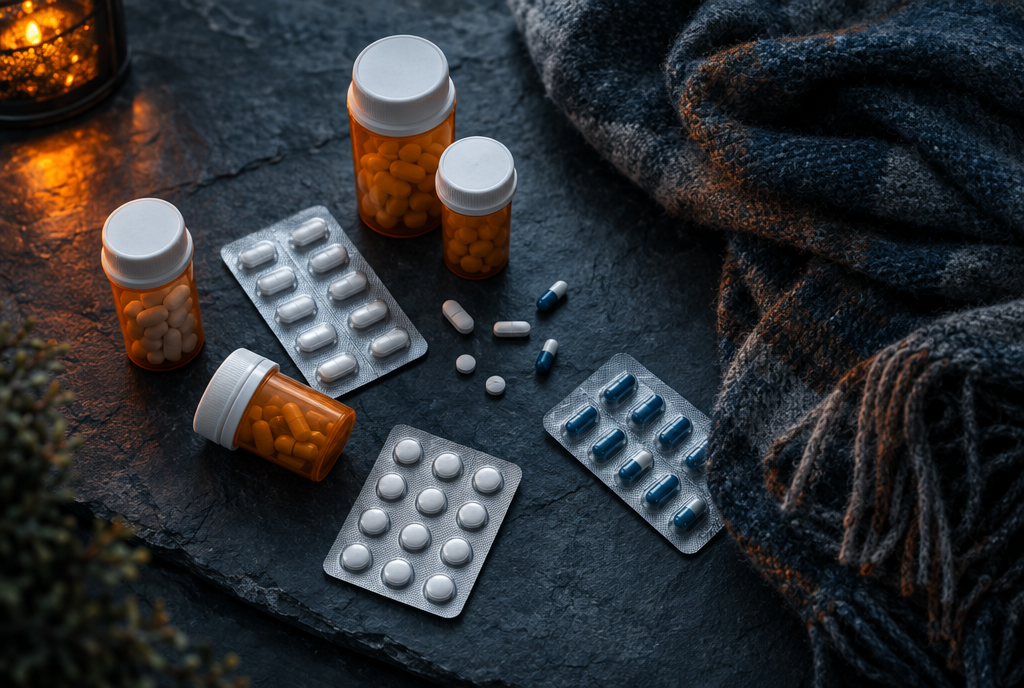
Several medicine classes can make you feel cold. Beta blockers, ADHD stimulants, triptans and ergot drugs can narrow blood flow to the fingers and toes; oxaliplatin causes nerve symptoms triggered by cold; and antipsychotics can occasionally lower core body temperature. A 2016 review identified 12 drug classes linked to Raynaud's phenomenon. Never stop a medicine on your own; talk to your prescriber first.
What medications can make you feel cold?
The table lists only drug classes we could tie to an FDA-approved label on DailyMed or to a peer-reviewed review. It is a starting point for a conversation with your prescriber, not a reason to change anything on your own. Other medicines may also affect how warm you feel.
| Drug class | Examples | How it can make you feel cold | Source |
|---|---|---|---|
| Beta blockers | Metoprolol, propranolol, atenolol | Cold extremities and arterial insufficiency, usually of the Raynaud type, reported after marketing; can aggravate poor circulation in the legs | Metoprolol succinate label; Khouri et al. 2016 |
| ADHD stimulants | Amphetamine products such as Adderall XR; methylphenidate | Class warning for peripheral vasculopathy, including Raynaud's: fingers or toes may feel numb, cool or painful and turn pale, blue, then red | Adderall XR label, section 5.7 |
| Triptans (migraine) | Sumatriptan (Imitrex) | Vasospasm warnings include Raynaud's syndrome and peripheral vascular ischemia; a warm or cold sensation was reported by 2% to 3% of trial patients versus 2% on placebo | Imitrex label, sections 5.5 and 6.1 |
| Ergot-containing migraine drugs | Ergotamine, dihydroergotamine | Reported to cause prolonged vasospastic reactions; must not be taken within 24 hours of a triptan | Imitrex label, sections 4 and 7.1 |
| Platinum chemotherapy | Oxaliplatin | Acute nerve symptoms brought on or worsened by cold temperatures or cold objects, in about 56% of patients in a key trial | Oxaliplatin label, section 5.2 |
| Other chemotherapy | Cisplatin, bleomycin | Highest reported risk of drug-induced Raynaud's phenomenon in a systematic review | Khouri et al. 2016 |
| Antipsychotics | Olanzapine, haloperidol, risperidone (most often reported) | Rare hypothermia, a core temperature below 95 °F (35 °C), often in the first week after starting or raising a dose | Zonnenberg et al. 2017 |
Which blood pressure medicines cause cold hands and feet?
Beta blockers are the classic example. The metoprolol succinate label lists cold extremities and arterial insufficiency, usually of the Raynaud type, among reactions reported after approval, and warns that beta blockers can bring on or worsen symptoms in people with peripheral vascular disease.
A 2016 systematic review in the British Journal of Clinical Pharmacology ranked beta blockers just behind cisplatin and bleomycin for the risk of drug-induced Raynaud's phenomenon. The label also warns against stopping suddenly, because abrupt withdrawal has been linked to worsening angina and heart attacks. Our beta blocker page covers this class in detail.
Can ADHD medication cause cold hands and feet?
Yes. The Adderall XR label states that CNS stimulants used for ADHD are associated with peripheral vasculopathy, including Raynaud's phenomenon. Signs are usually intermittent and mild, but the label notes that digital ulcers and soft tissue breakdown have occurred and calls for careful observation for changes in the fingers and toes.
The patient counseling section describes what to watch for: fingers or toes that feel numb, cool or painful, or change color from pale to blue to red. See our ADHD stimulant page for more.
Can migraine medicines make you feel cold?
Triptans act on serotonin receptors in blood vessels, and the label warns that the narrowing effect can reach beyond the head. The Imitrex label warns of non-coronary vasospastic reactions, including peripheral vascular ischemia and Raynaud's syndrome, and its patient information lists a cold feeling or color change in one or both legs or feet as a sign of reduced blood flow.
Ergot-containing drugs such as ergotamine and dihydroergotamine carry a related risk. The same label notes they have been reported to cause prolonged vasospastic reactions, and that taking them within 24 hours of sumatriptan is contraindicated because the effects may add up.
Why does chemotherapy make you sensitive to cold?
Oxaliplatin, used mainly for colorectal cancer, causes an acute nerve reaction that cold can trigger or worsen. The label describes symptoms within hours to two days of a dose that resolve within 14 days, seen in about 56% of patients receiving oxaliplatin with 5-FU and leucovorin, and advises avoiding ice during the infusion.
Other drugs act on blood vessels instead. The 2016 review found cisplatin and bleomycin carried the highest risk of drug-induced Raynaud's phenomenon, and suggested tyrosine kinase inhibitors may also be involved. Our chemotherapy cold sensitivity page has practical guidance for treatment days.
Can antipsychotics lower your body temperature?
Rarely, yes. A 2017 systematic review in Frontiers in Psychiatry found 57 published cases of hypothermia linked to antipsychotics. Olanzapine and haloperidol were each involved in 18% of exposures and risperidone in 14%. Of the cases, 58% followed starting a drug or raising the dose, and the authors identified the first 7 days as the highest-risk period.
Most people had added risk factors: advanced age in 46%, a benzodiazepine taken at the same time in 37%, and hypothyroidism or outdoor cold exposure in 15% each. The authors suggest the true rate is probably far higher than published reports show. This is a reason for caregivers to watch older relatives closely after a new prescription, not a reason to stop the medicine.
What about weight-loss and diabetes medicines?
Many people ask whether GLP-1 medicines make them colder. The link is indirect: eating less and losing body fat can lower heat production and insulation. Our GLP-1 page explains what the labels do and do not list.
What should you do if a medicine seems to make you cold?
Do not stop or change the dose yourself. Some medicines, including beta blockers, are risky to stop suddenly.
Note when the cold started, which body parts are affected, and whether fingers or toes change color. Bring the notes and your full medication list to your prescriber or pharmacist.
Keep your core and hands insulated with layers, warm gloves and socks, and warm up gradually after cold exposure.
If fingers or toes feel numb, keep heating pads, hot water bottles and warmers off bare skin, because numb skin can burn without warning.
When to call a clinician or emergency services
Call 911 for signs of hypothermia, such as heavy shivering, cold pale skin, confusion, unsteadiness, a slow pulse or reduced alertness, especially in an older adult who recently started or increased an antipsychotic.
Seek urgent care for a finger or toe that stays white or blue, becomes very painful, or develops a sore or ulcer.
Call your clinician promptly about a cold feeling or color change in a leg or foot after a triptan, or trouble swallowing or breathing during oxaliplatin treatment.
Talk to your prescriber about any new cold hands, cold feet or cold sensitivity after starting a medicine.
Key takeaways
Beta blockers, ADHD stimulants, triptans and ergot drugs can reduce blood flow to the fingers and toes.
Oxaliplatin caused cold-triggered nerve symptoms in about 56% of patients in a key trial, usually resolving within 14 days of a dose.
Antipsychotics can rarely cause hypothermia, often in the first week after starting or raising a dose and in older adults.
Never stop a medicine because you feel cold; bring a symptom log to your prescriber.
Frequently asked questions
Can medication cause cold intolerance?
Yes. Several drug classes are linked to cold hands and feet, cold-triggered nerve symptoms or, rarely, low body temperature. Other causes such as an underactive thyroid or anemia are also common, so a clinician should look at the whole picture.
Do beta blockers make you feel cold all over or just in your hands and feet?
The label lists cold extremities, meaning hands and feet. A general feeling of being cold has other possible causes, so mention it to your prescriber rather than assuming it is the medicine.
Can Adderall make your fingers turn white or blue?
Yes, this can happen. The Adderall XR label warns that ADHD stimulants are associated with Raynaud's phenomenon, in which fingers or toes may turn pale, then blue, then red. Tell the prescriber, and seek care quickly for sores or lasting color changes.
How long does cold sensitivity from oxaliplatin last?
According to the label, the acute form starts within hours to two days of a dose and resolves within 14 days. Report symptoms that last longer, or that affect daily tasks, to your oncology team.
Should I stop my medicine if it makes me cold?
No. Stopping some medicines suddenly can be dangerous, and there are often other options. Talk to your prescriber, who can weigh the benefits and look at alternatives.
From HEATJAC
We design low-profile thermal garments: a heat-reflective vest and a thermal harness with pockets for warmers or cold packs. If you have reduced sensation or a health condition, check with your clinician before adding heat.
Choosing gear? Before you buy: a checklist for any warming garment · What actually helps someone who is always cold
Related reading
Sources
Metoprolol succinate extended-release tablets, prescribing information, DailyMed, National Library of Medicine
ADDERALL XR prescribing information, DailyMed, National Library of Medicine
IMITREX (sumatriptan) tablets prescribing information, DailyMed, National Library of Medicine
Oxaliplatin for injection prescribing information, DailyMed, National Library of Medicine
Drug-induced Raynaud's phenomenon: beyond beta-adrenoceptor blockers (Khouri et al., 2016), British Journal of Clinical Pharmacology
Hypothermia due to Antipsychotic Medication: A Systematic Review (Zonnenberg et al., 2017), Frontiers in Psychiatry
About HEATJAC. HEATJAC is a thermal architecture company founded by an anesthesiologist. We design patented garment systems that capture, conduct and broaden warmth across the body, and we publish this knowledge hub because the science of staying warm should be public. HEATJAC products are not medical devices and are not intended to diagnose, treat, cure or prevent any disease.