
Feeling cold on Mounjaro or Zepbound (tirzepatide)
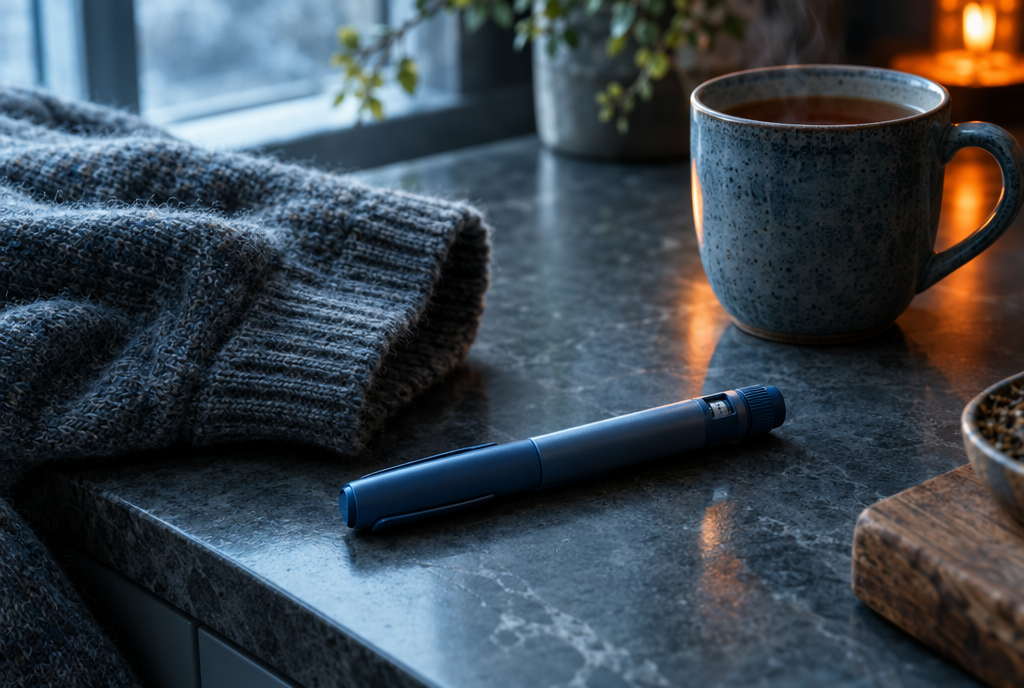
Feeling cold is not a listed side effect of Zepbound or Mounjaro. Neither US prescribing information lists chills, feeling cold or cold intolerance. The likely reasons are indirect: tirzepatide decreases calorie intake, and weight lost is mostly fat, which insulates. Listed effects such as fatigue, dizziness and low blood pressure can also feel like a chill. Persistent cold deserves a talk with your clinician.
Does Zepbound or Mounjaro make you feel cold?
Not as a recognized drug side effect. We checked the current US prescribing information for Zepbound (revised April 2026) and Mounjaro (revised January 2026). In the sections we reviewed, neither lists chills, feeling cold or cold intolerance as an adverse reaction or a warning.
Labels capture effects that trials measured or that were reported often enough to evaluate, so a missing entry does not mean nobody feels it. It does mean there is no evidence that tirzepatide itself lowers body temperature. The more likely explanations run through eating less, losing weight, and a few listed effects that overlap with feeling chilled.
Why might you feel colder while taking tirzepatide?
The Zepbound label states that tirzepatide decreases calorie intake, likely by affecting appetite, and that it lowers body weight with greater fat mass loss than lean mass loss. Both matter for warmth. Food is fuel for heat production, and body fat is insulation.
MedlinePlus, from the National Library of Medicine, notes that some people, often thin older women, do not tolerate cold well because they have very little body fat to keep them warm. Losing a meaningful amount of fat over months can make the same room feel cooler than it used to.
We cover the research on calorie restriction, metabolism and body temperature on our page about why losing weight makes you feel colder. None of that research measured cold sensation in people taking tirzepatide, so read it as a plausible explanation, not a proven one.
Which listed side effects can feel like being cold?
Several reactions in the labels can overlap with feeling chilled, run down or shaky. Figures below are from the Zepbound weight reduction trials unless noted.
| Label item | What the prescribing information says |
|---|---|
| Fatigue | 5% to 7% on Zepbound depending on dose, versus 3% on placebo |
| Dizziness | 4% to 5% on Zepbound, versus 2% on placebo |
| Low blood pressure | Hypotension in 1% to 2% on Zepbound, versus 0% on placebo |
| Dehydration | Nausea, vomiting or diarrhea can cause fluid loss; the label warns this can lead to acute kidney injury |
| Low blood sugar | Higher risk with insulin or a sulfonylurea; Mounjaro's medication guide lists shakiness, sweating, weakness, dizziness and confusion among symptoms |
Should a Mounjaro or Zepbound pen be warmed before injecting?
Many people search for ways to warm the pen with body heat or a warmer before the shot. The FDA-approved Instructions for Use for the Zepbound single-dose pen say plainly that it is not necessary to warm the pen to room temperature.
The storage rules set the limits. Keep pens in the refrigerator at 36 °F to 46 °F (2 °C to 8 °C), in the original carton to protect from light. If needed, a pen can stay unrefrigerated at up to 86 °F (30 °C) for a total of 21 days, then it must be discarded. Never freeze it, and do not use one that has been frozen.
Nothing in the labeling supports heating a pen with a hand warmer, heating pad, hot water or a microwave, and any of these can push it above 86 °F (30 °C). If a cold injection bothers you, ask your pharmacist or prescriber about injection comfort.
Could something else be making you cold?
Yes, and it is worth ruling out. MedlinePlus lists anemia, an underactive thyroid (hypothyroidism), blood vessel problems such as Raynaud phenomenon, problems with the hypothalamus, anorexia nervosa and chronic severe illness among causes of cold intolerance. Very low food intake can also leave you tired and cold.
Do not skip, stop or change a dose because you feel cold. Talk to your prescriber, who can review your intake, fluids and other medicines and check for other causes.
How to stay warm while taking tirzepatide
The goal is to hold on to the heat your body makes, since you may be making a little less of it and have less insulation.
Wear a thin base layer under everyday clothes and add a vest or cardigan indoors, where most of the day is spent.
Cover your hands, feet, head and neck in the evening, when many people notice the chill most.
Sip warm drinks through the day; they also help with fluid intake when nausea makes drinking hard.
Eat regular meals within your plan rather than going many hours with nothing.
If you have neuropathy or reduced feeling in your feet or hands, keep heating pads, hot water bottles and warmers off bare skin and check your skin often, because burns can happen without pain.
When to call a clinician or emergency services
Call your clinician about cold intolerance that is long-lasting or extreme, as MedlinePlus advises. Seek help promptly for warning signs named in the prescribing information.
Severe stomach pain that will not go away, with or without nausea or vomiting: possible pancreatitis, call now.
Nausea, vomiting or diarrhea that does not go away: call, since dehydration can harm the kidneys.
Upper stomach pain, fever, yellowing of skin or eyes, or clay-colored stools: possible gallbladder problems, call.
Shakiness, sweating, confusion or a fast heartbeat while also using insulin or a sulfonylurea: follow your low blood sugar plan and call.
Swelling of the face, lips, tongue or throat, or problems breathing or swallowing: seek emergency care.
Key takeaways
Feeling cold, chills and cold intolerance are not listed in the US prescribing information for Zepbound or Mounjaro.
Eating less and losing body fat are plausible indirect reasons, but no study has measured cold sensation in people taking tirzepatide.
Fatigue, dizziness, low blood pressure, dehydration and low blood sugar are listed effects that can feel like a chill.
The Zepbound pen instructions say it is not necessary to warm the pen; never heat it or let it exceed 86 °F (30 °C).
Never change your dose because you feel cold; talk to your prescriber.
Frequently asked questions
Does Zepbound make you feel cold?
Feeling cold is not listed as a side effect in the Zepbound prescribing information. Some people report it, and reduced calorie intake and fat loss are plausible reasons. If the cold is extreme or does not go away, ask your clinician to check for anemia, thyroid problems and other causes.
Can I warm my Mounjaro pen with body heat or a hand warmer before the shot?
The Zepbound pen instructions say it is not necessary to warm the pen to room temperature, and nothing in the labeling calls for warming. Pens may be kept unrefrigerated at up to 86 °F (30 °C) for a total of 21 days, so do not use heat sources that could push them higher. Ask your pharmacist if cold injections are uncomfortable.
How long can Zepbound or Mounjaro stay out of the fridge?
Both labels allow a single-dose pen or vial to be kept unrefrigerated at up to 86 °F (30 °C) for a total of 21 days, after which it must be thrown away. Do not freeze it, and keep it in the carton to protect it from light. Mounjaro multi-dose vials have separate 30-day rules in the label.
Is feeling cold on tirzepatide a sign of low blood sugar?
It can be part of the picture if you also feel shaky, sweaty, dizzy or confused, especially when tirzepatide is used with insulin or a sulfonylurea. Follow the low blood sugar plan your care team gave you. Feeling cold on its own is more often linked to eating less.
Will the cold feeling go away?
No one has studied this in people taking tirzepatide. If eating less and losing fat are behind it, it may ease as your weight and eating settle. Layers, regular meals and warm drinks help in the meantime.
Should I stop Mounjaro if I am always cold?
Do not stop or change your dose on your own. Talk to your prescriber, who can look for other causes, review your eating and fluids, and decide whether anything about your treatment should change.
From HEATJAC
We design low-profile thermal garments: a heat-reflective vest and a thermal harness with pockets for warmers or cold packs. If you have reduced sensation or a health condition, check with your clinician before adding heat.
Choosing gear? Before you buy: a checklist for any warming garment · What actually helps someone who is always cold
Related reading
Sources
ZEPBOUND (tirzepatide) injection: Prescribing Information (revised 04/2026), US Food and Drug Administration (Drugs@FDA)
MOUNJARO (tirzepatide) injection: Prescribing Information and Medication Guide (revised 01/2026), US Food and Drug Administration (Drugs@FDA)
Instructions for Use: ZEPBOUND single-dose pen (FDA-approved, revised April 2026), Eli Lilly and Company
Instructions for Use: ZEPBOUND single-dose vial (FDA-approved, revised April 2026), Eli Lilly and Company
Cold intolerance, MedlinePlus, US National Library of Medicine
About HEATJAC. HEATJAC is a thermal architecture company founded by an anesthesiologist. We design patented garment systems that capture, conduct and broaden warmth across the body, and we publish this knowledge hub because the science of staying warm should be public. HEATJAC products are not medical devices and are not intended to diagnose, treat, cure or prevent any disease.