
Riding a motorcycle in the cold: warmth and heated gear
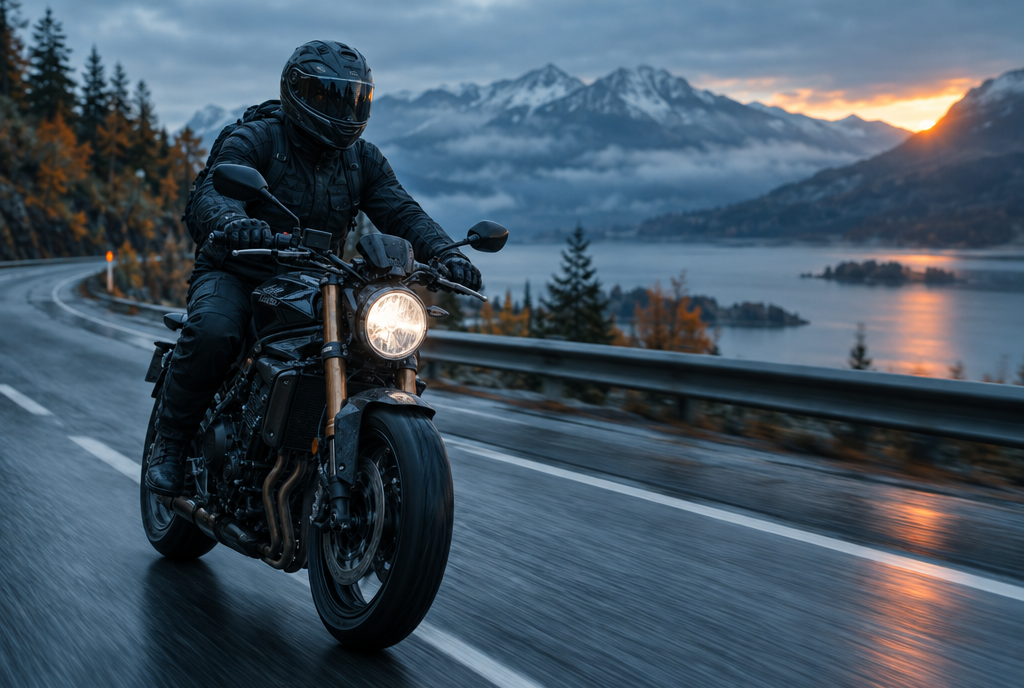
Riding in the cold is harder than it feels at a standstill because speed creates its own wind chill. Stay warm by blocking wind completely with a windproof outer layer, layering insulation underneath, sealing gaps at the neck and wrists, and adding heated gear for long rides. Cold slows reaction time, so if you start shivering or feel clumsy, get off the road and warm up.
Why does riding feel so much colder than the temperature?
On a motorcycle you create your own wind. The National Weather Service calculates wind chill with a published formula based on air temperature and wind speed. Applying that formula to 40°F air at 60 mph gives a wind chill of about 25°F, which is how cold it feels on exposed skin.
Wind chill describes how fast exposed skin loses heat, not the temperature of the air. It still explains why a mild-looking fall morning can leave a rider shaking after half an hour on the highway, and why protecting every gap in your gear matters so much.
How does cold affect riding safety?
The Georgia motorcycle operator manual states that cold weather significantly lengthens your reaction time, and advises reducing speed and increasing following distance and lateral space to compensate. Numb hands are slower on the clutch and brake, and shivering makes smooth throttle control harder.
The same manual lists hypothermia warning signs for riders: deteriorating coordination, irrational or confused behavior, sluggish movement, shivering, muscle tension, and shallow, slow breathing. Its advice is to leave the road at the first opportunity, get to shelter, take warm liquids, and change out of wet clothing.
How should you layer under motorcycle gear?
Georgia's manual recommends a windproof jacket and insulated layers. The Motorcycle Safety Foundation stresses that proper gear is essential to safe riding, and that gear also has to protect you in a fall, so warmth goes underneath the armor rather than replacing it.
Base: a snug synthetic or merino base layer on top and legs.
Insulation: a thin fleece or an insulated liner that fits under your jacket without compressing armor out of position.
Wind barrier: a windproof liner or a riding jacket and pants with a wind-blocking membrane.
Seal the gaps: a neck gaiter or balaclava under the helmet, gauntlet gloves over jacket cuffs, and boots under pant legs.
Rain: a waterproof oversuit, because wet layers lose warmth quickly at speed.
How does heated motorcycle gear work?
Heated motorcycle gear uses thin resistive heating elements, usually wire or carbon fiber, powered either from the motorcycle's electrical system or from a rechargeable battery pack. Common items include jacket liners, vests, gloves, pant liners and insoles.
The main choice is power source. The table compares the two approaches.
| Feature | 12-volt (bike-powered) gear | Battery-powered gear |
|---|---|---|
| Heat output | Generally higher, sustained while the engine runs | Lower, limited by pack capacity |
| Runtime | As long as you ride | Hours, and shorter in the cold |
| Setup | Wiring harness, fuse and often a controller | Charge the pack; no bike wiring |
| Limits | Must stay within the bike's spare charging capacity | Packs add bulk; cold reduces capacity |
| Off-bike use | Only with a separate power source | Works off the bike, for example at stops |
What should you check before buying heated gear?
For 12-volt gear, check your owner's manual or a dealer for how much spare charging capacity your motorcycle has, since heated jackets, gloves and grips all draw from the same system. Use a fused harness, and prefer a controller with adjustable settings so you can turn the heat down rather than overheat.
For battery gear, look at the pack's watt-hours and the maker's runtime at each setting, and expect less in the cold. With either type, route cables so they cannot snag, disconnect before getting off the bike, and stop using any item with damaged wiring or hot spots. Keep heating elements off bare skin.
Which body parts need heat most?
Hands and core. Hands sit directly in the airstream and control the brake and clutch, so heated grips or heated gloves are often the first upgrade. A heated vest or jacket liner warms the torso, and a warm core also helps the body keep sending warm blood to the hands and feet.
Feet and knees take less direct wind behind most fairings but still chill on long rides; insulated boots and heated insoles help. The CDC notes that frostbite most often affects the fingers, toes, nose, ears, cheeks and chin, so cover exposed skin between helmet and collar.
How cold is too cold to ride?
There is no single number. It depends on your gear, the speed you will ride, road conditions and whether you can stop to warm up. Ice, frost on bridges and sand from road treatment are often bigger hazards than the cold itself.
The Georgia manual recommends rest breaks every two hours to manage fatigue; in the cold, stopping more often makes sense. Use breaks to warm hands and drink something warm. Mayo Clinic notes that alcohol gives a false sense of warmth while increasing heat loss, which is one more reason to avoid it before riding. Talk to a clinician if you have a condition that affects sensation or circulation in your hands and feet before relying on heated gear.
Key takeaways
Speed creates wind chill: 40°F air at 60 mph feels like about 25°F on exposed skin, per the NWS formula.
Block wind completely and seal the neck, wrists and ankles.
Cold lengthens reaction time; ride with more space and stop at the first signs of hypothermia.
Choose 12-volt heated gear for long rides within your bike's charging capacity, or battery gear for flexibility.
Prioritize hands and core, and use adjustable controllers to avoid overheating.
Frequently asked questions
Is 12-volt or battery heated gear better for motorcycles?
For long rides, 12-volt gear usually delivers more heat without runtime limits, as long as your bike has spare charging capacity. Battery gear is simpler to set up and works off the bike, but runtime is limited and drops in the cold.
Do I need a controller for heated motorcycle gear?
A controller lets you adjust heat output, which helps you avoid overheating and sweating and reduces electrical load. Many riders consider it essential for heated jackets and gloves.
Is a heated vest enough for winter riding?
A heated vest warms the core and can make a big difference on moderate rides. In colder weather most riders add heated grips or gloves, since hands take the most wind.
What base layer is best for motorcycle riding?
A snug synthetic or merino base layer that wicks sweat and does not bunch under armor. Avoid cotton, which holds moisture and chills you at speed.
Can heated gear drain my motorcycle battery?
It can if the total draw of your accessories exceeds what the charging system produces, especially at low engine speeds. Check your bike's specifications, use a fused harness, and unplug gear when the engine is off.
From HEATJAC
We design low-profile thermal garments: a heat-reflective vest and a thermal harness with pockets for warmers or cold packs.
Choosing gear? Heated vest vs heat-reflective vest · A hunter's guide to staying warm in the stand
Related reading
Sources
Motorcycle Operator Manual, Section 9: Factors Affecting Rider Performance, Georgia Department of Driver Services
Wind Chill Chart, National Weather Service (NOAA)
You and Your Motorcycle: Riding Tips, Motorcycle Safety Foundation
Preventing Frostbite, Centers for Disease Control and Prevention
Hypothermia: Symptoms and causes, Mayo Clinic
About HEATJAC. HEATJAC is a thermal architecture company founded by an anesthesiologist. We design patented garment systems that capture, conduct and broaden warmth across the body, and we publish this knowledge hub because the science of staying warm should be public. HEATJAC products are not medical devices and are not intended to diagnose, treat, cure or prevent any disease.