
Feeling cold during and after a blood transfusion
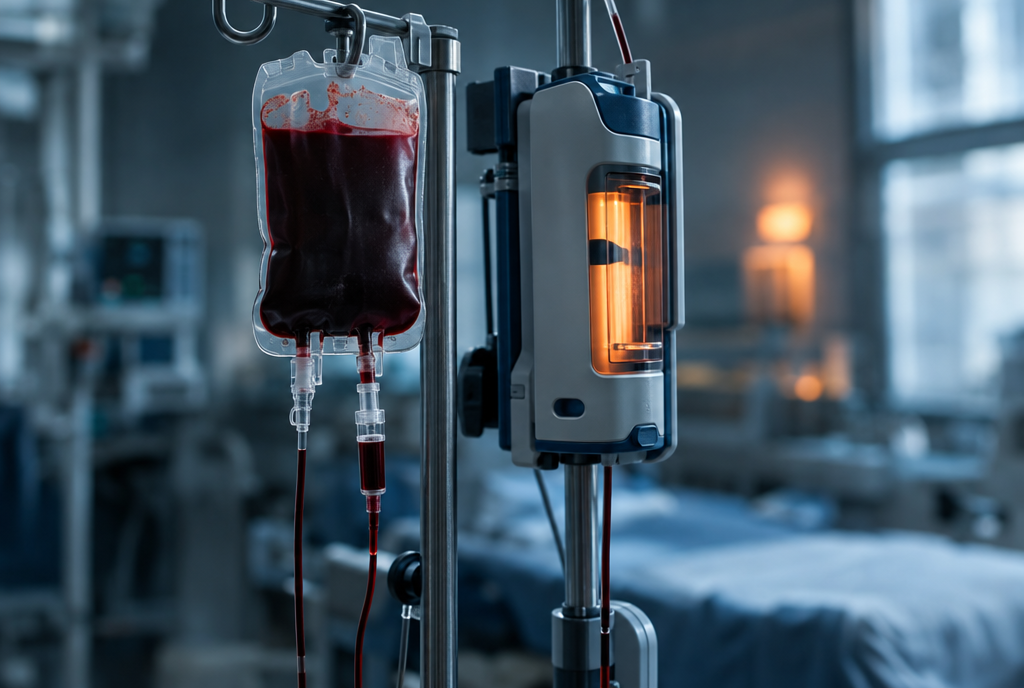
Feeling cold during a blood transfusion can come from the blood itself, since red cells are refrigerated at about 43 °F (6 °C), or from a reaction. Chills with a fever are one of the most common reactions, occurring in about 1% of transfusions. Because chills can also signal a rarer, serious reaction, tell your nurse the moment you feel chilled or shaky.
Is it normal to feel cold during a blood transfusion?
Feeling a little cool is common and often harmless. The American Red Cross says red cells are stored in refrigerators at 6 °C (about 43 °F) for up to 42 days. Platelets are kept at room temperature, and plasma is frozen and thawed before use. A unit of red cells runs into your vein over hours, and the arm with the IV can feel cool.
Cleveland Clinic notes that a red cell transfusion takes about two to four hours, while plasma and platelets may take up to an hour. Lying still in a cool room for that long, often in a gown, adds to the chill. Our page on why IV fluids make you feel cold explains the same effect with saline drips.
The difference that matters is between feeling cool and having chills. Feeling cool is steady and eases with a blanket. Chills are waves of shivering or shaking that come on even when you are covered, and they are a reason to call your nurse.
Why do some people get chills during a transfusion?
One of the most common causes is a febrile non-hemolytic transfusion reaction. A StatPearls review on the NCBI Bookshelf defines it as a temperature above 100.4 °F (38 °C) with a rise of at least 1.8 °F (1 °C) from your starting temperature, during the transfusion or within 4 hours. Some people have chills and shaking without a fever.
The same review says these reactions occur in about 1% of all transfusions, mostly with red cells and platelets. They are thought to come from substances released by white blood cells in stored blood. Removing white cells before storage, called leukoreduction, lowers the risk. The symptoms are usually mild, pass on their own and cause no lasting harm.
The catch is that a fever reaction is a diagnosis of exclusion. Chills and fever overlap with rare but serious problems, including a hemolytic reaction, in which the immune system attacks the transfused red cells, and infection. That is why the team stops the transfusion and checks you before deciding it is the mild kind.
| Possible cause | Typical timing | What you may notice | What usually happens |
|---|---|---|---|
| Chilled blood product | During the transfusion | Cool IV arm, mild chill that eases with blankets | Comfort measures; a blood warmer in specific situations |
| Febrile non-hemolytic reaction | During or within 4 hours | Chills or shaking, with or without fever | Transfusion stopped, you are checked, fever medicine if needed |
| Acute hemolytic reaction (rare) | During or right after | Chills, fever, chest or lower back pain, nausea, dark urine | Transfusion stopped, urgent tests and care |
| Delayed reaction | Next day to months later | Fever, chills, unusual bruising or other new symptoms | Call the team that gave the transfusion |
What does the nurse do if you get chills?
Cleveland Clinic explains that a transfusion starts slowly so staff can watch for problems, and your temperature, pulse and blood pressure are checked several times. Staff will ask whether you feel feverish, chilled or short of breath. Speaking up early is part of the safety plan, not a bother.
If you report chills, the usual first step is to stop the transfusion and recheck your vital signs. The StatPearls review describes checking for other causes, such as infection or a hemolytic reaction, which can include blood and urine tests. If you need future transfusions, the team will note what happened in your record.
Do hospitals warm blood before a transfusion?
Not routinely. Blood is warmed with dedicated, approved devices when there is a clinical reason. An NHS Lothian transfusion guideline lists large-volume rapid transfusion (more than 50 mL per kg of body weight per hour in adults), exchange transfusion in infants and people with cold agglutinins, antibodies that react in the cold. It adds that a blood warmer should always be considered for anyone who is hypothermic, meaning their body temperature is dangerously low, or at risk of becoming so.
Blood must never be warmed with improvised heat such as hot water, a microwave or a heat pack on the bag. If you feel cold, ask for blankets and let the team decide whether warming the blood makes sense for you.
How can you stay comfortable during a transfusion?
Ask for a warmed blanket before the transfusion starts, and keep your shoulders and feet covered.
Wear socks and a front-opening layer that leaves the IV arm free for staff to check.
Keep the IV arm under the blanket but visible enough for the site to be seen.
Do not place hand warmers, heat packs or a heating pad on the IV arm or the tubing. Ask staff first, especially if you have numbness or nerve damage, since skin you cannot feel well can burn.
Eat and drink if you are allowed; a warm drink can help you feel more comfortable.
When to call a clinician or emergency services
During the transfusion, use the call button for any new chill or symptom. Cleveland Clinic advises calling your healthcare provider right away after a transfusion for the signs below. For severe trouble breathing, chest pain or swelling of the face or tongue, call 911.
Fever, chills, or cold and clammy skin
Fast heartbeat, chest pain, trouble breathing or wheezing
Dark or reddish urine, or severe back pain
Rash, hives, itching, or swelling of the lips, tongue or face
Headache, dizziness, nausea or vomiting
Bleeding, pain or new bruising at the IV site
Key takeaways
Red cells are refrigerated at about 43 °F (6 °C), so mild coolness during a transfusion is common.
Febrile reactions, with chills with or without fever, are one of the most common transfusion reactions, at about 1% of transfusions, and are usually mild.
Chills can also be an early sign of a rare serious reaction, so tell your nurse right away rather than waiting.
Blood warmers are used for specific situations such as rapid large-volume transfusion; never warm blood or the IV arm with improvised heat.
Reactions can appear hours to months later; call your care team about fever, chills or dark urine after you go home.
Frequently asked questions
Why do I feel cold after a blood transfusion?
Hours of lying still, a cool room and chilled blood can leave you feeling cold. Chills or fever in the hours after a transfusion can also be a reaction. Call the team that gave the transfusion if you develop fever, chills or other new symptoms.
Is shivering during a blood transfusion dangerous?
Usually it is a mild fever reaction that passes without lasting harm. Shivering can also be an early sign of a rare serious reaction, so staff stop the transfusion and check you. Always report it straight away.
Can you get a fever from a blood transfusion?
Yes. A febrile non-hemolytic reaction raises your temperature during or within 4 hours of a transfusion. Fever with chest pain, back pain, nausea or dark urine can signal something more serious and needs urgent attention.
Why is my arm cold during a blood transfusion?
Blood and IV fluids enter the vein cooler than your body, which can chill that arm. Ask for a blanket to cover it. Do not put a heat pack or heating pad on the IV arm.
Will they warm the blood if I am cold?
Not routinely, but approved blood warmers are used in specific situations, such as rapid large-volume transfusion or for people who are hypothermic or at risk of becoming so. Tell your nurse you feel cold and let the team decide.
From HEATJAC
We design low-profile thermal garments: a heat-reflective vest and a thermal harness with pockets for warmers or cold packs. If you have reduced sensation or a health condition, check with your clinician before adding heat.
Choosing gear? Before you buy: a checklist for any warming garment · Are heated vests safe?
Related reading
Sources
Noninfectious Complications of Blood Transfusion (StatPearls), NCBI Bookshelf, National Library of Medicine
Blood Transfusion, Cleveland Clinic
Blood Transfusions Side Effects and Reactions, American Red Cross
What Happens to Donated Blood?, American Red Cross
Practical aspects of blood component transfusion, NHS Lothian
About HEATJAC. HEATJAC is a thermal architecture company founded by an anesthesiologist. We design patented garment systems that capture, conduct and broaden warmth across the body, and we publish this knowledge hub because the science of staying warm should be public. HEATJAC products are not medical devices and are not intended to diagnose, treat, cure or prevent any disease.