
Key cold numbers: hypothermia, frostbite and warning thresholds on one page
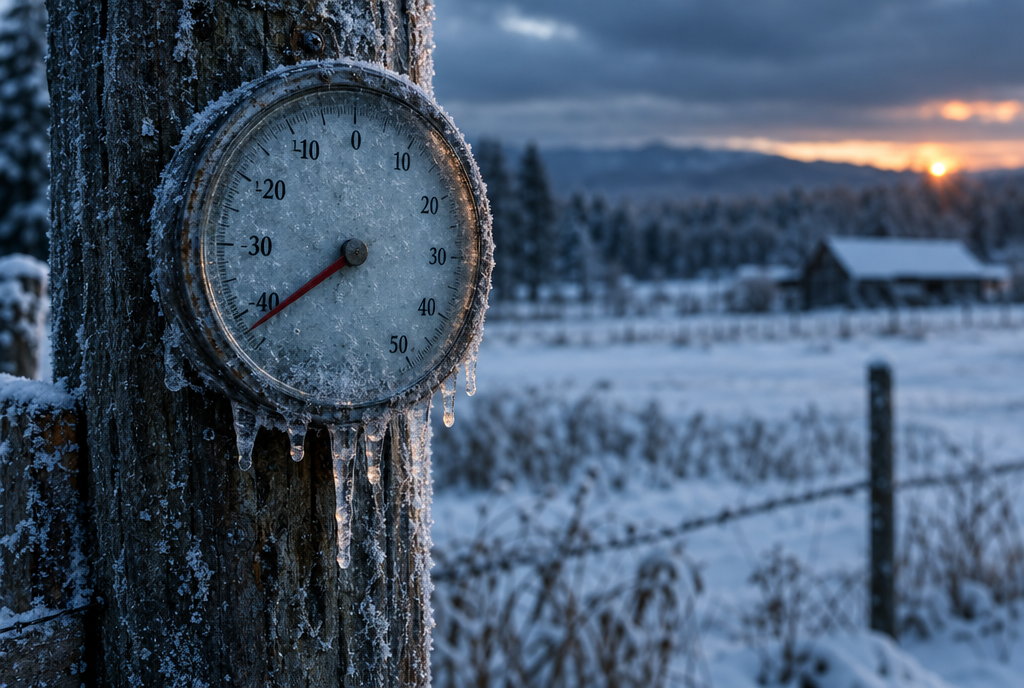
Hypothermia is a core body temperature below 35°C (95°F): mild from 32 to 35°C (90 to 95°F), moderate from 28 to 32°C (82 to 90°F) and severe below 28°C (82°F). Skin freezes in air below about -3°C (26.6°F), and at wind chills of -28 or colder, exposed skin can freeze in 30 minutes or less.
What are the key cold numbers at a glance?
Each figure below is quoted from the primary source named, with the year of the source. Sections that follow give the full bands and context.
| Threshold | Value | Source (year) |
|---|---|---|
| Hypothermia begins | Core below 35°C (95°F) | StatPearls, NCBI (2024) |
| Severe hypothermia | Core below 28°C (82°F) | StatPearls, NCBI (2024) |
| Skin freezes in air | Below about -3°C (26.6°F) | ACSM consensus (2021) |
| Frostbite in 30 minutes | 0°F air, 15 mph wind: wind chill -19°F | National Weather Service |
| Exposed skin freezes in 10 to 30 min | Wind chill -28 to -39 | Environment Canada (2025) |
| Extra warm-up breaks begin | -26°C (-15°F) with 16 km/h (10 mph) wind | ACGIH via WorkSafe Saskatchewan |
| Non-emergency outdoor work should cease | -43°C (-45°F) and below | ACGIH via WorkSafe Saskatchewan |
| Use caution in water | Below 21°C (70°F) | National Center for Cold Water Safety |
| Indoor minimum in cold seasons | 18°C (64.4°F) | WHO (2018) |
What body temperature is hypothermia?
StatPearls, the NCBI clinical reference last updated in January 2024, defines hypothermia as a drop in body temperature below 35°C (95°F) and stages it by core temperature.
Anyone with shivering, confusion, slurred speech or drowsiness after cold exposure needs to be warmed and assessed. Talk to a clinician about any cold-related symptoms, and call emergency services for confusion or loss of consciousness.
| Stage | Core temperature °C | Core temperature °F |
|---|---|---|
| Mild | 32 to 35 | 90 to 95 |
| Moderate | 28 to 32 | 82 to 90 |
| Severe or profound | Below 28 | Below 82 |
At what temperature does skin freeze?
The American College of Sports Medicine expert consensus statement on cold-weather exercise (2021) states that frostbite occurs when the skin surface freezes, at about -0.55°C (31°F) in salt water and below -3°C (26.6°F) in air. Skin does not freeze simply because the air is at 0°C (32°F); it has to cool below its own freezing point first.
Wind speeds up that cooling, which is why wind chill, not air temperature alone, predicts how fast frostbite develops on exposed skin.
What wind chill values signal frostbite risk?
The National Weather Service gives a benchmark: at 0°F with a 15 mph wind, the wind chill is -19°F and exposed skin can freeze in 30 minutes. Environment and Climate Change Canada publishes risk bands with explicit times, on a page last modified in December 2025. It adds that frostbite can occur faster than indicated in sustained winds over 50 km/h.
| Wind chill (Canada, °C scale) | Risk | Exposed skin can freeze in |
|---|---|---|
| 0 to -9 | Low | Not stated |
| -10 to -27 | Moderate | Risk with prolonged exposure |
| -28 to -39 | High | 10 to 30 minutes |
| -40 to -47 | Very high | 5 to 10 minutes |
| -48 to -54 | Severe | 2 to 5 minutes |
| -55 and colder | Extreme | Under 2 minutes |
What are the cold thresholds for outdoor work?
The ACGIH Threshold Limit Values set the most widely used work limits. They apply to workers in dry clothing, and the warm-up table assumes moderate to heavy work over a 4-hour period.
| Condition | ACGIH guidance | Reported by |
|---|---|---|
| Wind chill at or below -7°C (19.4°F) | Work-warming regimen for continuous work | CCOHS |
| -12°C (10.4°F) | Constant observation, adjusted pace, time for new workers to adapt | CCOHS |
| -26°C (-15°F) with 16 km/h (10 mph) wind | Warm-up breaks begin: 75 min work, 2 breaks | WorkSafe Saskatchewan |
| -43°C (-45°F) and below | Non-emergency work should cease | WorkSafe Saskatchewan |
How cold is dangerous water?
Cold water is dangerous well above freezing because the first threat is cold shock, the involuntary gasp and loss of breathing control, not hypothermia. The National Center for Cold Water Safety sets these points.
| Water temperature | Effect |
|---|---|
| Below 25°C (77°F) | Breathing begins to be affected |
| Below 21°C (70°F) | Use caution |
| 15 to 21°C (60 to 70°F) | Dangerous: breath control progressively harder |
| 10 to 15°C (50 to 60°F) | Very dangerous: maximum cold shock, gasping |
| Below 40°F (about 4.5°C) | Painfully cold; clear thinking almost impossible |
What is the minimum safe indoor temperature?
The World Health Organization Housing and Health Guidelines (2018) make a strong recommendation that indoor temperatures protect residents from cold, proposing 18°C (64.4°F) as a safe and well-balanced indoor temperature for general populations in cold seasons in temperate or colder climates. The guidelines give one figure for general populations; ask a clinician about individual needs.
How we compiled these numbers
We quote each threshold from the primary source that publishes it, keep original units, and give Fahrenheit or Celsius equivalents where the source does. Where published bands share an edge (hypothermia stages meet at 32°C and 28°C), we show the boundaries exactly as published. This page is updated each winter.
Key takeaways
Hypothermia: core temperature below 35°C (95°F); severe below 28°C (82°F).
Skin freezes in air below about -3°C (26.6°F).
At a Canadian wind chill of -28 or colder, exposed skin can freeze in 30 minutes or less.
ACGIH: non-emergency outdoor work should cease at -43°C (-45°F) and below.
Water below 21°C (70°F) calls for caution; WHO sets 18°C (64.4°F) as the indoor minimum in cold seasons.
Frequently asked questions
What temperature is considered hypothermia?
A core body temperature below 35°C (95°F). StatPearls classes 32 to 35°C (90 to 95°F) as mild, 28 to 32°C (82 to 90°F) as moderate and below 28°C (82°F) as severe or profound.
At what outside temperature can you get frostbite?
Skin freezes in air below about -3°C (26.6°F), according to the 2021 ACSM consensus statement. Wind shortens the time: at a Canadian wind chill of -28, exposed skin can freeze in 10 to 30 minutes.
How cold does water have to be to be dangerous?
The National Center for Cold Water Safety advises caution in any water below 21°C (70°F). Between 10 and 15°C (50 and 60°F), cold shock is at maximum intensity and breathing control is lost.
What is too cold to work outside?
Under the ACGIH schedule, non-emergency work should cease at -43°C (-45°F) and below, and at milder temperatures when wind rises. ACGIH-based measures start much earlier, at a wind chill of -7°C (19.4°F).
What is the lowest safe temperature for a home?
The WHO recommends 18°C (64.4°F) as a safe indoor temperature for general populations during cold seasons. It is a single figure for general populations, so ask a clinician about individual needs.
From HEATJAC
We design low-profile thermal garments: a heat-reflective vest and a thermal harness with pockets for warmers or cold packs.
Choosing gear? The thermal gear buying, safety and care guide · What warmth costs per shift
Related reading
Sources
Hypothermia (StatPearls), NCBI Bookshelf, National Library of Medicine
ACSM Expert Consensus Statement: Injury Prevention and Exercise Performance during Cold-Weather Exercise (Castellani et al., 2021, accepted manuscript), Current Sports Medicine Reports / UCL Discovery
Wind Chill Temperature Index, National Weather Service
Wind chill and the Wind Chill Index, Environment and Climate Change Canada
Working in Cold Conditions (fact sheet with work warm-up schedule), WorkSafe Saskatchewan
Cold Environments: Control Measures, Canadian Centre for Occupational Health and Safety
Water Temperature Safety Guide, National Center for Cold Water Safety
WHO Housing and Health Guidelines: Table 1, Recommendations, World Health Organization via NCBI Bookshelf
About HEATJAC. HEATJAC is a thermal architecture company founded by an anesthesiologist. We design patented garment systems that capture, conduct and broaden warmth across the body, and we publish this knowledge hub because the science of staying warm should be public. HEATJAC products are not medical devices and are not intended to diagnose, treat, cure or prevent any disease.