
Perioperative hypothermia statistics: how common it is and what the trials show
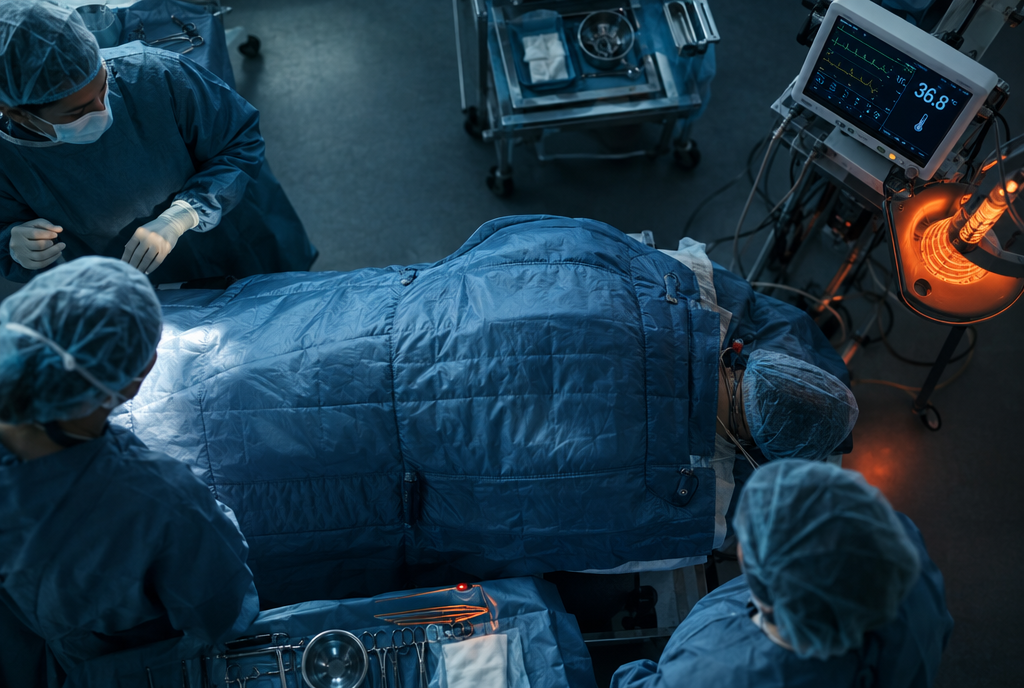
Perioperative hypothermia, a core temperature below 36.0°C under NICE CG65, is common. In a 2015 Anesthesiology study of nearly 59,000 patients warmed with forced air, 64% fell below 36°C in the first hour. A 2017 national study across 28 Chinese hospitals found 44.3%. Rates vary widely with definition, setting and how actively patients are warmed.
Key numbers at a glance
Each figure is listed with its year and population. Incidence depends heavily on when and how temperature was measured.
| Figure | Study, year and population | Source |
|---|---|---|
| Below 36.0°C | Definition of hypothermia in adults having surgery (2008, updated 2016) | NICE CG65 |
| 64% below 36°C in the first hour | Nearly 59,000 surgical patients, all warmed with forced air (Anesthesiology, 2015) | ASA news release |
| 44.3% intraoperative hypothermia | 3,132 patients, 28 hospitals in China, 2014 to 2015 (PLOS One, 2017) | Yi et al. |
| 19% vs 6% wound infection | 200 colorectal surgery patients, hypothermic vs normothermic (NEJM, 1996) | Kurz et al. |
| 6.3% vs 1.4% morbid cardiac events | 300 patients with cardiac risk factors (JAMA, 1997) | Frank et al. |
| About 16% more blood loss | 14 randomized trials, 1,219 patients, mild hypothermia (Anesthesiology, 2008) | Rajagopalan et al. |
| 9.9% vs 9.6% major cardiovascular outcomes | 5,013 patients warmed to 37°C vs 35.5°C (Lancet, 2022) | PROTECT trial |
How common is perioperative hypothermia?
The best known US figure comes from a 2015 Anesthesiology study led by Daniel Sessler at Cleveland Clinic. Of nearly 59,000 surgical patients, all warmed with forced air, 64% had a core temperature below 36°C during the first hour, nearly 50% stayed below 36°C continuously for more than an hour, and 20% stayed below it for more than two hours.
Where active warming is less routine, the picture differs. A national cross-sectional study of 3,132 patients in 28 Chinese hospitals, conducted from November 2014 to August 2015 and published in PLOS One in 2017, found intraoperative hypothermia in 44.3% of patients. Only 14.2% received active warming. The cumulative rate rose from 17.8% in the first hour after induction to 44.1% by four hours.
These two studies are not directly comparable. One counted any time below 36°C in the first hour of a warmed population, the other counted any time below 36°C during surgery. Reported rates depend on when and how temperature is measured, so figures from different studies are not directly comparable.
What did the landmark trials find?
Kurz and colleagues (New England Journal of Medicine, 1996) randomized 200 patients having colorectal surgery. Wound infection occurred in 18 of 96 patients (19%) in the hypothermia group, whose core temperature averaged 34.7°C, and in 6 of 104 (6%) in the normothermia group at 36.6°C. The hypothermia group stayed in hospital 2.6 days longer, about 20%.
Frank and colleagues (JAMA, 1997) randomized 300 patients with cardiac risk factors having abdominal, thoracic or vascular surgery. Postoperative core temperature was 35.4°C in the routine care group and 36.7°C in the warmed group. Morbid cardiac events occurred in 6.3% of hypothermic patients and 1.4% of normothermic patients, and ventricular tachycardia in 7.9% and 2.4%.
Rajagopalan and colleagues (Anesthesiology, 2008) pooled randomized trials of mild hypothermia, defined as less than 1°C below normothermia. Across 14 trials and 1,219 patients, hypothermia increased blood loss by about 16% (range 4% to 26%). Across 10 trials and 895 patients, it increased the relative risk of transfusion by about 22% (range 3% to 37%).
Did the PROTECT trial challenge the older evidence?
Partly. PROTECT, led by Sessler and published in the Lancet in 2022, enrolled 5,056 patients aged 45 or older with cardiovascular risk factors at 12 sites in China and at Cleveland Clinic between 2017 and 2021. Patients having two to six hours of noncardiac surgery were warmed aggressively to 37°C or managed routinely with a target of 35.5°C.
Mean final core temperatures were 37.1°C and 35.6°C. The 30-day composite of major cardiovascular outcomes occurred in 9.9% of the aggressively warmed group and 9.6% of the routine group (relative risk 1.04, 95% CI 0.87 to 1.24).
The authors concluded that keeping core temperature at or above 35.5°C appears sufficient. That challenges the idea that 36.0°C is a hard clinical cliff, but it does not show that unwarmed patients do well: the routine group was still actively managed to a floor of 35.5°C.
Where does the evidence conflict?
The older trials were small and focused. Kurz enrolled colorectal patients and Frank enrolled high cardiac risk patients, and both compared differences near 2°C. A 2016 Cochrane review of 67 trials and 5,438 participants found that active body surface warming reduced surgical site infection (risk ratio 0.36, 3 trials, 589 participants) and major cardiovascular complications (risk ratio 0.22, 1 trial, 300 participants), but rated both results as low-quality evidence and found no benefit on mortality.
Observational data are mixed. In the 2017 Chinese national study, hypothermic patients had more ICU admissions (10.03% vs 4.64%) and longer postoperative stays, but surgical site infection (2.41% vs 2.59%) and 30-day mortality did not differ significantly. Cohort studies also cannot separate temperature from the longer operations that produce it.
Stronger evidence: blood loss (pooled randomized trials) and shivering; Cochrane found no clear reduction in transfusion.
Mixed evidence: wound infection and cardiac events, with positive early trials and null large or observational studies.
Latest large trial: no added benefit from warming to 37°C over a 35.5°C floor, while NICE still uses 36.0°C.
What threshold do guidelines use?
NICE CG65, published in 2008 and updated in 2016, defines hypothermia as a core temperature below 36.0°C. It advises that induction should not start below 36.0°C except in emergencies, prewarming for at least 30 minutes, an ambient temperature of at least 21°C while the patient is exposed, and temperature checks every 30 minutes during surgery and every 15 minutes in recovery.
NICE has not adopted the 35.5°C floor suggested by the PROTECT authors. Anyone with questions about temperature management for their own surgery should talk to a clinician on their surgical team.
How we compiled these numbers
We used randomized trials, pooled reviews, a large US cohort and a national cross-sectional study, reading each abstract or an authoritative summary. Hypothermia means a core temperature below 36.0°C unless a study states otherwise. We report each figure with its year and population and do not combine studies. This page is updated each winter.
Key takeaways
Perioperative hypothermia is defined by NICE CG65 as a core temperature below 36.0°C.
Reported incidence ranges from about 44% (China, 2017) to 64% in the first hour of a warmed US cohort (2015), depending on definition and warming practice.
Early trials linked hypothermia near 35°C with more wound infection (Kurz 1996) and cardiac events (Frank 1997); pooled trials show about 16% more blood loss (2008).
PROTECT (2022) found no benefit from warming to 37°C over a 35.5°C floor.
Much of the outcome evidence is rated low quality, so single figures should be quoted with their study and year.
Frequently asked questions
What percentage of surgical patients become hypothermic?
It depends on setting and definition. A 2015 Anesthesiology study of nearly 59,000 warmed patients found 64% below 36°C in the first hour, while a 2017 study across 28 Chinese hospitals found 44.3% during surgery. Rates depend on when and how temperature is measured, so compare studies with care.
Does hypothermia during surgery cause wound infections?
The 1996 Kurz trial found wound infection in 19% of hypothermic and 6% of normothermic colorectal patients. Later evidence is mixed: a 2016 Cochrane review rated the infection benefit of warming as low-quality evidence and found no mortality benefit.
What did the PROTECT trial find?
PROTECT randomized 5,013 analyzed patients to warming at 37°C or routine care at 35.5°C. Major cardiovascular outcomes occurred in 9.9% and 9.6%, with no significant difference. The authors concluded that keeping core temperature at least 35.5°C appears sufficient.
How much does mild hypothermia increase blood loss?
A 2008 pooled review of 14 randomized trials with 1,219 patients found that less than 1°C of hypothermia increased blood loss by about 16%. Across 10 trials it raised the relative risk of transfusion by about 22%.
What temperature counts as perioperative hypothermia?
NICE CG65 defines it as a core temperature below 36.0°C and advises not starting anesthesia below that level except in emergencies. The PROTECT authors have argued that 35.5°C may be an adequate floor, but guidelines have not adopted that figure.
From HEATJAC
We design low-profile thermal garments: a heat-reflective vest and a thermal harness with pockets for warmers or cold packs.
Choosing gear? The thermal gear buying, safety and care guide · What warmth costs per shift
Related reading
Sources
Hypothermia: prevention and management in adults having surgery (CG65), NICE via NCBI Bookshelf
Many surgical patients experience hypothermia despite active warming (news release on a Cleveland Clinic study in Anesthesiology, 2015), American Society of Anesthesiologists
How Maintaining Normothermia Can Reduce Infections (summary of Kurz et al., NEJM 1996), AORN Outpatient Surgery Magazine
Perioperative maintenance of normothermia reduces the incidence of morbid cardiac events: a randomized clinical trial (Frank et al., JAMA 1997), Johns Hopkins University
The effects of mild perioperative hypothermia on blood loss and transfusion requirement (Rajagopalan et al., 2008), NCBI Bookshelf, Database of Abstracts of Reviews of Effects
Aggressive intraoperative warming versus routine thermal management during non-cardiac surgery (PROTECT), The Lancet, 2022
About HEATJAC. HEATJAC is a thermal architecture company founded by an anesthesiologist. We design patented garment systems that capture, conduct and broaden warmth across the body, and we publish this knowledge hub because the science of staying warm should be public. HEATJAC products are not medical devices and are not intended to diagnose, treat, cure or prevent any disease.