
Why are operating rooms so cold?
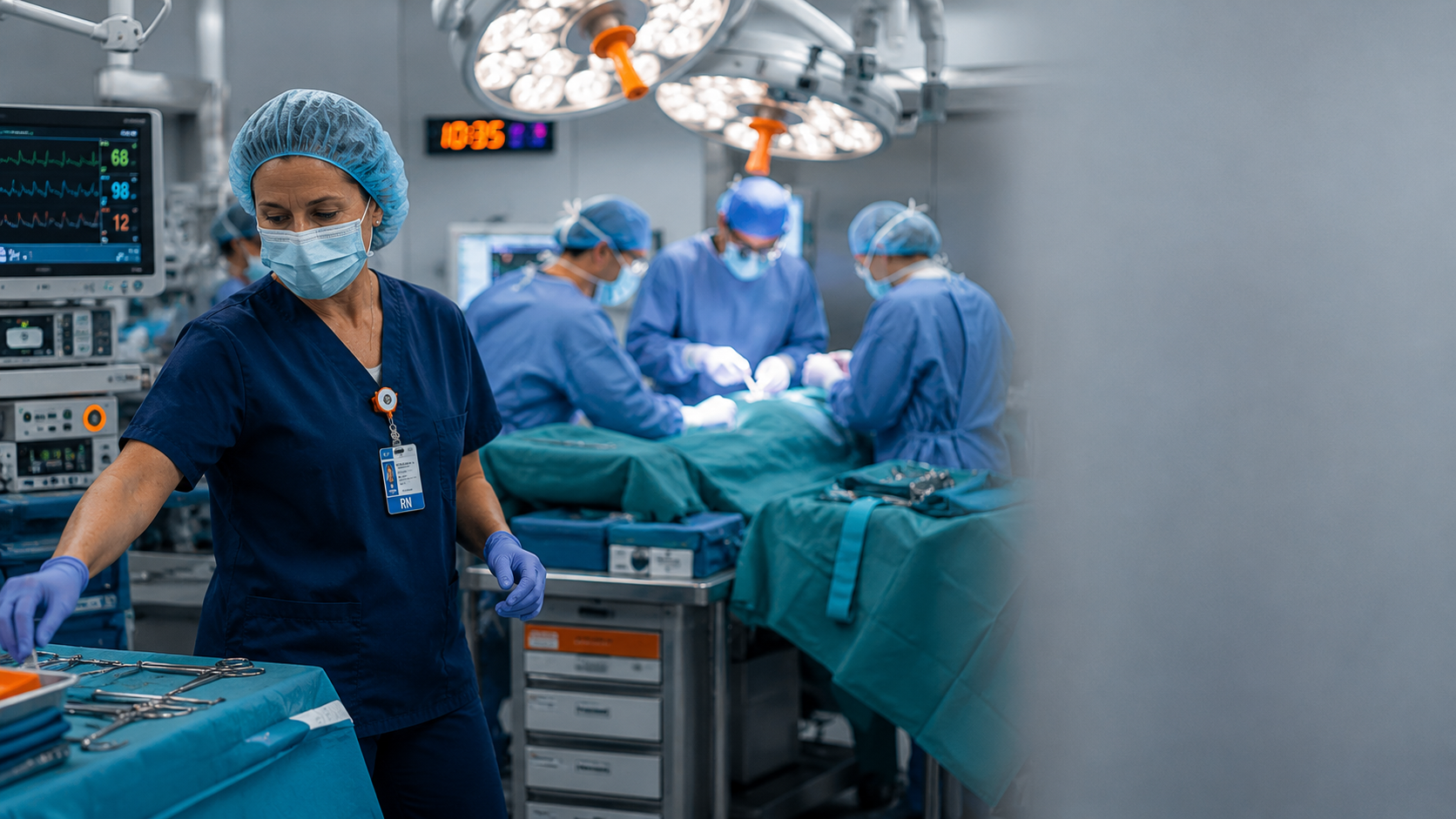
US operating rooms are designed to ASHRAE/ASHE Standard 170, which sets a temperature of 68 to 75 °F (20 to 24 °C) and relative humidity of 20 to 60 percent. Many rooms run at the cool end mainly because surgeons wear gowns under hot lights, and humidity has to be managed alongside temperature. Cold air is not what keeps the room sterile.
How cold is an operating room?
Most operating rooms sit between 68 and 75 °F (20 and 24 °C). That is the design range in ANSI/ASHRAE/ASHE Standard 170, the ventilation standard used for US health care facilities. CDC infection control guidance describes cool temperature standards of 68 to 73 °F (20 to 23 °C) as the range usually associated with operating rooms.
Within that range, the thermostat is often set by the team for each case. A room near 68 °F (20 °C) feels cold to anyone standing still in thin scrubs, and colder still to an unclothed patient on the table. The full standards are covered in our guide to operating room temperature and humidity standards.
| Design parameter | Typical requirement | Source |
|---|---|---|
| Temperature | 68 to 75 °F (20 to 24 °C) | ASHRAE/ASHE Standard 170, Table 7-1 |
| Relative humidity | 20 to 60 percent | ASHRAE/ASHE Standard 170; CMS lowered its minimum from 35 to 20 percent in 2013 (ASHE) |
| Total air changes | At least 20 per hour, at least 4 of them outdoor air | ASHRAE/ASHE Standard 170, Table 7-1 |
| Pressure | Positive relative to surrounding areas | ASHRAE/ASHE Standard 170, Table 7-1 |
| UK humidity (in use) | 35 to 60 percent | HTM 03-01, as cited by the Association for Perioperative Practice |
| Room temperature while the patient is exposed | At least 69.8 °F (21 °C) | NICE guideline CG65 (England) |
Why are operating rooms kept cold?
The main reason is the people doing the work. Surgeons and scrub staff wear sterile gowns, gloves, masks and sometimes lead aprons, and they stand under powerful surgical lights for hours. In a warm room they sweat, tire and lose focus, and sweat dripping into a sterile field is a real concern. The APSF Newsletter notes that staff comfort and case needs often drive operating room temperatures down.
Humidity is the second factor. Cool air holds less water vapor, and the APSF points out that cold operating rooms have higher relative humidity than warm ones with the same absolute humidity. Too much humidity encourages mold and mildew; too little raises the risk of static discharge that can interfere with electronic equipment, and shortens the shelf life of some supplies. Because cooler air raises relative humidity, the APSF notes that turning the thermostat down for staff comfort can push humidity above its upper limit, so engineers manage the two together.
Equipment adds heat too. Lights, monitors, imaging systems, energy devices and warming systems all release heat into the room, so the cooling system works continuously during a long case.
Do operating rooms have to be cold to prevent infection?
No. This is the most common misconception. Infection control in the operating room comes from ventilation design, not from cold air. Standard 170 requires positive pressure, so air flows out of the room rather than in, along with at least 20 air changes per hour and high-efficiency filtration. CDC guidance notes that particle removal from room air peaks at about 12 to 15 air changes per hour.
Temperature and humidity matter for infection mainly at the extremes. CDC guidance states that relative humidity above 60 percent promotes fungal growth, which is one reason the upper humidity limit exists. A room at 75 °F (24 °C) with proper airflow is not less sterile than one at 68 °F (20 °C).
Why are operating theatres so cold in the UK?
The reasons are the same. In the UK, theatre ventilation follows Health Technical Memorandum 03-01, and the Association for Perioperative Practice cites its humidity range of 35 to 60 percent while theatres are in use, with temperature set within locally agreed parameters. NICE guidance for England adds a patient-focused floor: the ambient temperature should be at least 69.8 °F (21 °C) while the patient is exposed.
What does a cold operating room do to patients?
Patients lose heat fast in surgery. They are lightly covered, often given cool fluids, and their skin is exposed to cool air and surfaces. General and regional anesthesia also blunt the body's normal defenses against cold, so heat moves from the core to the skin and out into the room.
The result can be perioperative hypothermia, which NICE defines as a core temperature below 96.8 °F (36.0 °C). Hypothermia during surgery can lead to complications and an uncomfortable recovery, which is why surgical teams warm patients with blankets and active warming devices and keep the room warmer while the patient is uncovered. Our pages on perioperative hypothermia and the NICE, AORN and ASA guidance explain this in depth.
Why does the operating room feel cold before surgery even starts?
Patients usually notice the cold first, on arrival from a warm preoperative area in a thin gown. The room may already be set for the team that is about to gown up. Good practice is to cover the patient with warmed blankets, keep exposure brief, and keep the room warmer while the patient is uncovered, then adjust once drapes and warming devices are in place. Patients who feel cold should say so; it is a routine request.
Who feels cold in the operating room?
The people who move least and wear least. Anesthesia providers sit or stand at the head of the bed, often near the air supply, for the entire case. Circulating nurses move in and out of the sterile area in thin scrubs and are not under the lights. Patients, of course, feel it most.
This creates a well-known conflict: the gowned surgeon under the lights is warm while the rest of the team is chilly. Our article on the operating room thermal comfort gap covers how teams negotiate the thermostat.
How do OR staff and patients stay warm?
Staff usually rely on layers that meet facility attire rules: long-sleeve base layers under scrubs, approved warm-up jackets and thermal vests. Our practical guide to staying warm in the operating room covers what works within infection control policy.
Patients can ask for a warm blanket before surgery and tell the nurse whenever they feel cold. Avoid bringing personal heating pads or warmers to the hospital without staff approval.
When to call a clinician or emergency services
Feeling cold and shivering just after surgery is common, and the recovery team will check your temperature and warm you. Talk to your clinician or care team about symptoms that do not settle.
Tell your nurse right away if you feel very cold, cannot stop shivering or feel confused after surgery.
After you go home, call your surgical team for fever, chills, or redness, swelling or discharge at the wound.
Call emergency services for trouble breathing, chest pain, or sudden confusion.
Key takeaways
US operating rooms are designed for 68 to 75 °F (20 to 24 °C) and 20 to 60 percent relative humidity under ASHRAE/ASHE Standard 170.
Rooms often run cool for gowned surgeons under hot lights; temperature and humidity are managed together.
Infection control comes from positive pressure, high air change rates and filtration, not cold air.
Patients risk perioperative hypothermia, so teams warm them actively and keep the room warmer while they are exposed.
Anesthesia providers, circulating nurses and patients feel the cold most.
Frequently asked questions
How cold is an operating room?
Usually 68 to 75 °F (20 to 24 °C), the design range in ASHRAE/ASHE Standard 170. Many teams set the room toward the cooler end during surgery. It feels colder than the number suggests because patients are lightly covered and staff wear thin scrubs.
Why do operating rooms have to be cold?
They do not have to be cold to stay sterile. Rooms are kept cool mainly for the comfort and performance of gowned surgical teams under hot lights, with humidity managed alongside temperature. Sterility depends on airflow, pressure, filtration and sterile technique.
At what temperature and humidity levels should the OR be maintained?
Standard 170 sets 68 to 75 °F (20 to 24 °C) and 20 to 60 percent relative humidity for operating rooms. In England, NICE adds that the room should be at least 69.8 °F (21 °C) while the patient is exposed. Each hospital sets its own policy within these limits.
Why are surgery rooms so cold for patients?
Patients are mostly uncovered, may receive cool fluids, and anesthesia reduces the body's ability to hold heat. Surgical teams counter this with warm blankets and active warming devices. Tell the nurse if you feel cold before or after your operation.
Can I bring my own blanket or warmer to surgery?
Ask the hospital first. Most facilities provide warmed blankets and have rules about personal items in surgical areas, and heating pads or air-activated warmers can burn skin that is numb from anesthesia. Your care team will tell you what is allowed.
From HEATJAC
We design low-profile thermal garments: a heat-reflective vest and a thermal harness with pockets for warmers or cold packs.
Choosing gear? What nurses and OR staff should look for in thermal gear · Getting a thermal vest approved for clinical areas
Related reading
Sources
Addendum d to ANSI/ASHRAE/ASHE Standard 170-2008, Ventilation of Health Care Facilities (Table 7-1), ASHRAE and ASHE
CMS lowers OR humidity requirement (issue brief), American Society for Health Care Engineering
Environmental Infection Control Guidelines: C. Air, Centers for Disease Control and Prevention
Humidity Levels in ORs, Anesthesia Patient Safety Foundation (APSF Newsletter)
Hypothermia: prevention and management in adults having surgery (CG65), recommendations, National Institute for Health and Care Excellence
Managing Extreme Heat in the Operating Theatre Environment (Member Advice Note), Association for Perioperative Practice
About HEATJAC. HEATJAC is a thermal architecture company founded by an anesthesiologist. We design patented garment systems that capture, conduct and broaden warmth across the body, and we publish this knowledge hub because the science of staying warm should be public. HEATJAC products are not medical devices and are not intended to diagnose, treat, cure or prevent any disease.