
What to bring to the hospital to stay warm: a patient packing list
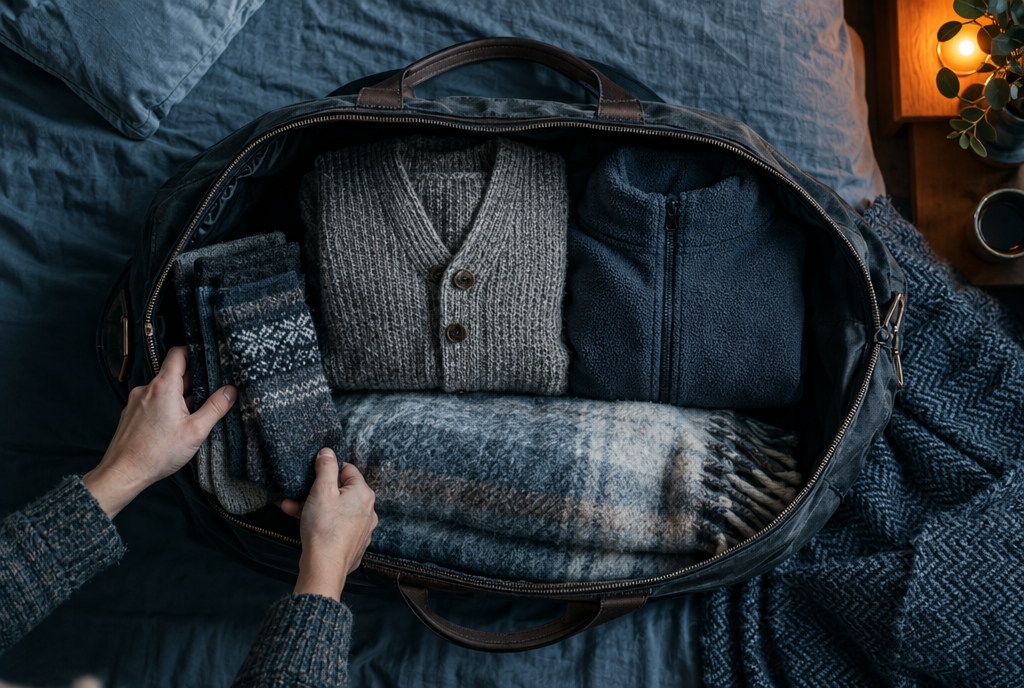
To stay warm in the hospital, pack layers you control: a robe, a front-opening sweater or zip top that clears IV lines and monitors, warm socks, slippers with non-slip soles and a firm fit, and a soft hat. Leave heating pads and electric blankets at home; many hospitals do not allow them, and nurses can bring warmed blankets instead.
Why pack for warmth at all?
Hospitals can feel cold, especially when you are lying still in a thin gown with an IV running. UK NICE guidance on preventing hypothermia around surgery tells patients that the hospital may be colder than their own home, that keeping warm before surgery lowers the risk of complications afterward, and that they should tell staff whenever they feel cold.
The same guidance suggests bringing extra clothing such as a dressing gown, an undershirt, warm clothing and slippers. What you pack is the part you control, so it is worth a little planning. For why patient rooms, the emergency department and imaging rooms run cool, see our guide to why hospitals are cold.
The hospital packing list for staying warm
Pack light, label everything, and choose items that are easy to put on with one arm, a drain or a sore abdomen.
| Item | Why it helps | What to look for |
|---|---|---|
| Robe or dressing gown | Covers the open back of a gown for walks and visits | Light, washable, front-tie or zip, not floor length |
| Front-opening top (zip hoodie, cardigan, button shirt) | Adds warmth while leaving IV lines and monitor leads reachable | Wide or roll-up sleeves, no tight cuffs |
| Soft undershirt or sleeveless top | A thin base layer under the gown | Breathable, easy to remove for checks |
| Warm socks | Feet often feel coldest in bed | Soft tops that do not leave deep marks |
| Slippers or shoes for walking | Warmth plus safer footing | Non-slip sole, firm fit, supported heel |
| Soft hat or beanie | Keeps your head warm in a cool room | Thin enough to sleep in |
| Day clothes for later in the stay | Being dressed can help you feel more normal and active | Loose waist, room for dressings |
What clothes work with IV lines, monitors and dressings?
Think about access. Staff need to reach your IV site, blood pressure cuff, heart monitor leads and any wound without you undressing, so tops that open fully at the front, or sleeves that push well above the elbow, are the most useful. A pullover with tight cuffs is hard to manage once an IV is in the back of your hand or forearm.
Layer from thin to thick. A light undershirt, the hospital gown and a zip or button layer on top let you adjust as the room changes. If you are having surgery on an arm, shoulder or leg, pack for the side that will be bandaged: one roomy sleeve, wide-leg pants or shorts, and a slip-on shoe with a grippy sole.
Keep valuables at home. Hospitals generally advise against keeping them at the bedside, and an NHS trust's guidance asks patients to let the ward nurse arrange safe storage for anything valuable.
Packing for day surgery versus a longer stay
For day surgery, one bag is enough: the clothes you arrive in (chosen to be easy to put back on), a robe or zip layer, warm socks, slip-on shoes with grippy soles and a hat. Pre-op and recovery areas can feel cool, so wear or carry your warm layer into the building rather than leaving it in the car.
For a stay of several nights, add a second set of socks and an undershirt, a set of day clothes, and a small fleece throw if the ward allows it. Pack clothes for going home that fit over dressings, swelling or a brace.
Do socks with grips prevent falls in the hospital?
Not as reliably as many people assume. A 2021 rapid review in the International Journal for Quality in Health Care found weak evidence that non-slip socks prevent hospital falls, laboratory tests in which they were no safer than walking barefoot, and some risk of carrying bacteria.
Footwear guidance from Sir Charles Gairdner Hospital in Western Australia, written by its podiatry department and falls unit, advises against walking on the ward in ordinary socks or surgical stockings because they can be slippery. It recommends slippers with non-slip soles, a firm fit, a thin firm sole and a supported heel, and says non-slip socks are for when safe footwear is not available. An NHS trust's packing list also names non-slip slippers. Pack a pair that fits snugly over warm socks.
Can you bring a heating pad, electric blanket or your own blanket?
Usually not the electric ones. Saint Alphonsus Health System's patient guide, for example, states that safety rules prevent heating pads and electric blankets in the hospital, that nurses can provide warm blankets, and that any electrical item brought from home must meet listed safety standards and may be inspected. Rules vary, so check with your hospital before you pack.
There are good reasons for caution. A review of burns from body heating devices in the journal Wounds found higher risk in people with reduced sensation and in people who fell asleep on or against a device, and reports that skin can burn at 111 °F (44 °C). Numbness from anesthesia, a nerve block or a new incision can hide the warning signs. Ask the nurse before using any hand warmer or heat pack.
A plain fleece throw or a familiar blanket is often welcome; one NHS trust suggests a favorite blanket as a comfort item for people with dementia. Keep it clearly labeled, and expect staff to move it for checks.
When to call a clinician or emergency services
Packing well supports comfort; it does not replace care. Tell your nurse or clinician straight away about any of these, in the hospital or after you go home.
Shivering you cannot stop, or feeling hot and feverish.
Pain, swelling, leaking or coolness at an IV site.
Redness, blistering or soreness where anything warm touched your skin.
After discharge, follow the warning signs on your discharge sheet, and call emergency services for confusion, trouble breathing or chest pain.
Key takeaways
Hospitals can be colder than home, and NICE guidance tells patients to bring extra layers and tell staff when they feel cold.
Front-opening tops and roomy sleeves keep you warm without blocking IV lines, monitors or dressings.
Well-fitting slippers with non-slip soles beat ordinary socks; evidence for grip socks alone is weak.
Leave heating pads and electric blankets at home and ask for warmed blankets instead.
Ask before using any heat pack, since numb skin can burn without warning.
Frequently asked questions
Can I bring my own blanket to the hospital?
Most hospitals allow a plain, nonelectric blanket or throw, but rules vary, so ask ahead. Label it, keep it washable, and expect staff to move it for checks. Nurses can also bring warmed blankets.
Can I bring a heating pad to the hospital?
Often not. Many hospitals restrict heating pads and electric blankets for safety, and numbness after anesthesia or surgery raises the risk of burns. Ask your nurse for a warmed blanket instead.
What should I wear to the hospital for surgery?
Wear loose, comfortable clothes that are easy to put on after the operation, such as a zip top, wide-leg pants and slip-on shoes with grippy soles. Bring a robe and warm socks for the stay. Follow your hospital's instructions about jewelry, makeup and nail polish.
Are hospital grip socks enough to prevent falls?
Evidence that grip socks prevent falls is weak. Hospital footwear guidance favors slippers or shoes with non-slip soles, a firm fit and a supported heel. Ask staff for help when you first get up after surgery.
How can I stay warm in a hospital gown?
Add a thin undershirt beneath it if allowed, a front-opening layer on top, warm socks and a hat. Ask for a warmed blanket early, and tell staff whenever you feel cold.
From HEATJAC
We design low-profile thermal garments: a heat-reflective vest and a thermal harness with pockets for warmers or cold packs. If you have reduced sensation or a health condition, check with your clinician before adding heat.
Choosing gear? Before you buy: a checklist for any warming garment · Are heated vests safe?
Related reading
Sources
Hypothermia: prevention and management in adults having surgery (CG65), Recommendations, National Institute for Health and Care Excellence (NICE)
Patient Welcome Book (page 11), Saint Alphonsus Health System
What to bring to hospital, East Kent Hospitals University NHS Foundation Trust
Footwear in hospital, Sir Charles Gairdner Hospital, North Metropolitan Health Service (Western Australia)
Benefits and risks of non-slip socks in hospitals: a rapid review (Jazayeri et al., 2021), International Journal for Quality in Health Care
Burns Sustained From Body Heating Devices: An Integrative Review (Kornhaber et al., Wounds, 2020), Wounds / HMP Global Learning Network
About HEATJAC. HEATJAC is a thermal architecture company founded by an anesthesiologist. We design patented garment systems that capture, conduct and broaden warmth across the body, and we publish this knowledge hub because the science of staying warm should be public. HEATJAC products are not medical devices and are not intended to diagnose, treat, cure or prevent any disease.