
How to stay warm at a football game and other outdoor sporting events
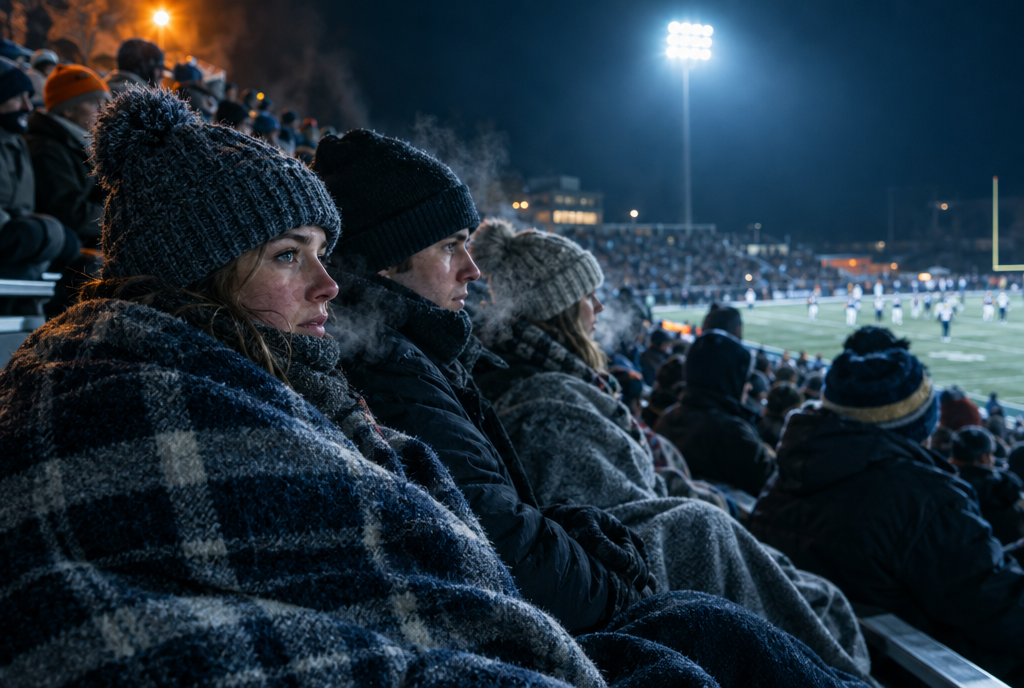
To stay warm at a football game, sit on an insulated seat pad so cold bleachers cannot pull heat from your body, then wear loose layers under a windproof shell. Cover your feet, hands and head and keep them dry, bring warmers if the venue allows them, drink warm non-alcoholic fluids and take short warm-up walks. The same plan works for any outdoor sporting event.
Why do you get so cold watching an outdoor game?
Spectators barely move. The Compendium of Physical Activities rates sitting quietly at about 1.3 METs, close to resting, compared with about 3.5 METs for a moderate walk. Three hours in the stands produces little body heat, so clothing that felt fine on the walk from the parking lot starts to feel thin by halftime.
Stadiums add their own problems. Seats are often metal or concrete, upper decks and open ends catch wind, and night games start as temperatures fall. Planning for all three is the difference between an uncomfortable evening and an enjoyable one.
Do seat cushions actually help you stay warm at a game?
Yes, and they are often the single most useful item. Mayo Clinic lists direct contact with something very cold as one of the ways the body loses heat. A metal bleacher or concrete step conducts warmth away from your thighs and lower back for the whole game, no matter how good your jacket is.
A foam or insulated stadium seat pad breaks that contact. Closed-cell foam, an insulated cushion or a folded blanket under you all help, and heated seat cushions add warmth on top of insulation. A second pad under your feet on a concrete floor helps too.
| Item | What it does | Tradeoffs |
|---|---|---|
| Foam or insulated seat pad | Blocks conduction into cold seats; no power | Adds no heat of its own |
| Heated seat cushion | Insulates and adds adjustable heat | Needs a charged battery; check venue rules |
| Stadium blanket | Wraps legs and blocks wind; can sit on it | Bulky; may count against bag or item limits |
| Air-activated warmers | No power; slips into gloves, pockets or boots | Single use; keep off bare skin |
What should you wear to an outdoor sporting event?
The CDC recommends several layers of loose-fitting clothing, a hat, a scarf or knit mask over the face, mittens or gloves, a water-resistant coat and water-resistant boots. For a game, start with a base layer that is not cotton, add fleece or an insulated vest, and finish with a windproof, water-resistant shell.
Your team gear can go on top. A jersey over a shell, or a team knit hat over a liner, keeps you warm without giving up the colors.
How do you keep your feet, hands and head warm at a game?
Feet sit on cold concrete for hours. Wear insulated, water-resistant boots with room for wool or synthetic socks, and bring a spare pair if rain or snow is likely, since the CDC notes that getting chilled from rain or sweat raises hypothermia risk even above 40°F.
For hands, mittens hold heat better than gloves; a thin liner lets you use your phone. Cover your head and neck, and pull a gaiter over your face when the wind picks up.
How much does wind matter in a stadium?
More than most fans expect. The National Weather Service explains that wind chill describes heat loss from exposed skin: at 0°F with a 15 mph wind, the wind chill is -19°F and exposed skin can freeze in 30 minutes. Check the forecast wind chill, not just the temperature, before you decide what to wear.
Upper rows and open ends of a stadium are usually windier than lower bowl seats. A windproof shell and a blanket over your legs make a large difference.
Movement helps too. A walk to the concourse at halftime or between innings raises your heat production and gets you out of the wind for a few minutes. Heated indoor concourses and clubs, where available, are worth using as planned warm-up breaks rather than a last resort.
Does a beer or hot chocolate keep you warm?
Hot chocolate, coffee, soup and a real meal help, because warm fluids are comforting and food gives your body fuel to make heat. Alcohol works against you. Mayo Clinic explains that alcohol may make the body feel warm inside but widens blood vessels, so the skin loses heat more rapidly. CCOHS calls it a deceptive feeling of warmth.
If you drink, alternate with warm non-alcoholic fluids, and pay extra attention to how cold you actually are.
How do you keep kids and older adults warm at a game?
Mayo Clinic notes that children lose heat faster than adults and may ignore the cold because they are having fun, while the body's ability to regulate temperature and sense cold may lessen with age. The National Weather Service advises being even more cautious with children, older adults and people with compromised health.
Dress them in an extra layer, check hands, feet and faces at every break, and leave early if they are shivering or unusually quiet. Shivering, clumsiness, slurred speech or confusion can signal hypothermia; get the person somewhere warm and seek medical help. Anyone with symptoms after cold exposure should talk to a clinician.
Can you bring hand warmers, blankets and heated gear into a stadium?
Rules vary widely by venue, league and season. Many stadiums limit bag size and type, and some restrict items such as blankets, cushions or battery packs, so check the venue's official website before you leave.
Warmers slip easily into pockets, gloves and boots; follow the package directions and keep them off bare skin, especially on children. Battery-heated vests, gloves and cushions give adjustable heat but need a charged battery, while battery-free layers and seat pads need no power. Either is a reasonable choice.
Key takeaways
Sitting still produces little body heat, so dress warmer than the forecast suggests.
An insulated seat pad stops cold metal or concrete seats from draining heat.
Wear loose layers under a windproof shell and keep feet, hands and head covered and dry.
Skip alcohol as a warmer; it increases heat loss from the skin.
Check the venue's bag and item rules before packing blankets, cushions or heated gear.
Frequently asked questions
What is the best thing to sit on at a cold football game?
An insulated or closed-cell foam seat pad, because it blocks heat loss into cold metal or concrete. A heated seat cushion adds warmth if the venue allows it. A folded blanket works in a pinch.
How do I keep my feet warm at a football game?
Wear insulated, water-resistant boots with wool or synthetic socks and room to wiggle your toes. Put a pad or piece of cardboard under your feet on concrete, and use toe warmers made for footwear following the package directions.
Are heated seat cushions allowed in stadiums?
It depends on the venue. Some allow seat cushions and battery-powered items and some restrict them, so check the stadium's official policy page before the game.
How do I keep a baby warm at an outdoor game?
Dress the baby in one more layer than you are wearing, cover the head, hands and feet, and shield them from wind. Check their skin often and go inside if they seem cold. Do not place hand warmers directly against a baby's skin.
Does drinking alcohol keep you warm at a game?
No. Alcohol can make you feel warm, but it widens blood vessels so your skin loses heat faster. Warm non-alcoholic drinks and food are the better choice.
How do you stay warm at a high school football game?
Plan for metal bleachers, open wind and a night kickoff. Bring a foam seat pad and a blanket for your legs, wear a non-cotton base layer, a fleece and a windproof shell, and add a hat, mittens and insulated boots. Walk to the concession stand at halftime to warm up, and check the school's rules on bags, blankets and heated items before you go.
What should I bring to a cold football game?
A seat pad, a stadium blanket, a hat, a scarf or neck gaiter, mittens with thin liners, spare wool socks and air-activated hand and toe warmers. Add a thermos of a warm non-alcoholic drink if the venue allows it. Check the forecast wind chill, not just the temperature, and the venue's bag policy before packing.
Why do I freeze at night football games?
You are sitting still for hours while the air cools after sunset, and sitting quietly produces about as little body heat as resting. Wind across open stands and cold seats add to the heat loss. Dress for the temperature expected at the end of the game, not at kickoff, and add a layer before you feel cold.
From HEATJAC
We design low-profile thermal garments: a heat-reflective vest and a thermal harness with pockets for warmers or cold packs.
Choosing gear? Heated vest vs heat-reflective vest · A hunter's guide to staying warm in the stand
Related reading
Sources
Hypothermia: Symptoms and Causes, Mayo Clinic
Preventing Hypothermia (Winter Weather), Centers for Disease Control and Prevention
Wind Chill Chart, National Weather Service
2011 Compendium of Physical Activities (supplemental activity table), Medicine and Science in Sports and Exercise
Cold Environments: Working in the Cold, Canadian Centre for Occupational Health and Safety
About HEATJAC. HEATJAC is a thermal architecture company founded by an anesthesiologist. We design patented garment systems that capture, conduct and broaden warmth across the body, and we publish this knowledge hub because the science of staying warm should be public. HEATJAC products are not medical devices and are not intended to diagnose, treat, cure or prevent any disease.