
Knowledge
Sourced guides on how the body stays warm, how patients and clinicians are kept comfortable, how crews work safely in cold and heat, and how warming gear works. Pick the theme closest to your world.
Ready to choose gear? Browse all buyer’s guides →
Free tools: wind chill and frostbite calculator, cold work warm-up schedule, what to wear by temperature, which warmth setup is right for you? and the warmth runtime and cost calculator. All tools and data →

Science of Warmth
For anyone who wants to understand how the body makes, keeps and loses heat.
Start here
Popular
All Science of Warmth articles →
Healthcare
For clinicians, perioperative teams, hospital leaders, and patients before and after surgery.
Start here
- Patient warming and perioperative hypothermia
- Thermal comfort for clinicians
- For patients: surgery and recovery
Popular
- How to stay warm in the operating room
- What is perioperative hypothermia?
- Forced-air vs conductive warming

Work and Duty
For employers, safety leads, crews, service members and EMS.
Start here
Popular
All Work and Duty articles →
Everyday Life and Health
For people who feel the cold, and for daily life outdoors.
Start here
- Cold sensitivity and Raynaud’s
- Staying warm in everyday life
- Staying warm at home and with family
- Staying warm with a health condition or disability
- Medications and feeling cold
Popular
All Everyday Life and Health articles →
Heat and Cooling
For hot jobs, heavy protective gear and personal heat sensitivity.
Start here
Popular
All Heat and Cooling articles →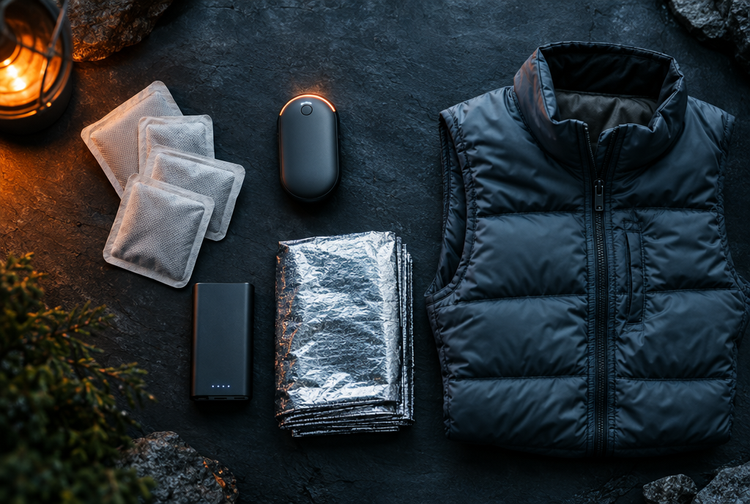
Technology and Gear
For choosing, using and caring for warming gear.
Start here
Popular
All Technology and Gear articles →All articles
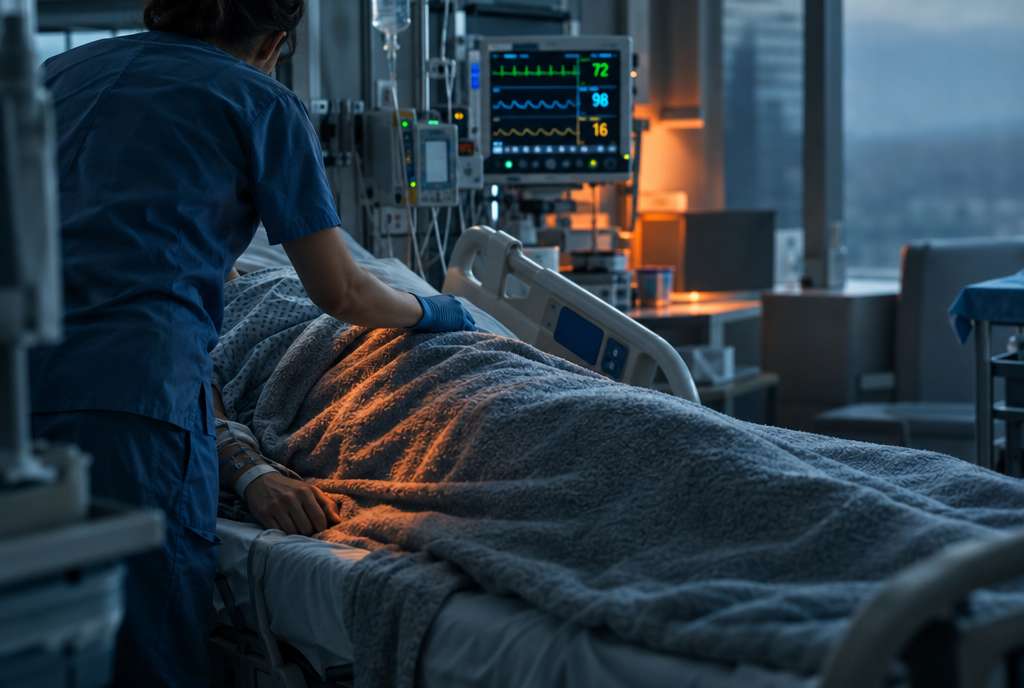
Why you feel cold after surgery, and shivering after anesthesia
Feeling cold after surgery is common. Anesthesia blunts the body's temperature control, heat shifts from the core to the skin within the first hour, and operating rooms are cool, so unwarmed patients typically lose 1 to 2°C of core temperature. Shivering after anesthesia is uncomfortable but usually not dangerous, and it normally settles within 20 to 30 minutes with warming.
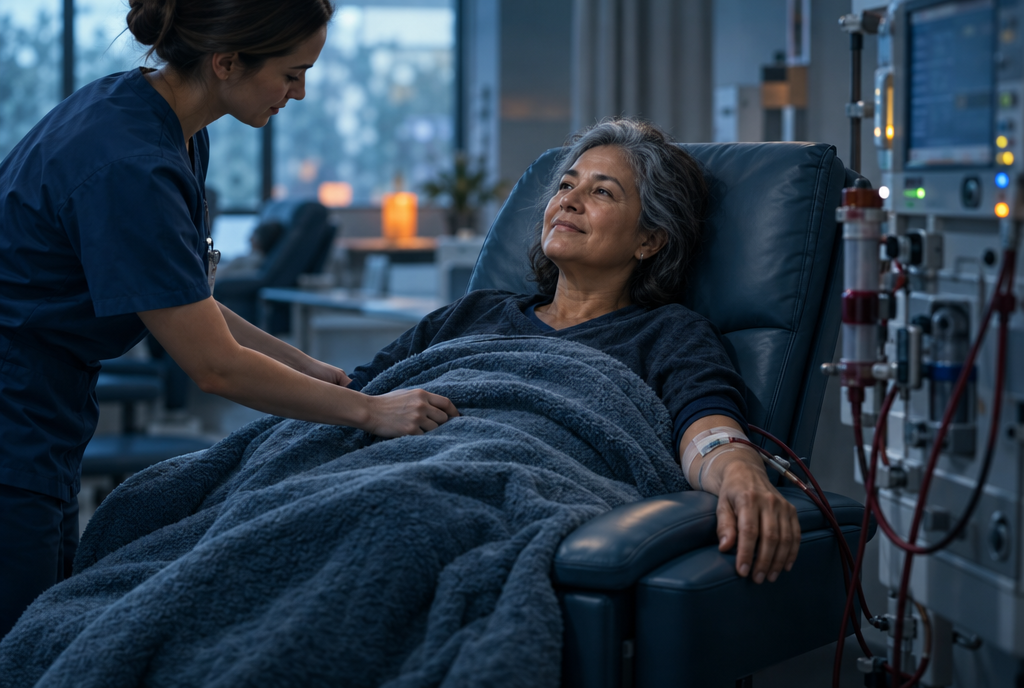
Why dialysis and infusion patients feel cold, and how clinics keep them comfortable
Feeling cold during dialysis is common and usually has several overlapping causes: some of your blood is circulating outside your body, the dialysate may be set slightly cool to help keep blood pressure stable, anemia reduces heat production, your access arm stays uncovered, and you sit still for hours. Infusion patients face similar factors. Layers, blankets and a word with your care team usually help.
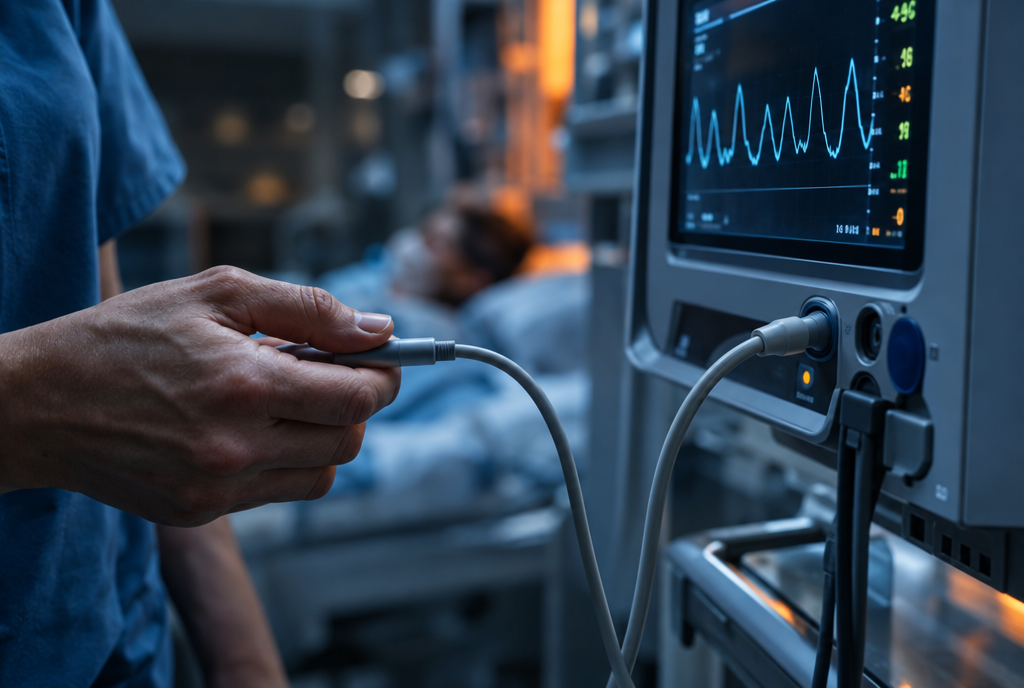
Core temperature monitoring: methods and accuracy
Core temperature is best measured where blood from the body's core is sampled directly or closely: the pulmonary artery, distal esophagus, nasopharynx or tympanic membrane. Bladder, oral, axillary and zero-heat-flux forehead sensors are practical near-core options with known limits. Infrared temporal and ear scanners are not accurate enough to guide perioperative care, and NICE advises against indirect estimates.
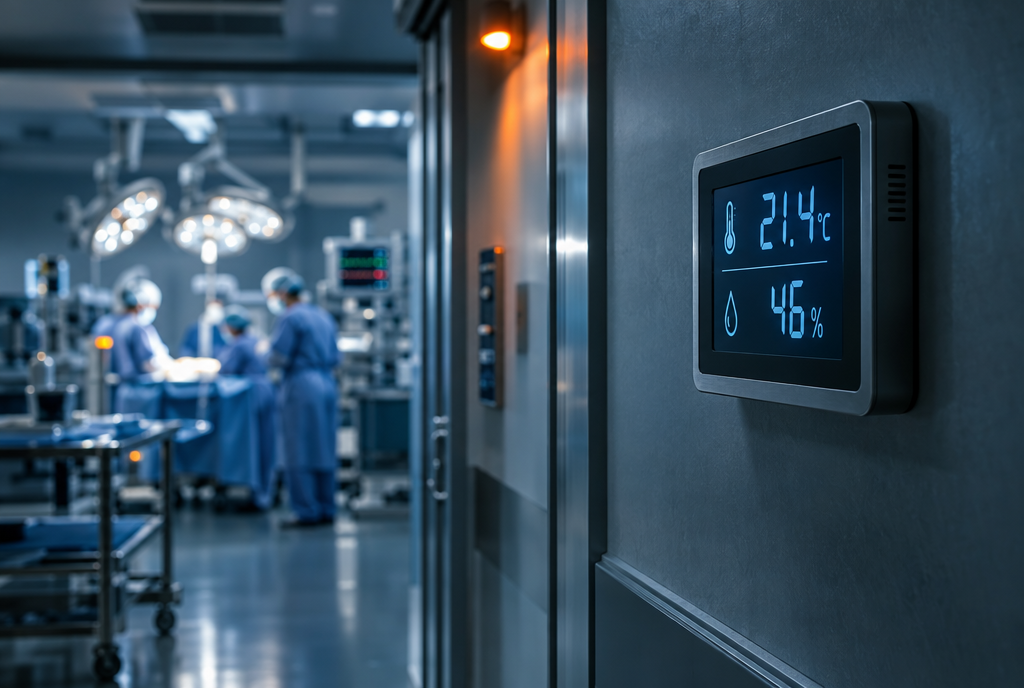
Operating room temperature and humidity standards (ASHRAE 170 and AORN)
In the US, operating room design conditions come from ANSI/ASHRAE/ASHE Standard 170, which sets a temperature range of 68°F to 75°F (20°C to 24°C) and relative humidity of 20 to 60 percent. CMS lowered its minimum humidity from 35 to 20 percent in 2013. The UK's NICE guideline adds a patient-focused rule: at least 21°C (69.8°F) while the patient is exposed.
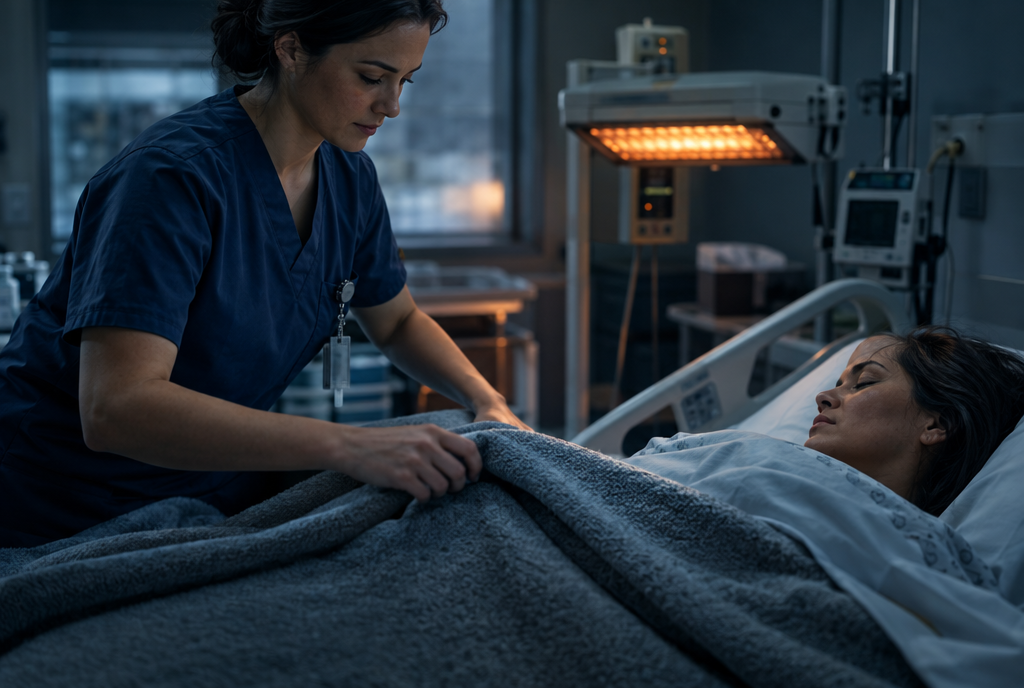
Passive vs active warming: when each is used
Passive warming reduces heat loss by insulating the patient with blankets, heat-reflective layers or clothing, but relies on the body's own heat. Active warming adds external heat through devices such as forced-air, resistive or circulating-water systems. In surgery, anesthesia blunts the body's heat production and defenses, so guidelines favor active warming for most anesthetized patients and use passive measures as support.
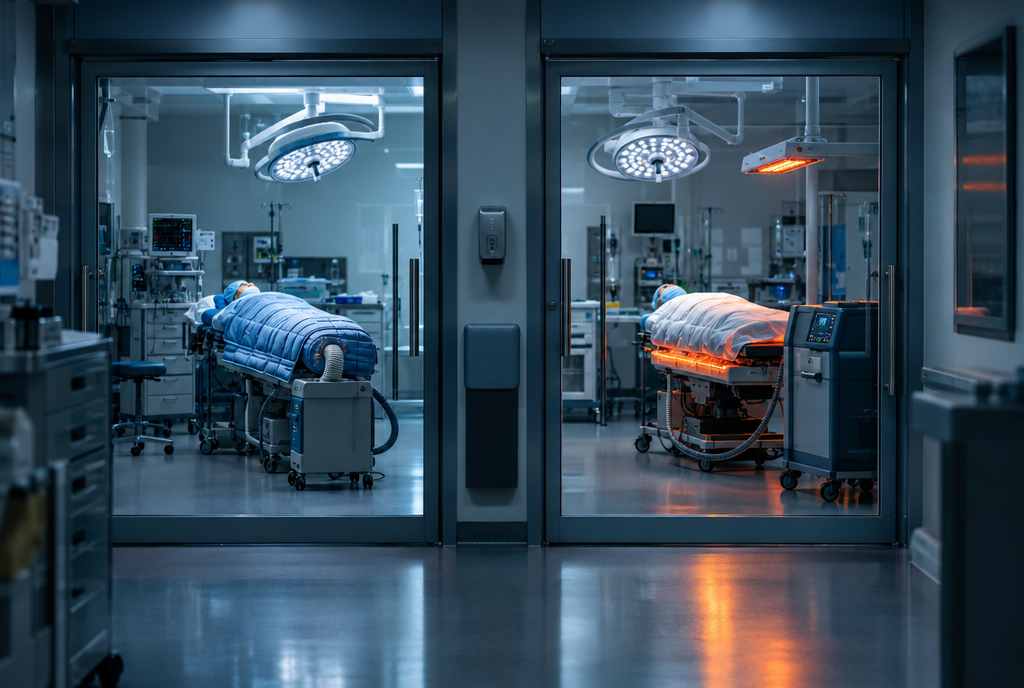
Forced-air vs conductive warming: what the evidence shows
Both forced-air and conductive warming reduce perioperative hypothermia, and neither eliminates it. Forced air has the larger evidence base and is NICE's default; some trials find it slightly more effective, while others find conductive warming equivalent or better, especially when combined with prewarming. Timing, coverage and consistent use often matter more than the choice of technology.
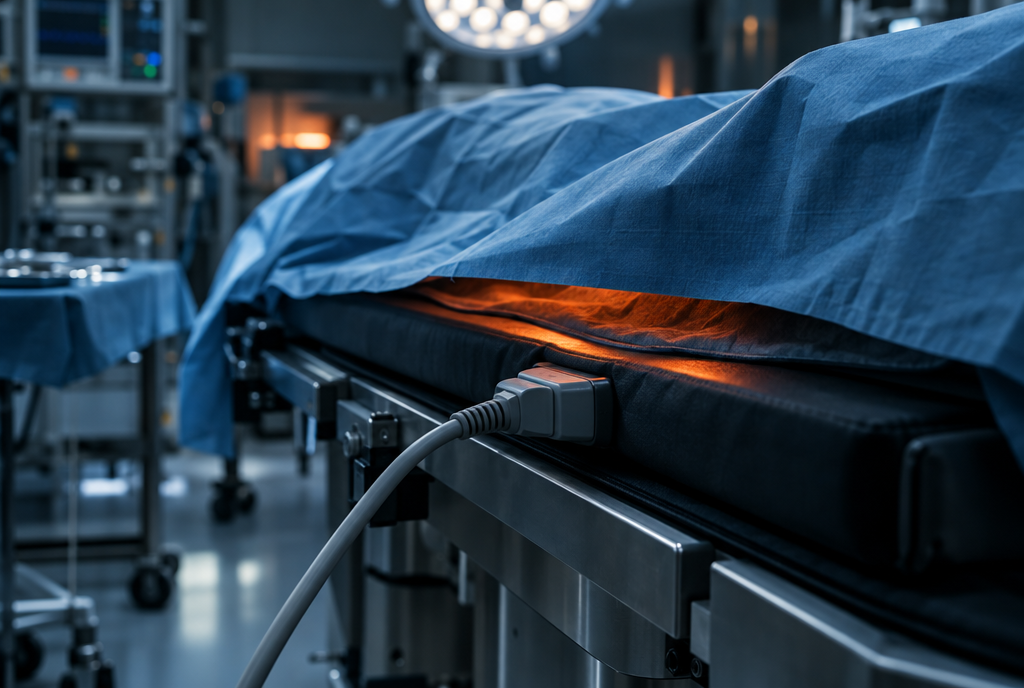
Conductive and resistive patient warming explained
Conductive patient warming transfers heat through direct contact between a warm surface and the patient's skin. The two main forms are electric resistive systems, which pass a low-voltage current through a carbon or polymer fabric in blankets and mattresses, and circulating-water systems, which pump temperature-controlled water through pads or mattresses. NICE recommends considering resistive warming when forced air is unsuitable.
Forced-air warming explained: how convective patient warming works
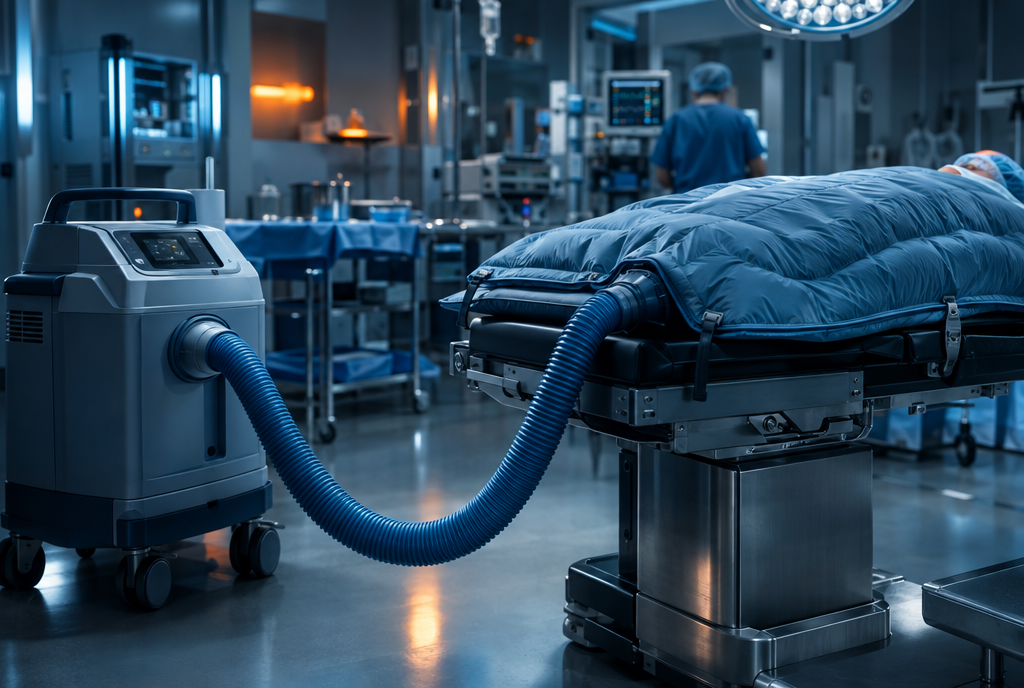
Forced-air warming blows heated, filtered air from a bedside unit through a hose into a disposable blanket or gown, which releases it through small perforations over the patient's skin. It warms by convection and also blocks radiant loss to the room. It is the most widely used active warming method in surgery and the default recommended by NICE for anesthesia longer than 30 minutes.
Prewarming before surgery: why 30 minutes matters
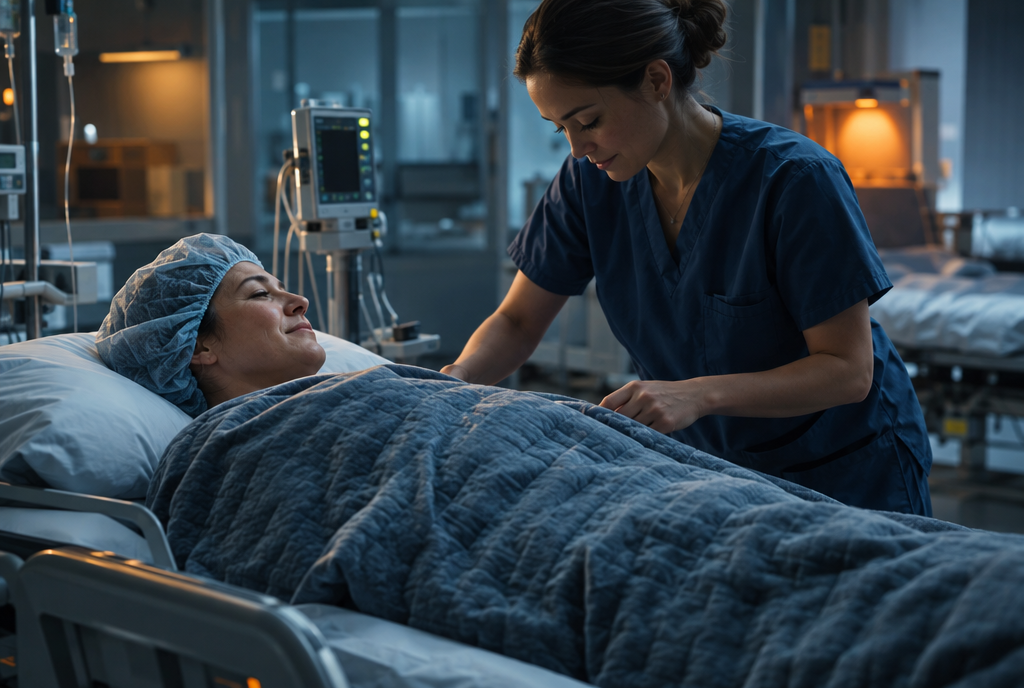
Prewarming means actively warming a patient's skin, usually with a forced-air or conductive device, before anesthesia starts. It loads heat into the arms and legs so that less core heat is lost when anesthesia dilates blood vessels. NICE recommends starting active warming at least 30 minutes before induction when the patient's temperature is 36.0°C or above.
Inadvertent perioperative hypothermia: NICE, AORN and ASA guidance compared
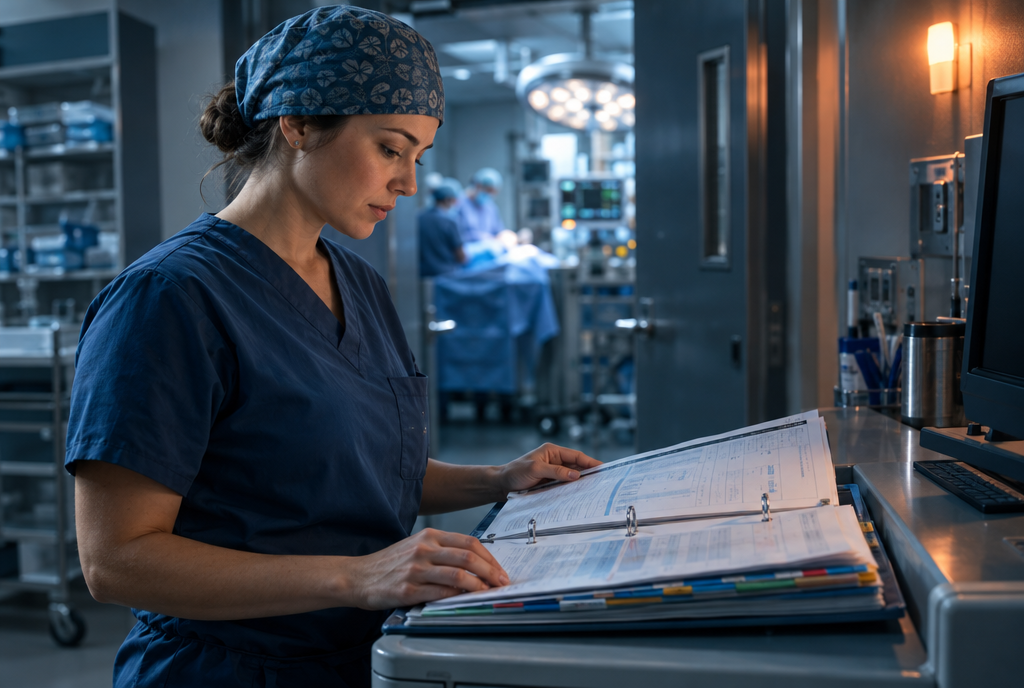
The three most cited sources agree on the core idea: keep surgical patients at or above 36.0°C. NICE CG65 gives the most specific protocol, including 30 minutes of prewarming and 30-minute intraoperative checks. AORN's Guideline for Patient Temperature Management sets US nursing practice and favors active warming. The ASA standard requires temperature monitoring whenever clinically significant changes are expected.
What is perioperative hypothermia? Definition, causes and risks
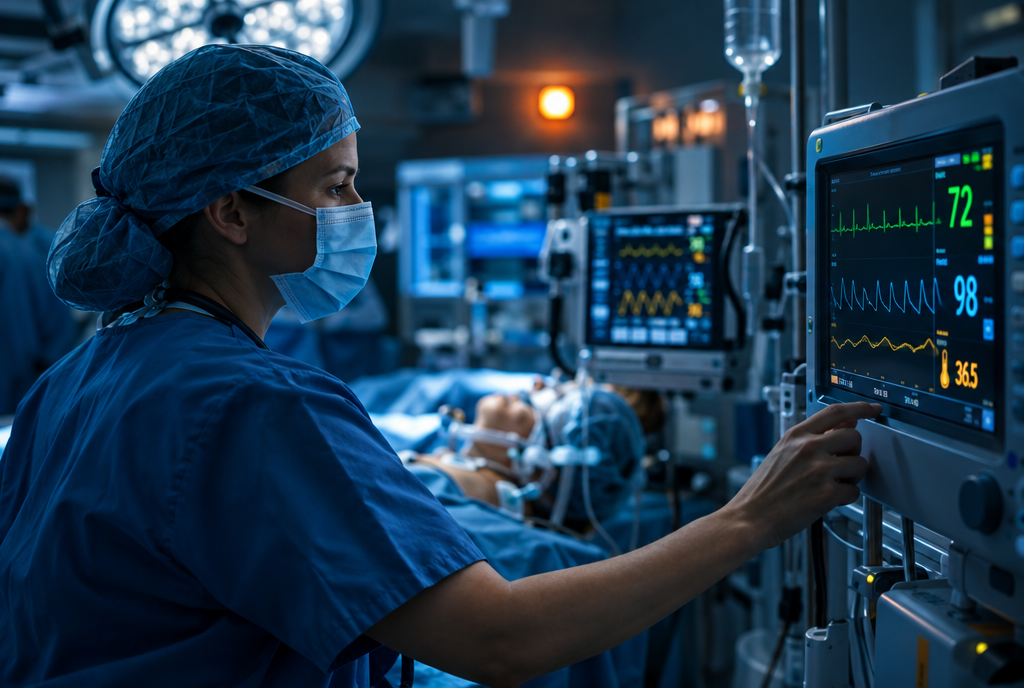
Perioperative hypothermia is a core body temperature below 36.0°C (96.8°F) in the period around surgery. It is common because anesthesia impairs the body's temperature control and moves heat from the core to the skin, while patients lie exposed in a cool room. Even mild hypothermia is linked to more bleeding, wound infection, cardiac events and patient discomfort.
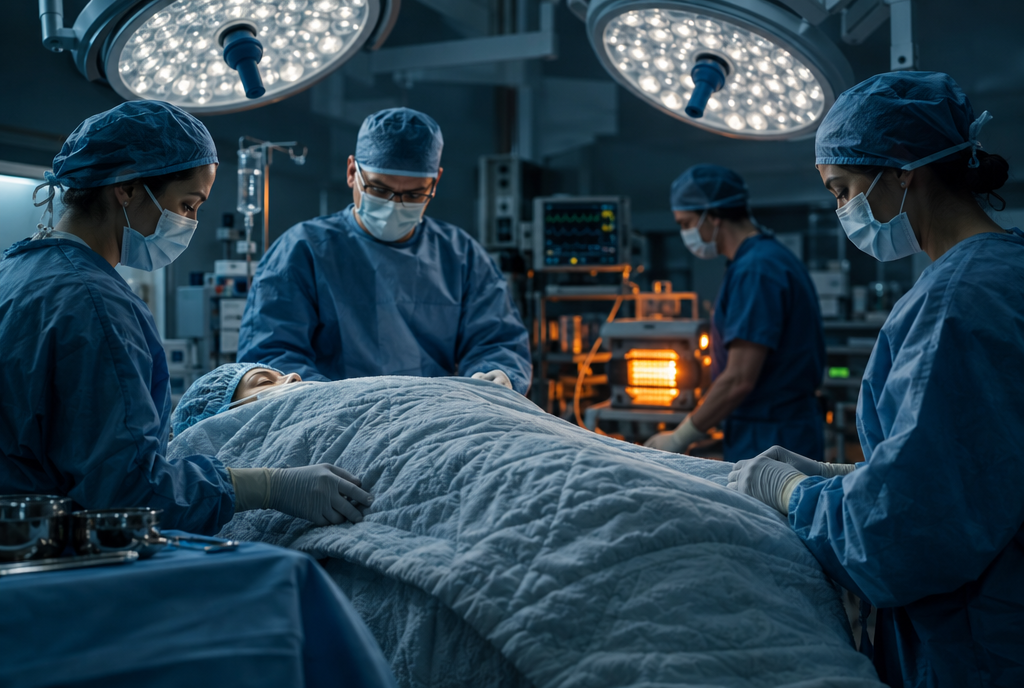
Perioperative hypothermia and patient warming: the complete guide
Patient warming is the set of practices that keep surgical patients at or above 36.0°C, the threshold for perioperative hypothermia. Anesthesia disables normal temperature control and operating rooms are cool, so most patients lose heat without help. Effective programs combine prewarming, active warming with forced-air or conductive devices, warmed fluids, sensible room settings and accurate core temperature monitoring.