
Knowledge
Sourced guides on how the body stays warm, how patients and clinicians are kept comfortable, how crews work safely in cold and heat, and how warming gear works. Pick the theme closest to your world.
Ready to choose gear? Browse all buyer’s guides →
Free tools: wind chill and frostbite calculator, cold work warm-up schedule, what to wear by temperature, which warmth setup is right for you? and the warmth runtime and cost calculator. All tools and data →

Science of Warmth
For anyone who wants to understand how the body makes, keeps and loses heat.
Start here
Popular
All Science of Warmth articles →
Healthcare
For clinicians, perioperative teams and hospital leaders.
Start here
Popular
- How to stay warm in the operating room
- What is perioperative hypothermia?
- Forced-air vs conductive warming
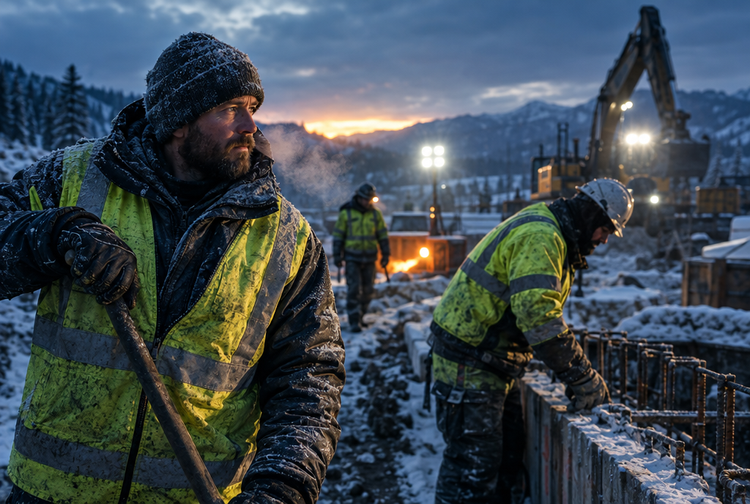
Work and Duty
For employers, safety leads, crews, service members and EMS.
Start here
Popular
All Work and Duty articles →
Everyday Life and Health
For people who feel the cold, and for daily life outdoors.
Start here
- Cold sensitivity and Raynaud’s
- Staying warm in everyday life
- Staying warm at home and with family
- Staying warm with a health condition or disability
Popular
All Everyday Life and Health articles →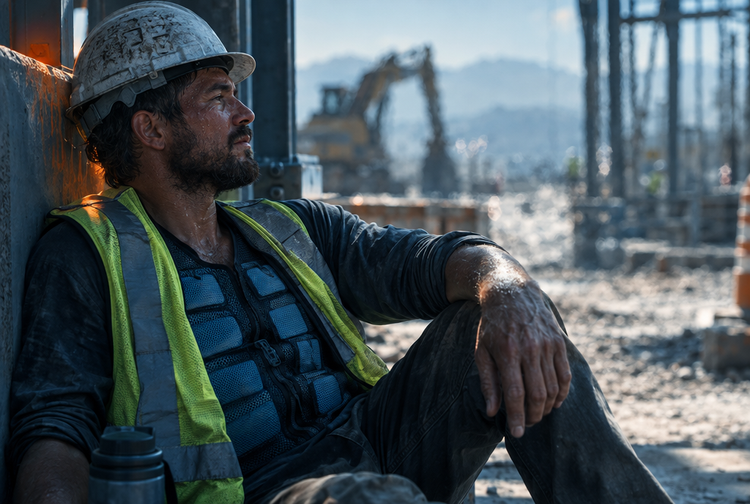
Heat and Cooling
For hot jobs, heavy protective gear and personal heat sensitivity.
Start here
Popular
All Heat and Cooling articles →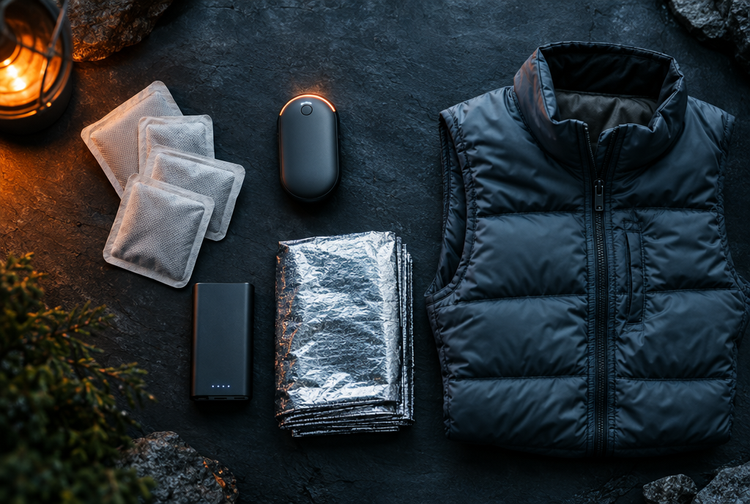
Technology and Gear
For choosing, using and caring for warming gear.
Start here
Popular
All Technology and Gear articles →All articles
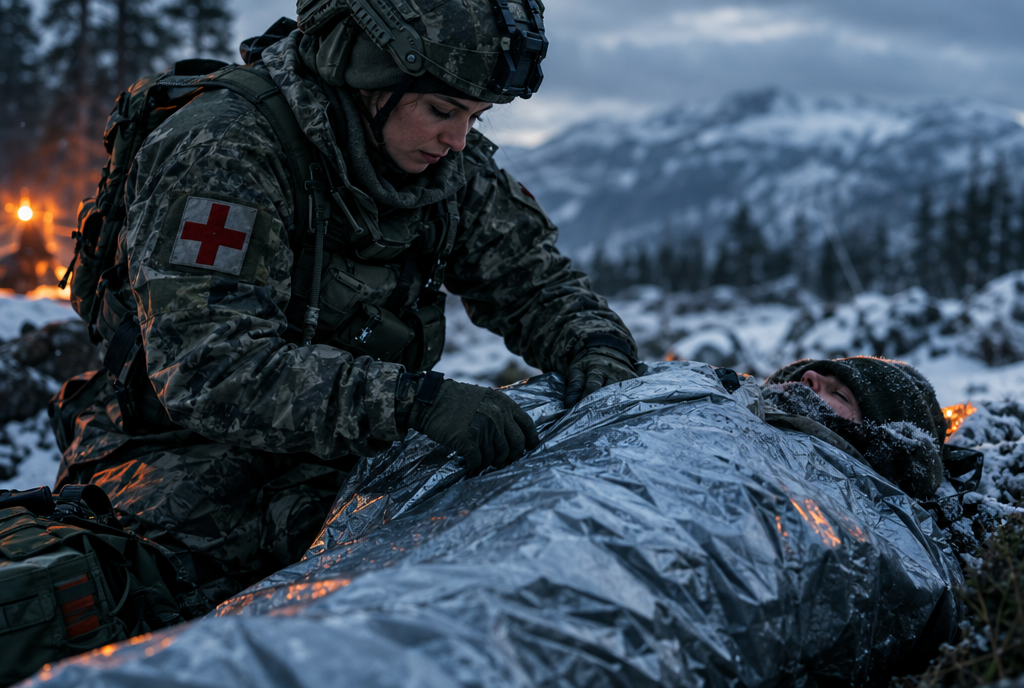
The Hypothermia Prevention and Management Kit (HPMK) explained
The Hypothermia Prevention and Management Kit (HPMK) is a compact casualty-warming kit used in military and tactical medicine. It pairs a chemical, air-activated heating liner with a hooded, heat-reflective vapor-barrier shell. Medics use it to limit heat loss in trauma casualties during care and evacuation. It is not insulated, so guidelines treat it as a short-term tool.
ECWCS levels 1 to 7 explained
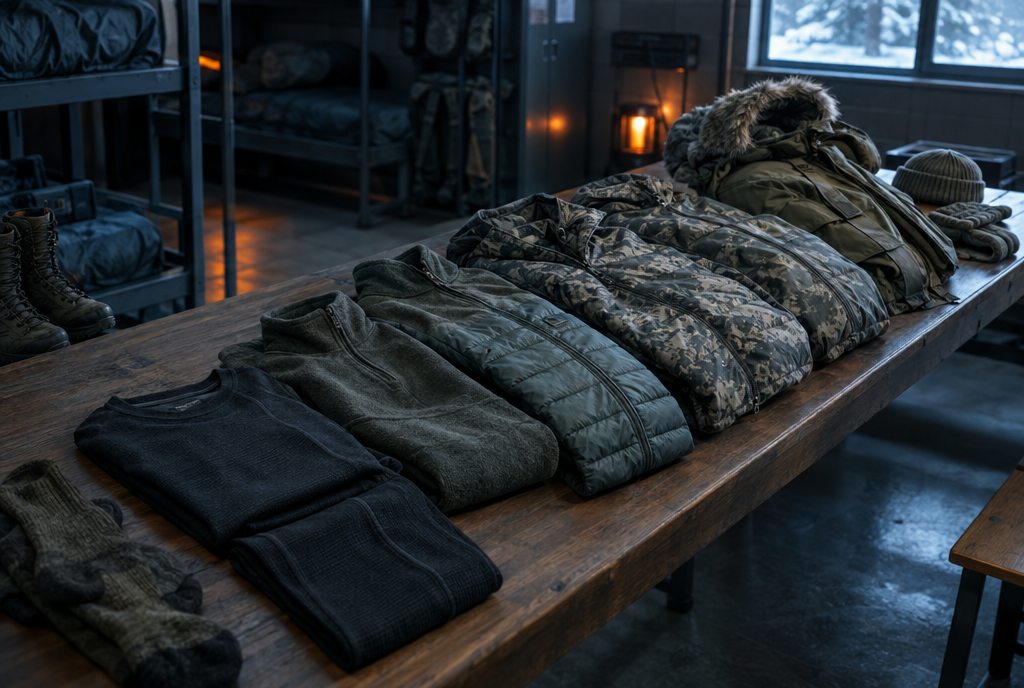
The Extended Cold Weather Clothing System (ECWCS) Generation III is the US Army's 12-piece, seven-level layering system. Levels 1 and 2 are base layers, Level 3 is fleece, Level 4 a wind jacket, Level 5 soft shell, Level 6 a waterproof shell and Level 7 an insulated parka and trousers. The Army rates the full system for about minus 40 to plus 60 °F.
Building a heated and thermal PPE program: an employer checklist
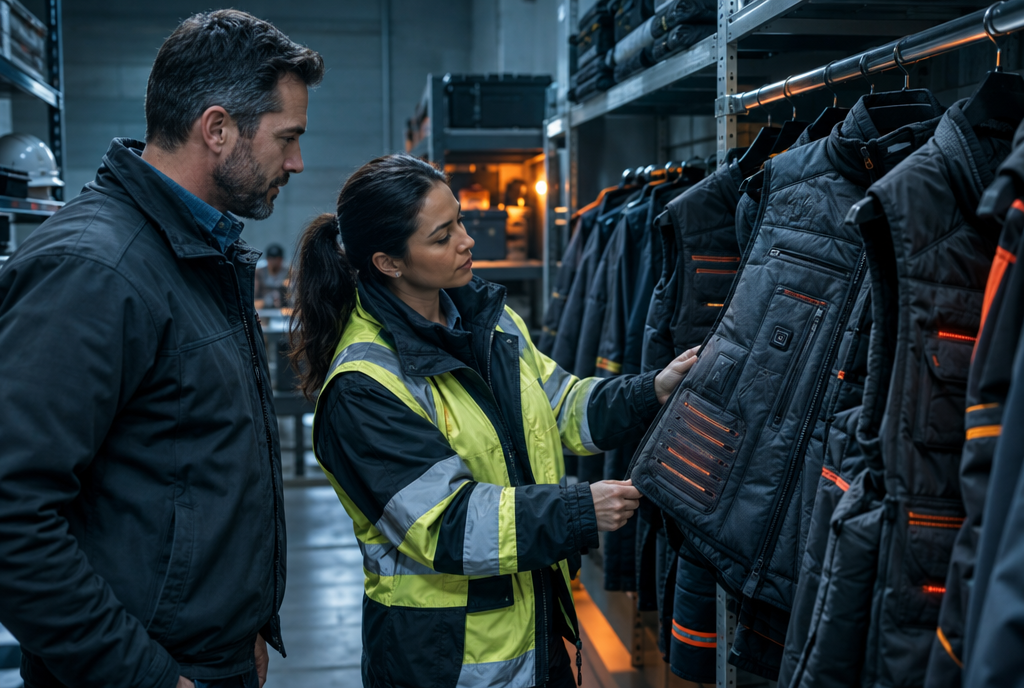
A heated and thermal PPE program starts with a documented cold hazard assessment, then specifies garments that pass seven checks: battery safety and charging, washing and care, sizing and fit, dexterity, compatibility with hi-vis and other PPE, a structured pilot with real crews, and a realistic cost per shift. Heated gear should supplement engineering controls, warm-up breaks and good layering, not replace them.
Winter work in utilities and construction: staying warm and safe
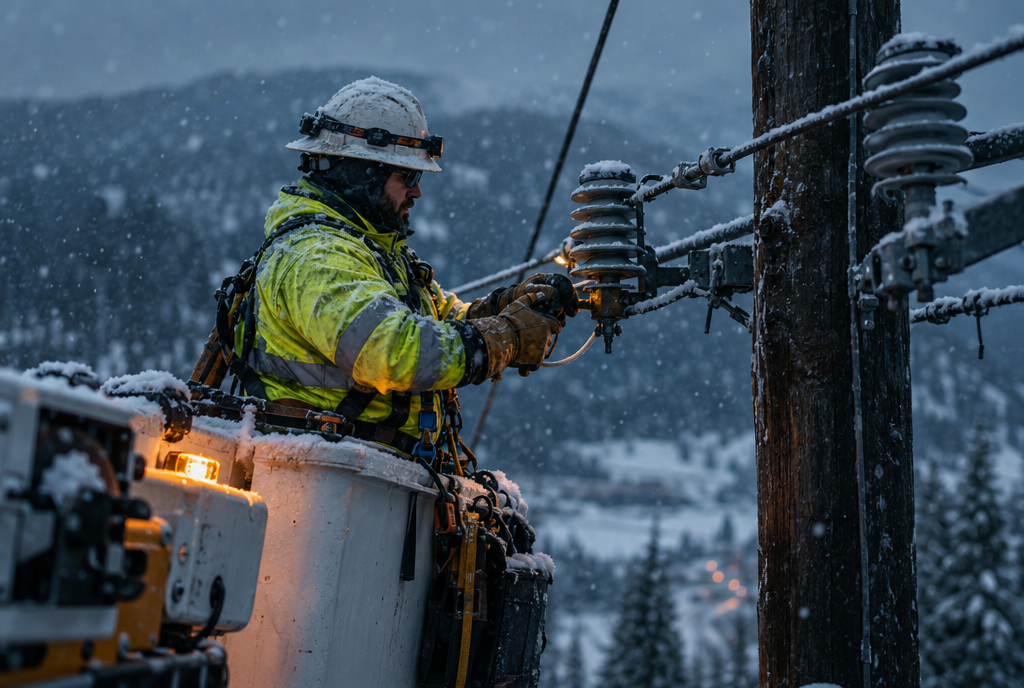
To stay warm working outside in winter, dress in three adjustable layers that fit under your harness and hi-vis, keep hands, feet and head dry and covered, and plan around wind chill rather than air temperature. Take warm-up breaks in a heated space, pair up to watch for early cold stress signs, and treat ice, winter driving and downed lines as part of the same plan.
How cold affects worker dexterity, safety and productivity
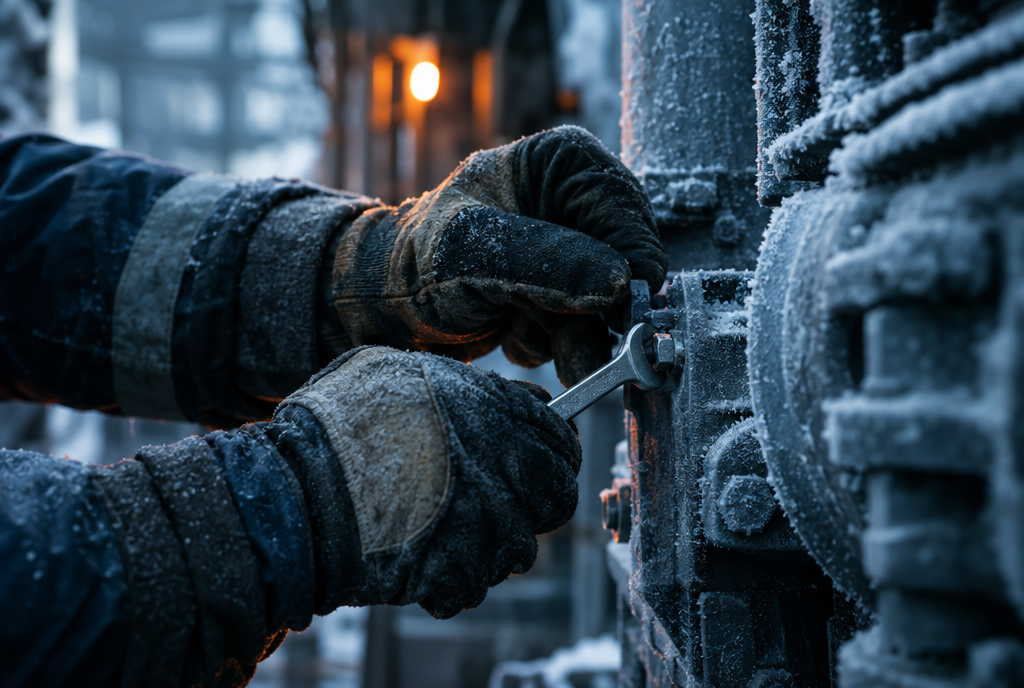
Cold slows work long before it causes injury. As hands cool, finger sensitivity, grip and fine motor control fall, and muscles and joints stiffen. A 2025 study found sharp drops in manual dexterity once finger skin cooled to about 23°C, and a nationwide Italian study linked cold days to roughly 6,000 extra occupational injuries a year. Keeping hands and core warm protects both safety and output.
Work and warm-up schedules for cold environments
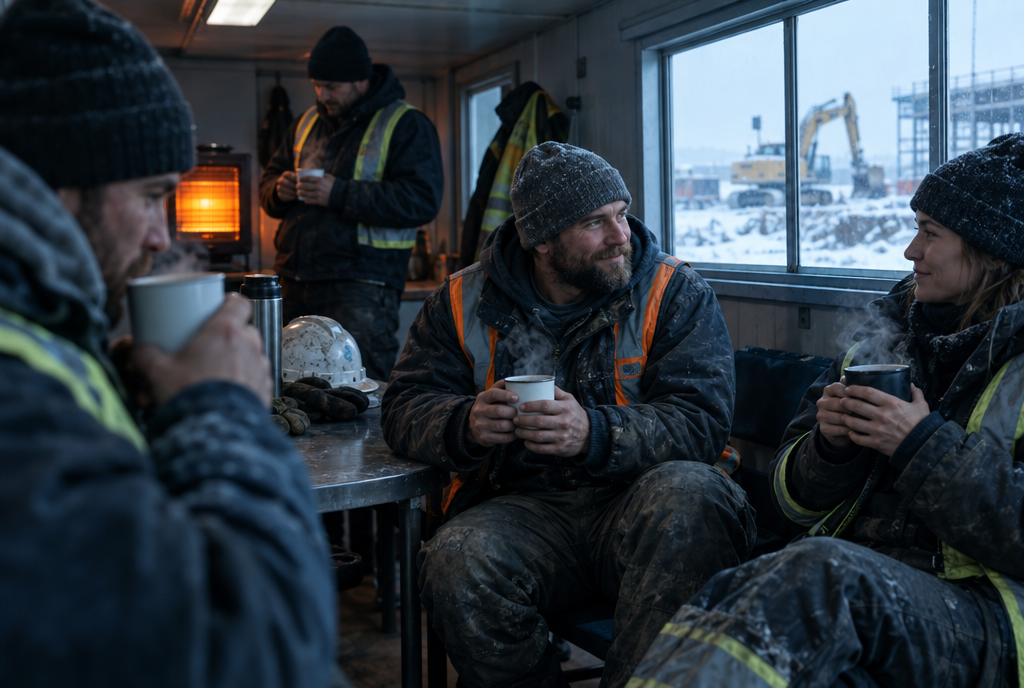
The most widely used cold work and warm-up schedule comes from the ACGIH Threshold Limit Value for cold stress. For moderate to heavy work over a four-hour period, it shortens the maximum work period and adds 10-minute warm-up breaks as air temperature falls and wind rises, starting at about -26°C (-15°F) with a 16 km/h (10 mph) wind, and stops non-emergency work at about -43°C (-45°F).
Frostbite vs frostnip vs chilblains: how to tell them apart
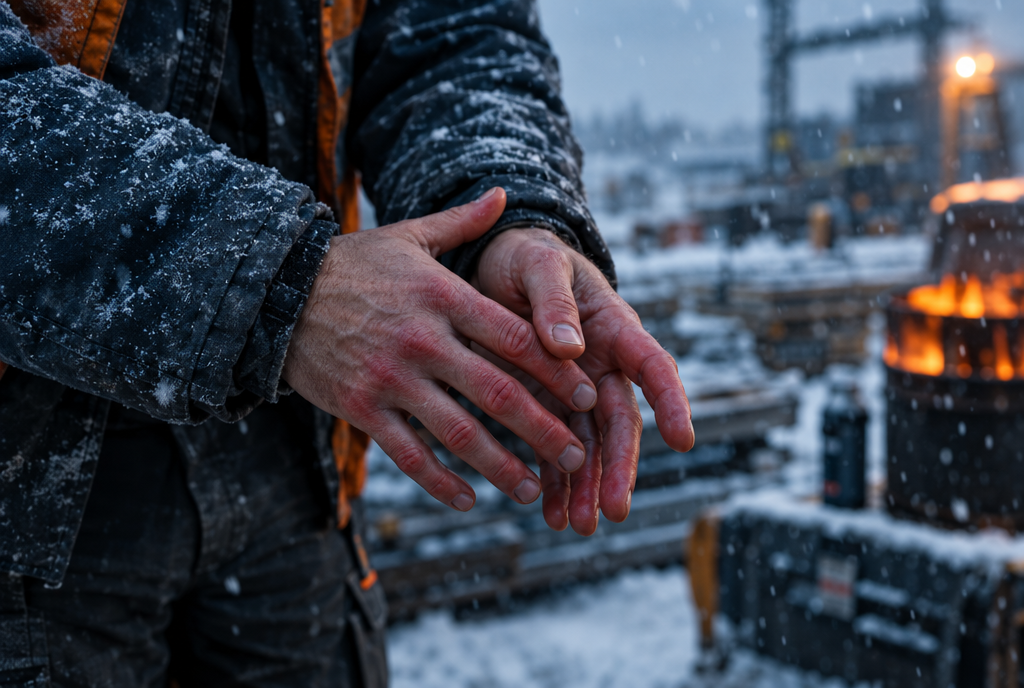
Frostnip and frostbite are freezing injuries: frostnip is the mild, temporary surface stage, while frostbite freezes skin and deeper tissue below 0°C (32°F) and can cause permanent damage. Chilblains are not freezing injuries; they are itchy, red or purple patches that appear hours after repeated exposure to cold, damp air above freezing, and usually clear in 2 to 3 weeks.
Cold stress symptoms and first aid: hypothermia, frostbite, trench foot
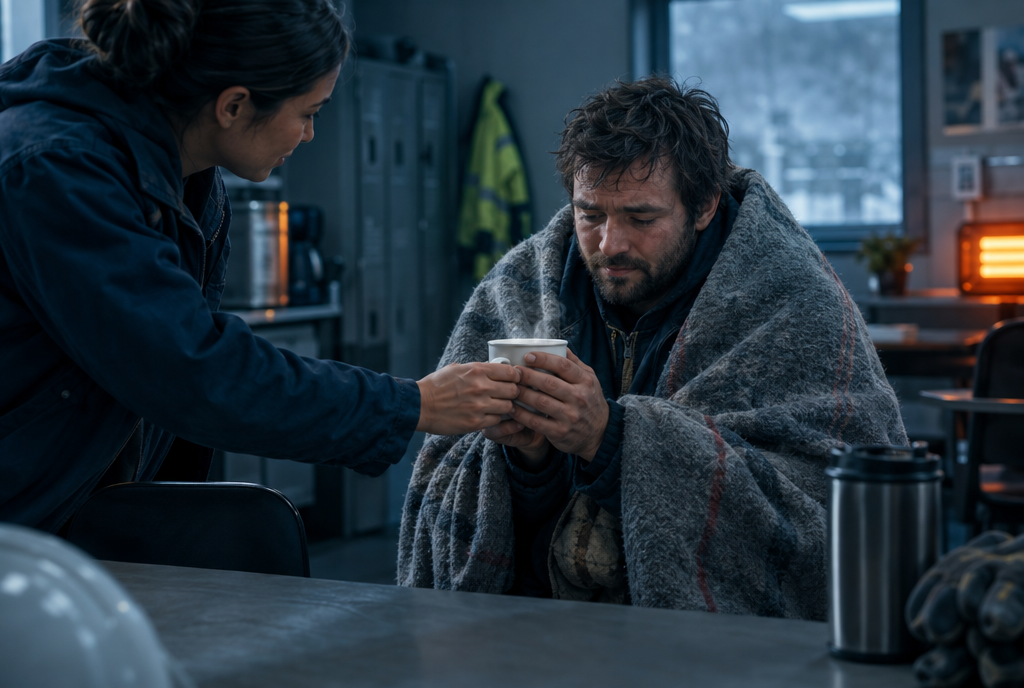
Cold stress shows up as shivering, fatigue, clumsiness and confusion (hypothermia), numb, tingling, pale or waxy skin (frostbite), and red, swollen, numb feet after wet cold (trench foot). First aid starts the same way: get the person out of the cold, remove wet clothing, warm them gently and call for medical help. Never rub frostbitten skin or use direct high heat.
What to wear in a freezer warehouse: a layering guide
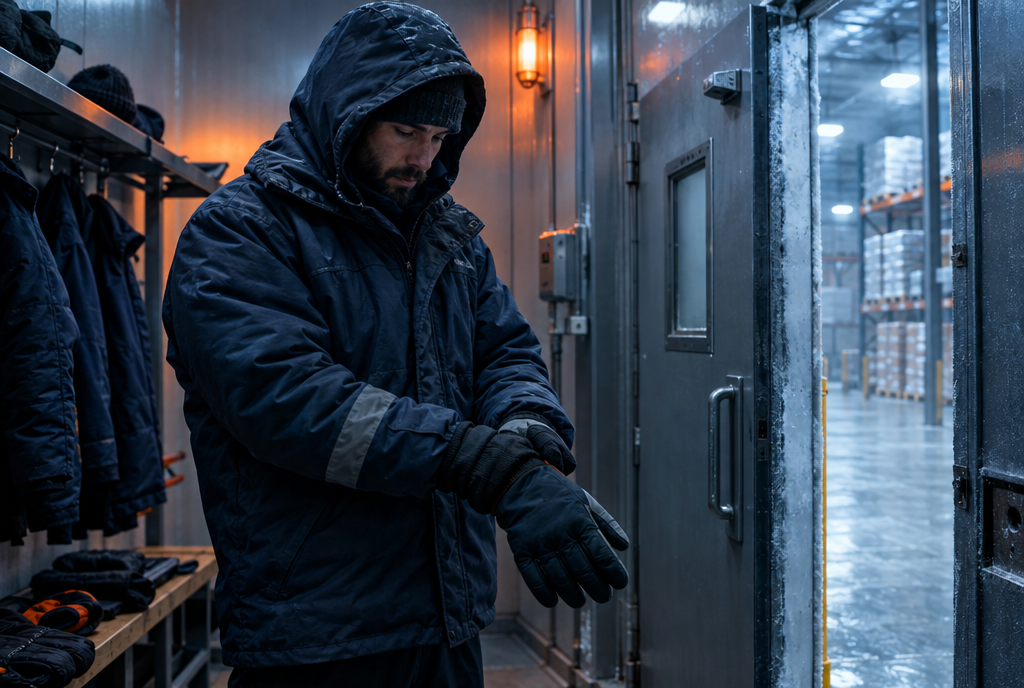
Dress for a freezer warehouse in three layers: a moisture-wicking base of wool or synthetic fabric, an insulating middle layer or freezer suit, and a wind-resistant outer layer. Add insulated gloves with liners, an insulated hat or hood, and insulated boots with dry socks. Avoid cotton, open layers before you sweat, and change damp items at every break.
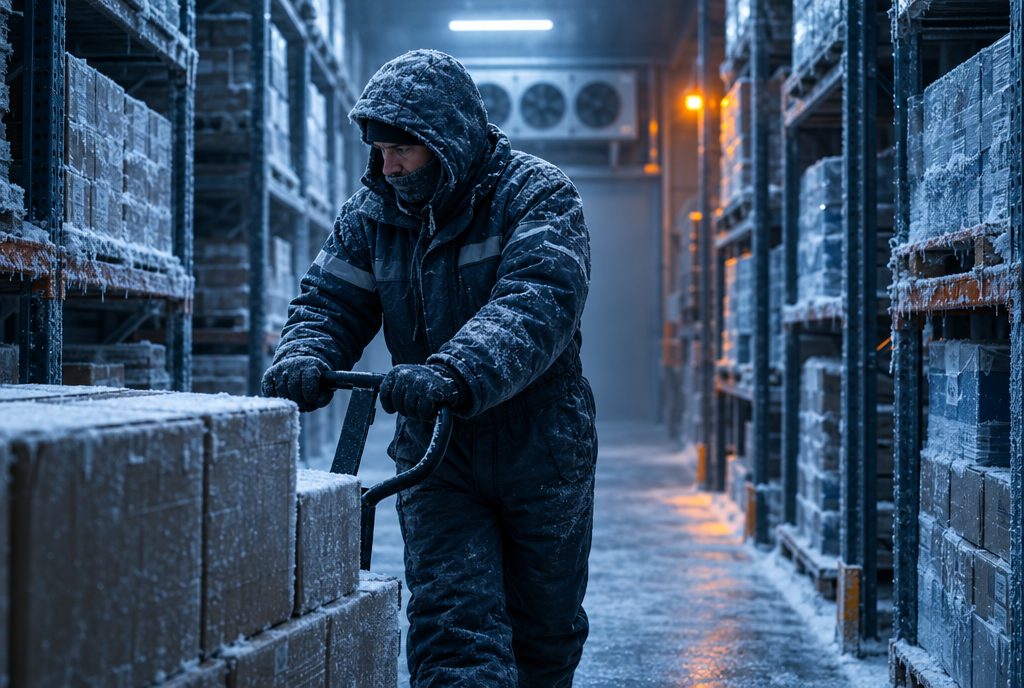
Working in a freezer: health risks and how to manage them
Working in a freezer is manageable when exposure is controlled, but it carries real risks: cold, painful hands and lost dexterity, frostbite on exposed or damp skin, whole-body cooling toward hypothermia, and strain from repeated moves between cold and warm zones. Research on cold store workers links long, repeated exposure to symptoms, while limited, well-managed entries show fewer lasting effects.
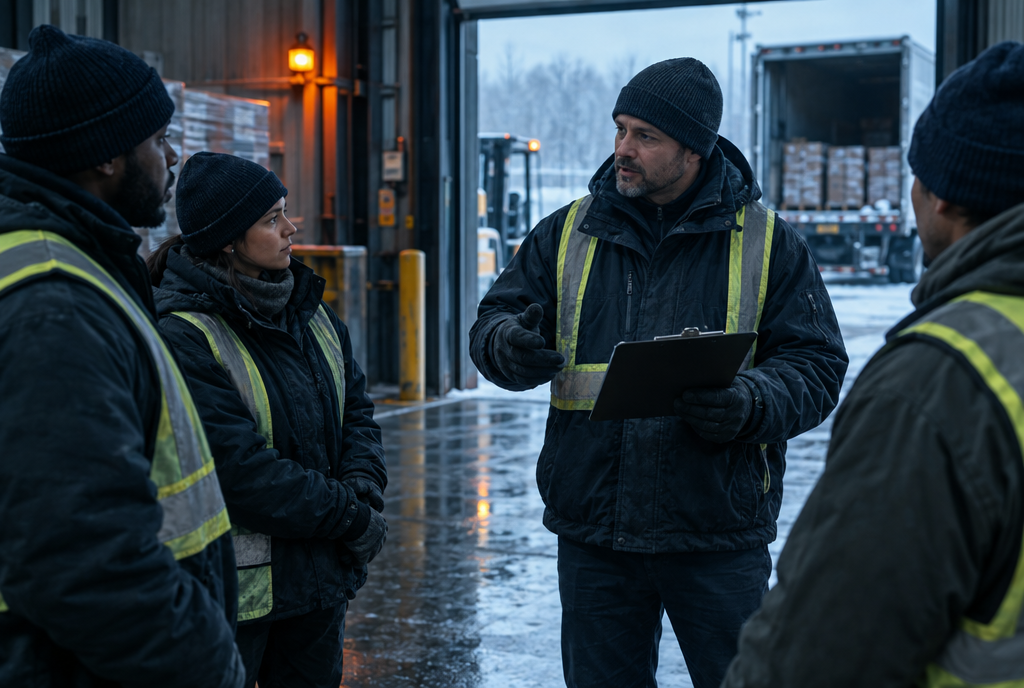
What OSHA says about cold stress (and what it does not)
OSHA has no specific standard for cold stress and sets no minimum working temperature. Employers are covered by the General Duty Clause, Section 5(a)(1) of the OSH Act, which requires a workplace free from recognized hazards likely to cause death or serious harm, including cold. The PPE standard's hazard assessment and training duties also apply, while ordinary winter clothing is excepted from employer payment.
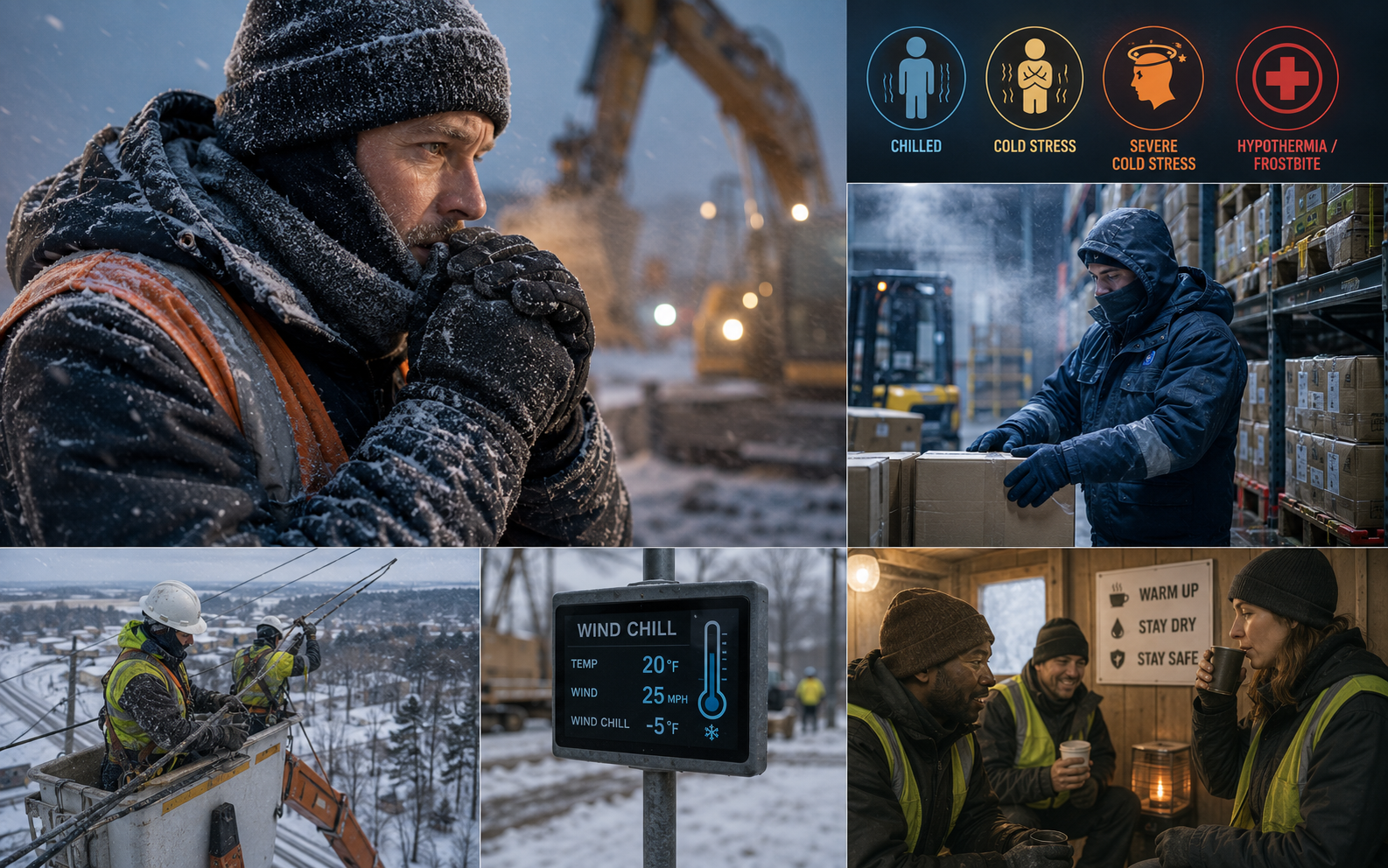
Cold Stress At Work
Cold stress affects cold-storage, utility, construction, and outdoor crews. The risk factors, warning signs, and the controls that actually work.
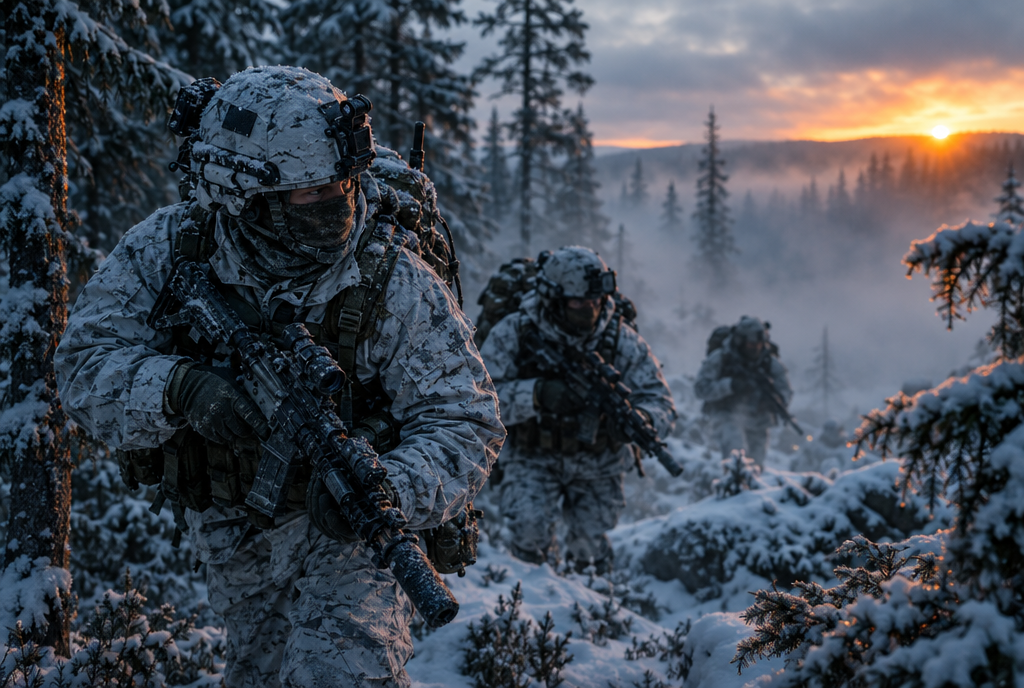
Cold-weather readiness: thermal systems for military, tactical and EMS teams
Cold-weather readiness means solving two thermal problems at once: keeping the team warm, dry and able to use their hands, and keeping casualties from losing heat. Military practice relies on adjustable layering such as the Army's seven-level ECWCS, strict moisture control to avoid cold injuries, and casualty warming kits like the HPMK. Batteries, body armor and procurement rules shape every choice.
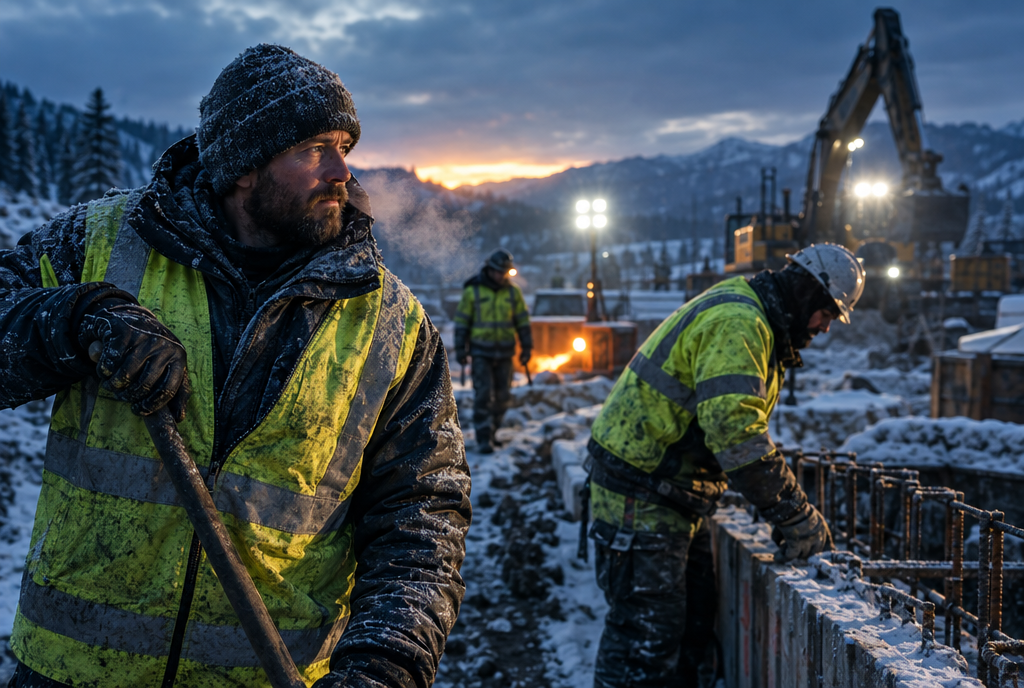
Working in the cold: a guide for employers and crews
Cold stress happens when the body loses heat faster than it can replace it, cooling the skin, the hands and feet, and eventually the core. Low temperature, wind and wetness all drive it. In the United States OSHA has no specific cold standard, so employers manage the hazard under the General Duty Clause with engineering controls, warm-up breaks, training and suitable clothing.